
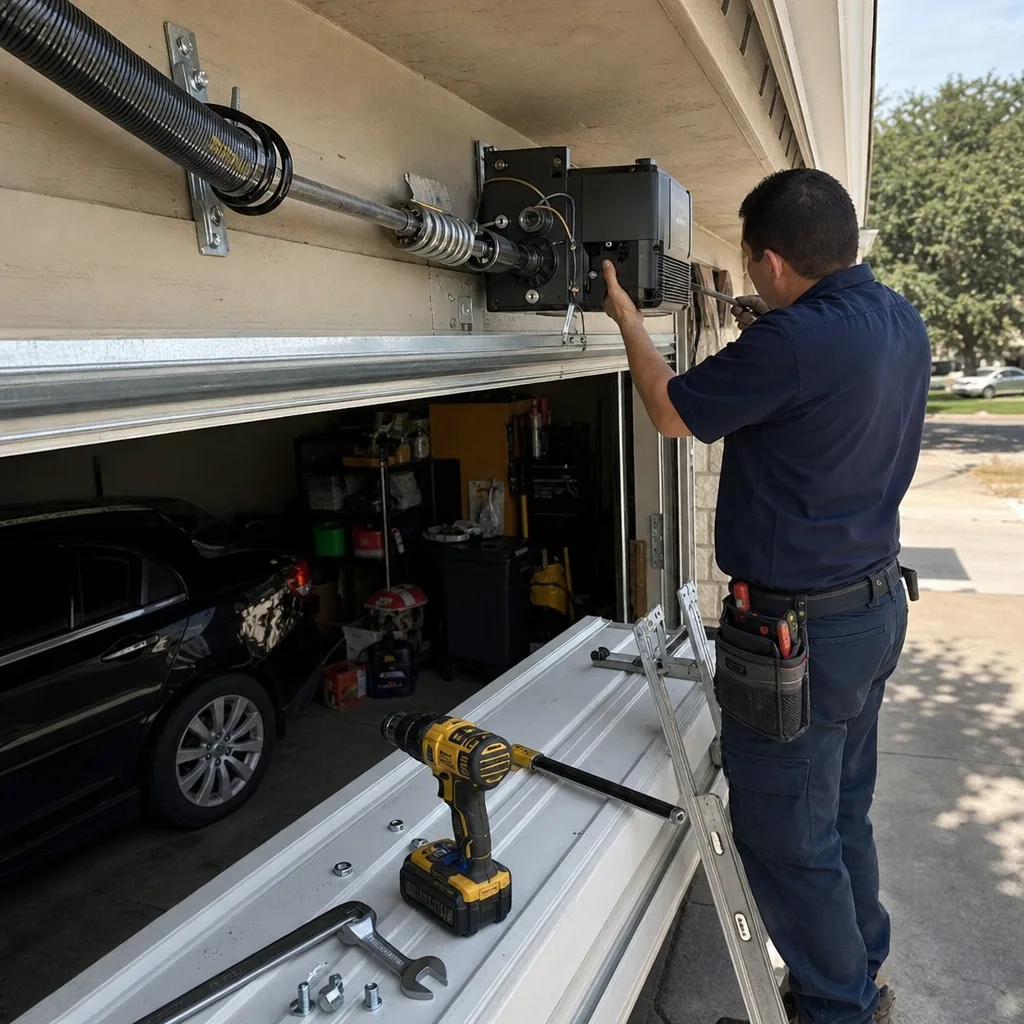
Last updated November 15, 2026
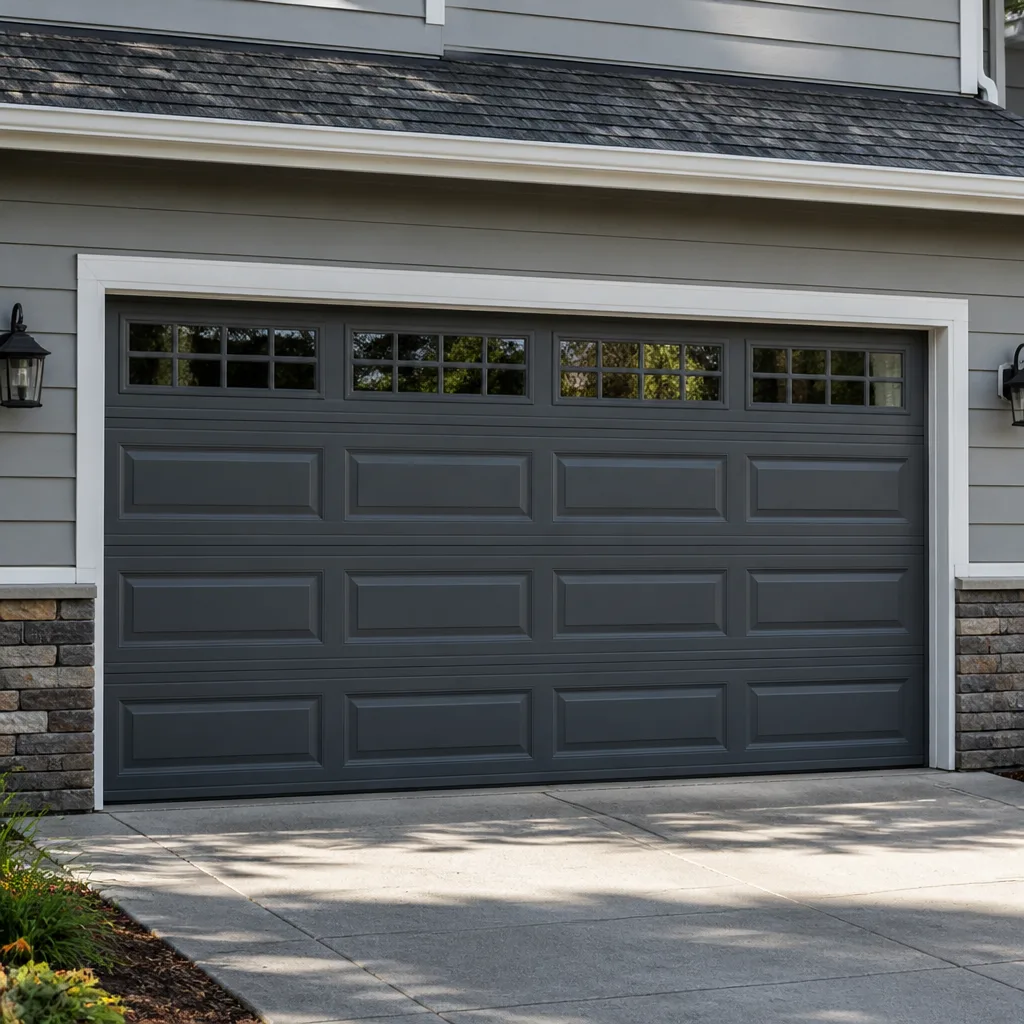 Raised-panel steel
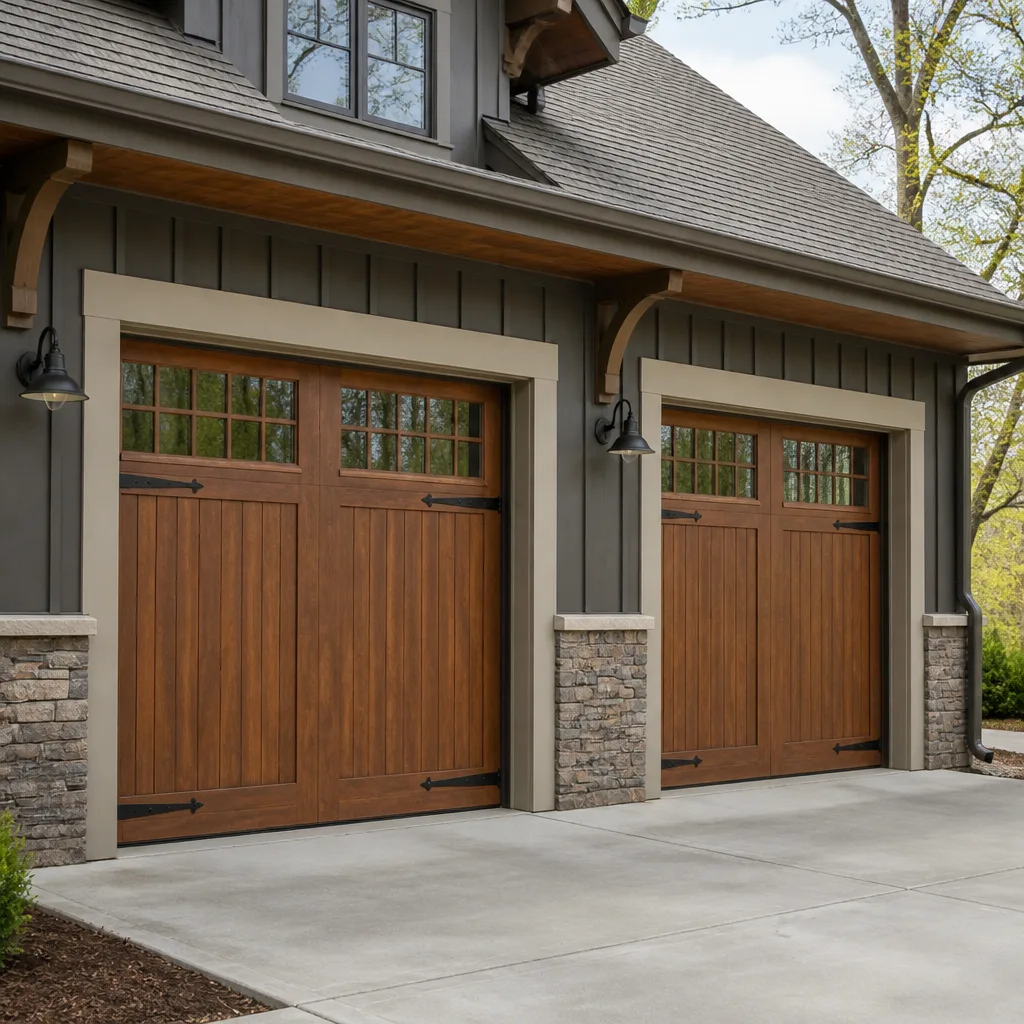 Carriage house
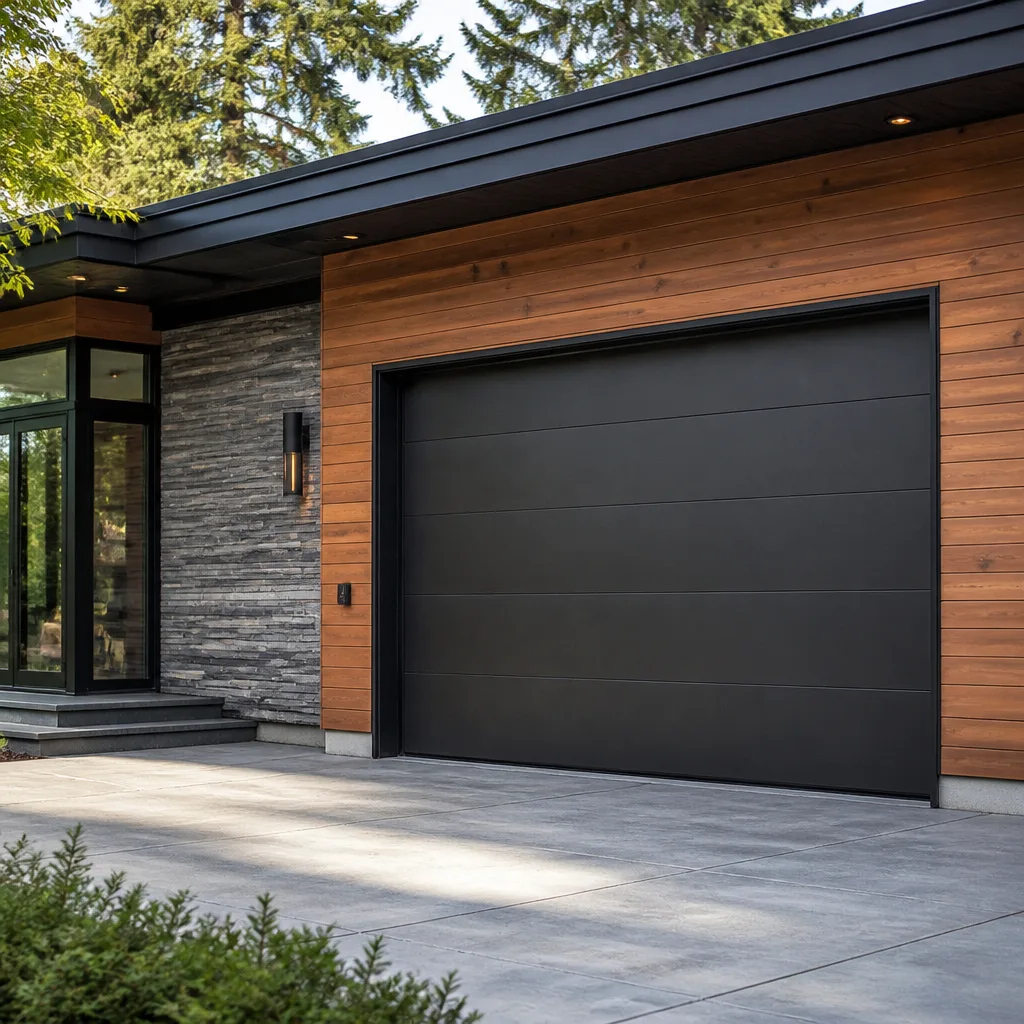 Modern flush
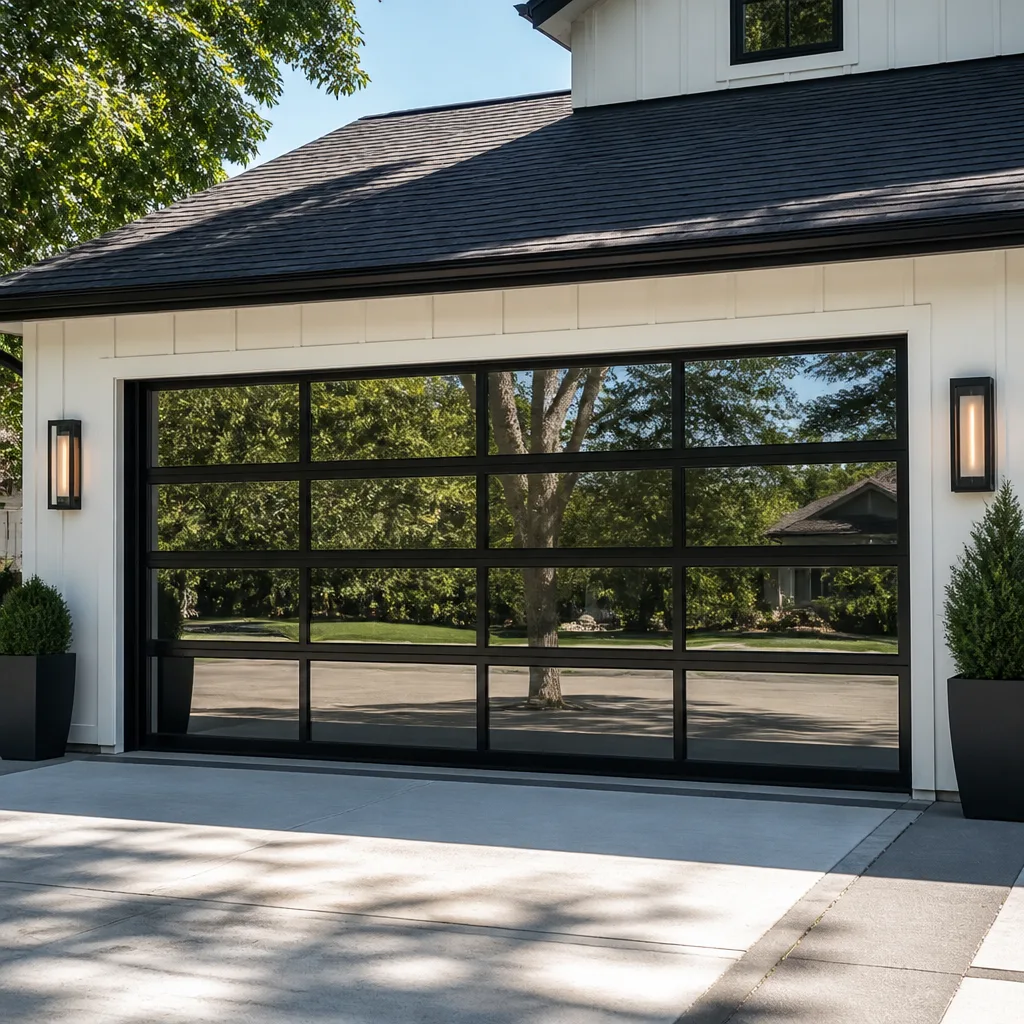 Full-view glass
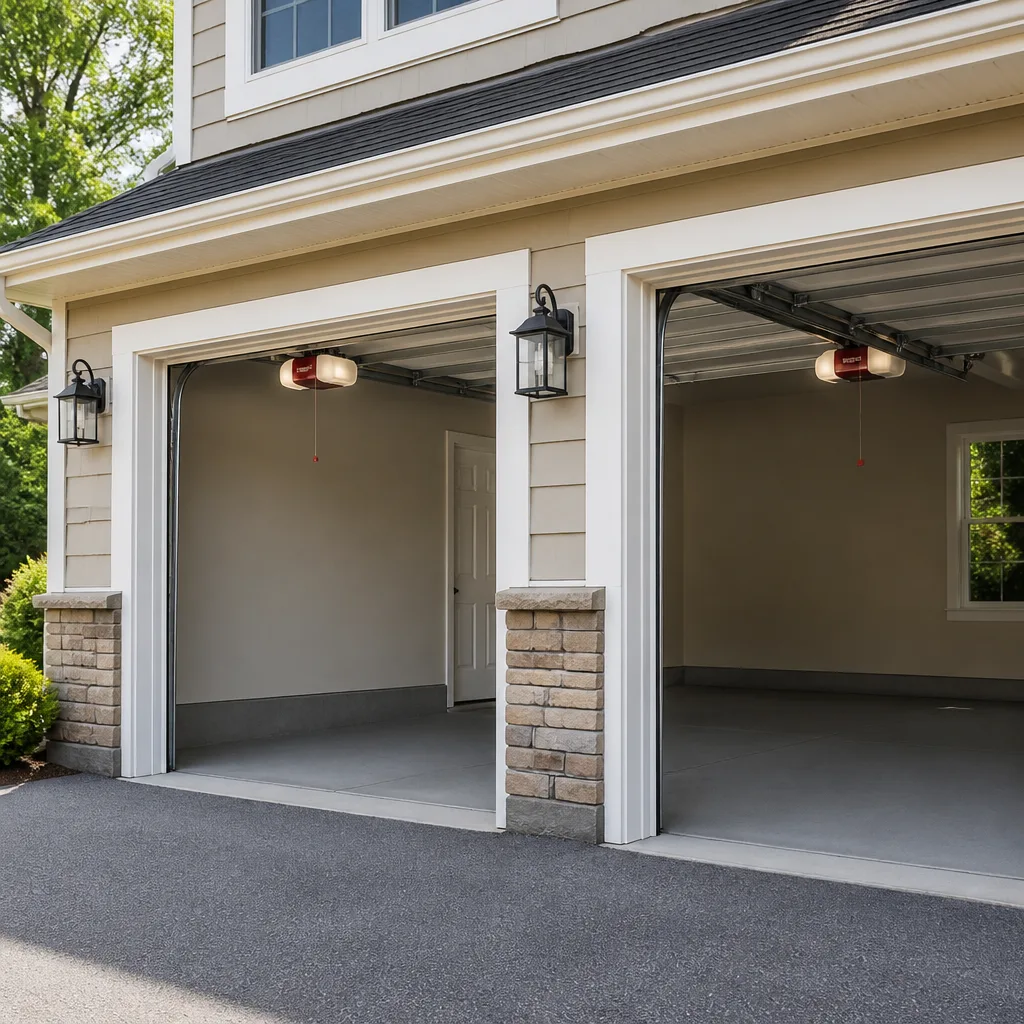 LiftMaster openers
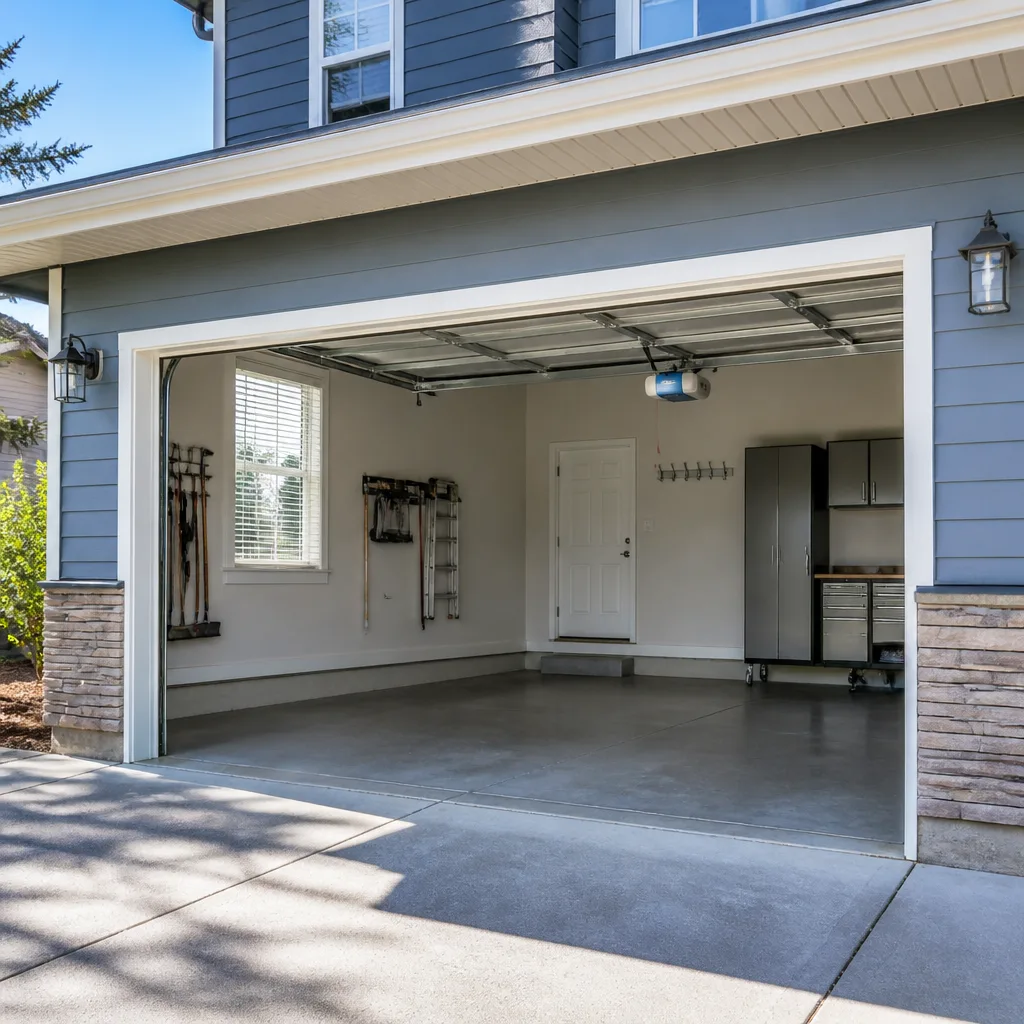 Chamberlain openers
Full 25-point door and opener safety check with every visit - springs, cables, rollers, tracks, and your LiftMaster or Chamberlain opener included
You get a price before we start. It does not change when the pro arrives.
Get your free estimateHow to Hire a Garage Door Contractor in College Station: A Step-by-Step Guide
Asking “are you licensed?” in Texas won’t protect you for garage door work. The state doesn’t require a specific trade license for this kind of job, which means the burden of vetting a contractor falls entirely on you, the homeowner. That’s an uncomfortable fact, but it’s the one that matters most before you hand anyone money in College Station. This guide walks through what to actually verify instead, from brand training and insurance to how a written quote should read line by line. By the end, you’ll have the exact questions that separate a dedicated door specialist from a general handyman who lists garage doors somewhere on a long service menu.
Quick Answer
To hire a garage door contractor in College Station, verify three things before any work begins: proof of general liability insurance, brand-specific training on your door or opener make, and a written, itemized estimate that states the price is agreed before work starts. Texas has no state license for garage door work, so these checks do more to protect you than a license number ever could. Get at least two written quotes and ask how each one handles warranty and parts.
Styles & brands we work with
- Raised-panel steel
- Carriage house
- Modern flush
- Full-view glass
- LiftMaster openers
- Chamberlain openers
Table of Contents
- What Does Texas Actually Require of a Garage Door Contractor?
- Why Brand Authorization Is the Best Vetting Signal
- How to Read a Garage Door Quote Line by Line
- The Questions to Ask Before You Hire
- Spring Warranty Terms: Parts-Only vs. Labor-Included
- Red Flags Specific to the College Station Market
- What College Station Climate and Housing Mean for Your Door
- Repair vs. Replace: When to Hire for Which Job
What Does Texas Actually Require of a Garage Door Contractor?
Texas does not require a state-issued trade license to repair or install a residential garage door. There’s no equivalent to the electrical or plumbing license system for this trade. That single fact reframes the whole hiring decision: nobody’s license number is protecting you, so the safeguards you build have to come from other sources.
What you can and should verify:
- General liability insurance. Ask for a certificate of insurance naming the work being done. If something gets damaged while the door is being worked on, insurance is what stands behind the repair.
- Workers’ compensation or equivalent coverage. If someone is injured on your property, this matters. A crew without coverage can leave a homeowner exposed.
- A real business entity. A company name, an address you can trace, and a phone number that gets answered are baseline signals. A truck and a first name aren’t enough.
- Brand-specific training. This is the credential that actually predicts whether the job gets done right the first time, and we’ll cover why in the next section.
It’s fine to ask any of this up front. A contractor who does this work well will answer without hesitation. One who bristles at the insurance question is telling you something worth hearing. The state isn’t going to vet them, so you’re the one who has to.
Why Brand Authorization Is the Best Vetting Signal
A contractor authorized by a manufacturer like Clopay or LiftMaster has completed verifiable training tied to those products. A generalist who works on thirty different things hasn’t. That gap is the closest thing to a credential in this trade, and it’s the one you can actually check.
Garage doors and openers aren’t interchangeable systems. A Clopay door has its own torsion, track, and panel specifications. A LiftMaster opener has its own logic board, safety sensor behavior, and force settings. A Wayne Dalton legacy system can have parts that a generalist has never touched and won’t be able to source correctly. When a technician already knows the platform, diagnosis is faster and correct parts get ordered the first time instead of the second or third.
How to check brand familiarity without being coy about it:
- Tell the contractor your door and opener brand when you call. Their reaction is the first test. A specialist asks a follow-up about the model; a generalist often goes quiet or says they’ll “take a look.”
- Ask whether they service that brand regularly or only occasionally. “We service your brand” should be an easy answer if it’s true.
- Ask whether they handle the opener separately from the door. Companies that only do doors will outsource or decline motor and logic-board jobs, which means a second call, a second invoice, and a second company to hold accountable.
- Ask what happens if the door and the opener both turn out to have problems. A full-service door specialist handles both in one visit. A generalist hands one of them off.
At Bluestone Garage Door Repair, we’re factory-familiar with eight major brands, including Clopay, Amarr, Wayne Dalton, Craftsman, LiftMaster, Chamberlain, Genie, and Raynor. That breadth matters most for homeowners with a legacy or less-common system. A Wayne Dalton or Raynor door that a door-only contractor turns down is still a door that needs to close. Being able to say “we service your brand” – and mean it – is worth more to you than any badge on a website.
How to Read a Garage Door Quote Line by Line
A written quote protects you only if you know what each line actually means. Vague phrases like “hardware included” and “labor only” can hide very different scopes, and the difference shows up on the invoice. Read every quote the same way before you sign anything.
Here’s how to break a quote down:
- “Labor only” means the price covers the time to do the work, but parts are billed separately. Ask for the parts cost up front or you’ll be surprised at the total.
- “Hardware included” is too vague on its own. Ask exactly what’s included: hinges, rollers, springs, cables, brackets, weather seal, or the door panels themselves. “Hardware” can mean one hinge or the whole assembly.
- Springs are priced per spring, not per door. A matched pair is usually replaced together, so the pair costs roughly twice a single-spring line. A quote that shows one spring on a two-spring door is incomplete, not a deal.
- Opener work should show parts and labor separately. If a logic board, motor, or safety sensor is being replaced, the part should be named.
- Haul-away and disposal of the old door or opener should be listed if it’s being charged. It’s often the line that appears at the end as a surprise.
- Warranty should be stated on the quote itself: what’s covered, for how long, and whether labor is included in a return visit.
The standard to hold everyone to: the price on the written estimate is the price, and it’s agreed before work starts. If a quote leaves room for “we’ll see when we get there,” that’s exactly where the invoice grows. Get it in writing and hold to it. A free estimate should cost you nothing and commit you to nothing. When you’re ready to compare, we’ll put a written price in front of you before any work begins. Call (888) 874-4281. We answer 24/7. Fast dispatch from 7am to 7pm, Sunday through Friday.
The Questions to Ask Before You Hire
These are the questions that separate a garage door specialist from a generalist, and they’re best asked on the phone before anyone comes out. The answers tell you more than a website ever will.
- “Do you service my brand and model?” Give them the door and opener make. If they’ve never heard of it, that’s useful information.
- “Are you insured, and can you send the certificate?” Insurance is the closest thing to a license this trade has in Texas. Ask for it in writing.
- “Who does the opener work?” If the answer is “we outsource that,” you’re dealing with two companies and one invoice problem.
- “What’s included in the price, and what’s not?” Get the answer in writing. Springs, hardware, opener parts, and haul-away should each be clear.
- “What’s your spring warranty, and does it cover labor?” Parts-only vs. labor-included is the single biggest warranty question on this trade. Ask it every time.
- “Will the price change once you see it?” A trustworthy answer is “the written estimate sets the price.” Anything vague is a warning.
- “Are you a local business, and where do you operate?” Accountability lives where a business operates. An out-of-area company that doesn’t seem to know College Station is a risk.
- “Do you handle repair, opener work, and new installation?” One team, one call, one accountability line is easier to manage than three separate contractors for three scopes.
You don’t need to ask all eight in a single call. But the questions you do ask should get a straight answer, fast. Our technicians have up to 11 years of experience, and the questions above are the ones we get asked most – they’re good questions.
Spring Warranty Terms: Parts-Only vs. Labor-Included
Parts-only warranty means the manufacturer covers the spring itself, but you pay again for the labor to install the replacement. Labor-included warranty means a return visit for a failed spring is covered on both parts and install. For a homeowner, that’s the difference between a warranty and a discount coupon.
Torsion springs are the most common failure point on a residential door, and they’re also the component most often replaced. That makes the warranty terms matter more here than anywhere else on the door. When you compare quotes, look at the warranty line as carefully as the price line, because a cheap spring with a parts-only warranty can cost more over a few years than a slightly higher quote with labor included.
Questions to ask about spring warranty:
- Does the warranty cover the spring, the install labor, or both?
- How long does it last, and does it reset if the spring is replaced a second time?
- What voids it? Springs are rated by cycle count, and a warranty that excludes normal wear from heavy use is worth less than it looks.
- Is the replacement spring a matched pair or single? A pair should be quoted and warranted as a pair on a two-spring door.
One safety note that belongs in any conversation about springs: torsion springs and the cables attached to them are held under serious tension. A spring or cable that lets go while someone is working on it can cause severe injury. This isn’t a DIY component. A trained technician with the right winding bars and the right procedure is the safe path, and that applies whether the job is a routine replacement or an emergency.
Red Flags Specific to the College Station Market
College Station’s housing stock is a mix of newer subdivisions, established neighborhoods, and rental properties near campus, and the contractor market that serves it mixes real specialists with generalists and out-of-area companies that show up when demand is high. Knowing the specific patterns to watch for matters more here than in a market with a long-established contractor base.
Red flags to watch for:
- Out-of-area companies that surge into town after storms. A truck with no local accountability can do the work, collect payment, and be untraceable when something fails. Ask where the company operates and how to reach someone if a repair doesn’t hold.
- A generalist who lists garage doors among dozens of services. They may do fine work on a fence or a deck, but a door has its own spring tension, track, and opener logic. A generalist diagnosing from a manual on his first visit is a repeat-visit risk.
- “We don’t service that brand.” A door-only contractor who turns down a Wayne Dalton or Raynor door leaves you with an open door and a phone tree to work through. Brand breadth is a red-flag test.
- No written estimate before work begins. If the price is a handshake, you’ve lost the only protection Texas gives you. Ask for the estimate in writing.
- An opener repair offer that turns into a full door replacement. Opener issues are often just opener issues. A quote that jumps straight to a new door without diagnosing the opener is worth a second opinion.
- No insurance certificate on request. A contractor who won’t send proof of insurance is passing a risk to you.
- A quote that lists one spring on a two-spring door. It’s a sign the technician didn’t inspect the system, or is pricing to win a quote and planning to add cost later.
None of these are unique to College Station in that they don’t happen elsewhere. They’re specific to a market where supply is uneven, which is exactly what you’re dealing with here. When in doubt, ask for a written estimate and walk away from anything that feels vague. We’ll give you a quote you can compare: (888) 874-4281.
What College Station Climate and Housing Mean for Your Door
College Station’s summers are long and hot, and the heat has a real effect on a residential garage door. The doors here spend months cycling in high temperatures, which is hard on lubricant, weather seal, and the strain on springs and rollers. Winters are mild by comparison, which means the dominant wear pattern isn’t cold and ice. It’s heat and seasonal expansion.
What that means for the door you’re hiring someone to work on:
- Lubrication matters more than you’d expect. Rollers, hinges, and the torsion assembly need fresh lubricant as part of routine service. Ask whether the quote includes it.
- Weather seal and bottom seal wear faster in the heat. A seal that’s cracked or compressed lets in heat, dust, and pests. Replacing it is a line item worth asking about, since it’s often left off a repair quote.
- Track and alignment issues show up seasonally. Panels and tracks that move with temperature swings can cause sticking and uneven travel. A specialist will check alignment rather than just replacing a part.
- Opener strain is real. A door that’s slightly out of balance pushes more work onto the opener motor and logic board. That’s one reason opener problems and door problems often show up together.
The housing side matters too. Rental properties near campus and newer subdivisions both see heavy daily door use, and a door that’s used several times a day wears faster than one used once. If you’re a landlord managing a residential property, the same vetting applies, and a technician who can diagnose the door and the opener in one visit saves you two sets of scheduling and two invoices. When a door or opener is failing on a College Station property, the call is the same either way. We handle garage door repair and garage door opener repair under one company, so you’re not coordinating two contractors for one problem.
Repair vs. Replace: When to Hire for Which Job
Repair and replacement are different buying decisions, and the hiring approach changes with each. A repair is a diagnostic question: what failed, what’s the fix, what’s the estimate. A replacement is a measurement and ordering question: what door fits, what’s the lead time, what’s the installed price. Knowing which job you’re hiring for keeps you from getting quoted for the wrong one.
The repair decision:
- A single component failure (spring, cable, roller, hinge) is usually a repair.
- Repeated problems on the same door often point to an underlying issue, like an out-of-balance door or a worn torsion assembly. Diagnose the cause, not just the symptom.
- An opener that won’t respond, reverses unexpectedly, or runs but doesn’t move the door is a repair and diagnosis question. That’s opener work, not door work, and it should be handled by someone who does both.
The replacement decision:
- A door with damaged panels, a bent track, or repeated structural failures may be beyond economical repair.
- A door that no longer meets your needs for insulation, security, or appearance is a replacement decision, not a repair one.
- Replacement is measured and ordered, then scheduled. It’s a written-price conversation, not an urgent-visit one. That’s fine; it’s the right process for a door that has to fit.
If you’re not sure which side of the line you’re on, describe the symptoms on the phone. A specialist can usually tell you what to expect before anyone comes out. For a repair, we offer same-day service when scheduling allows and a free estimate before work starts. For a replacement, we’ll measure, price it in writing, and schedule it. Either way, one call covers it: (888) 874-4281. We answer 24/7. Fast dispatch from 7am to 7pm, Sunday through Friday.
Common Mistakes to Avoid
- Treating “licensed” as the whole vetting question. Texas doesn’t require a trade license for garage door work, so a license number wouldn’t protect you anyway. Ask for insurance, brand familiarity, and a written estimate instead.
- Accepting a verbal quote. The written estimate is your only price protection. A handshake price is a number that can grow once the work starts, and there’s no recourse if it does.
- Comparing quotes by total price alone. A cheaper quote with a parts-only spring warranty and vague “hardware included” language can cost more than a higher quote with labor covered and clear scope. Read the lines, not just the bottom number.
- Hiring a generalist for an opener problem. A handyman who lists doors as one of many services may decline or outsource the motor and logic-board work. That puts you back on the phone and back on the clock.
- Ignoring the spring warranty line. Parts-only vs. labor-included is the biggest warranty question on this trade. Ask it before you sign, not after the spring fails.
- Assuming a quote for one spring covers the door. A two-spring door quoted as one spring will need a second invoice to get back to a matched pair. Ask what’s being replaced and why.
- Skipping the brand question. If a company doesn’t service your specific Clopay, Amarr, or Wayne Dalton door, you’ll find out at the worst possible moment. Ask on the call, not at the door.
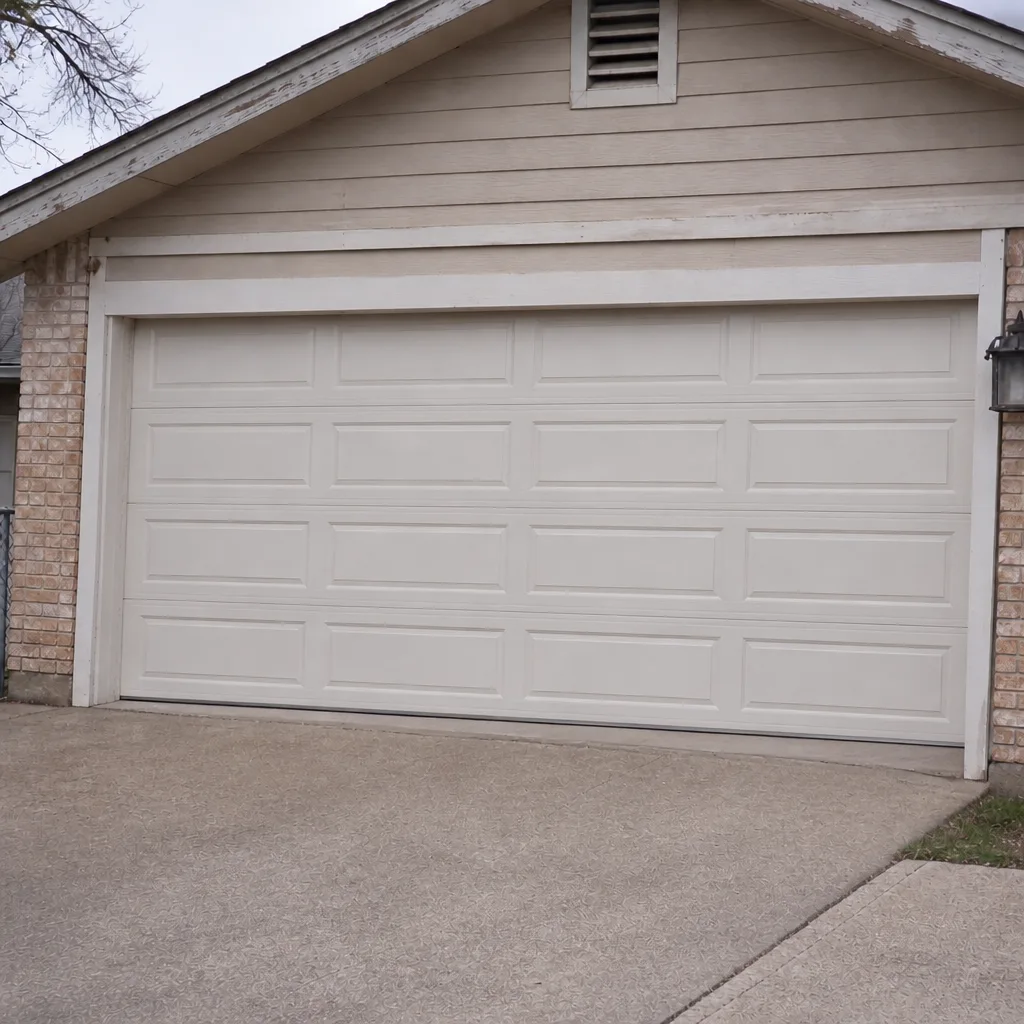
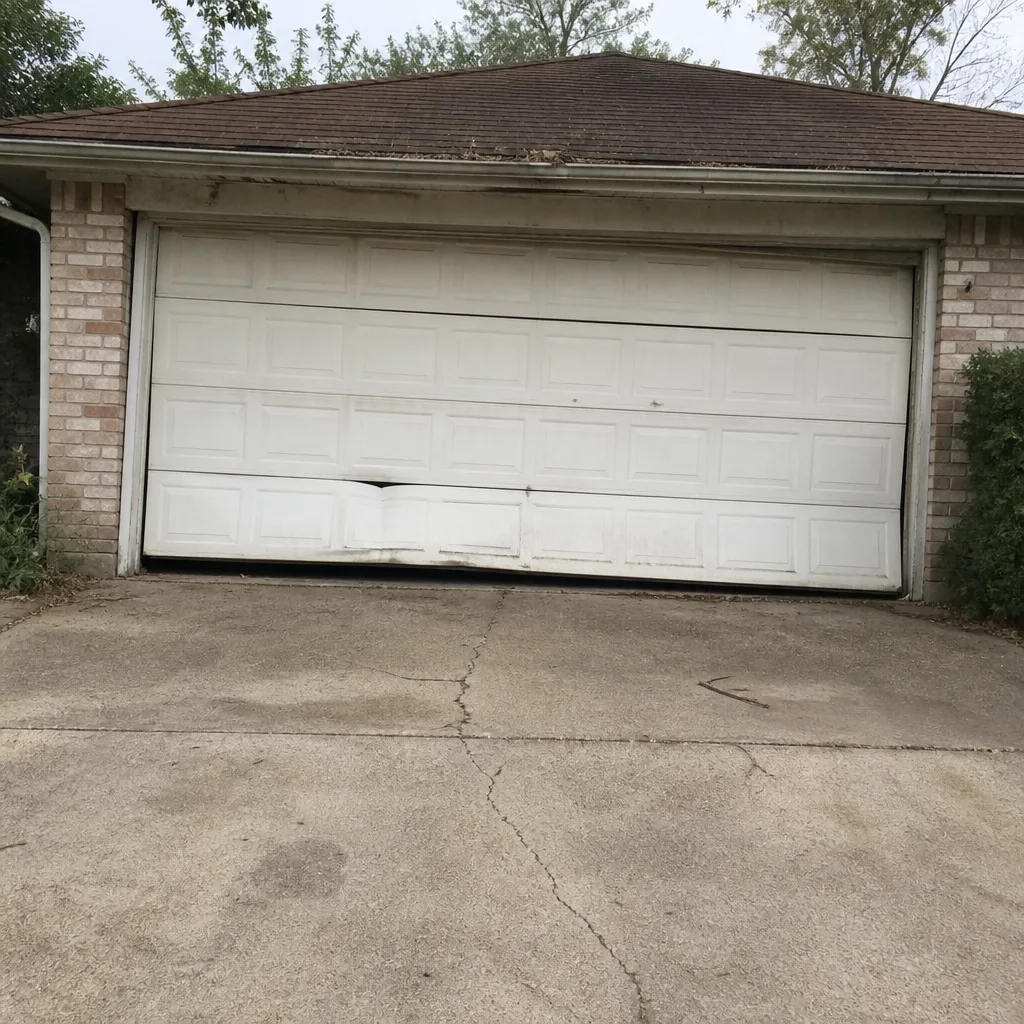
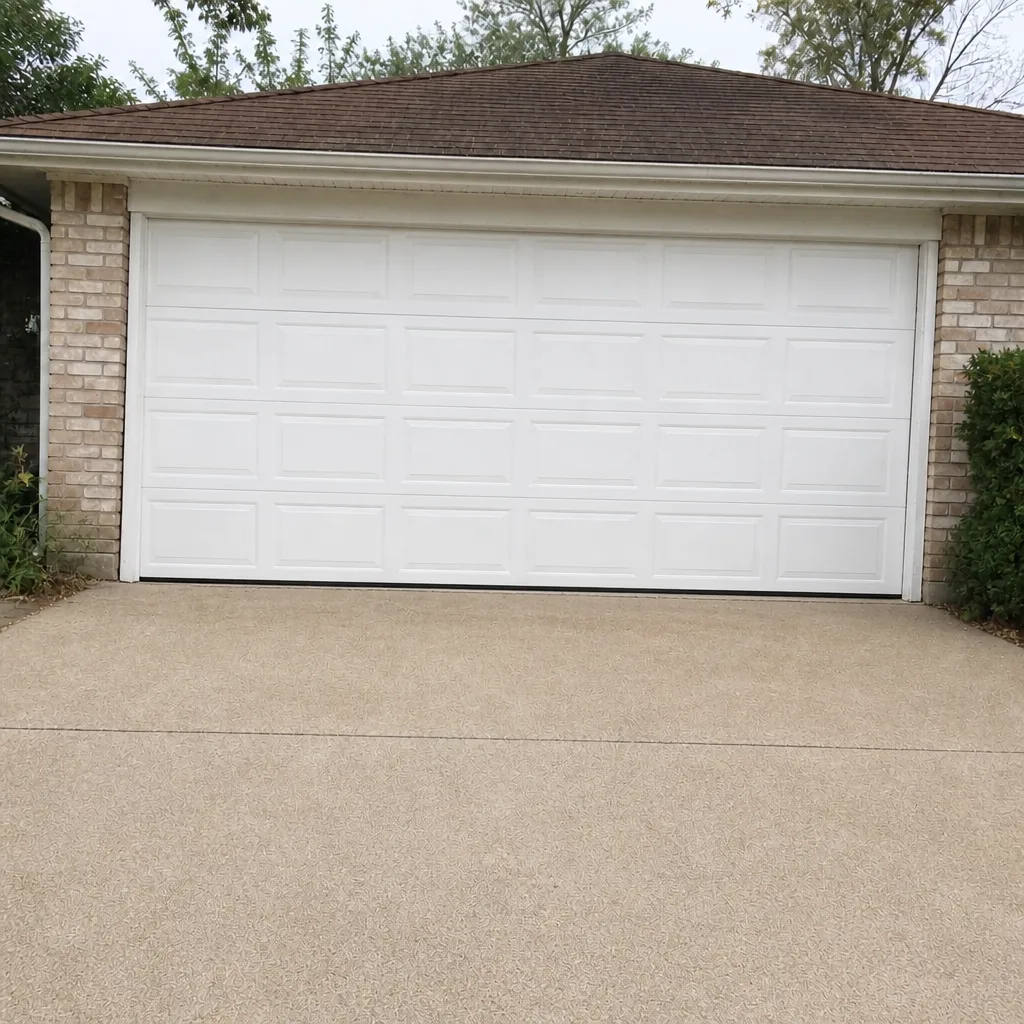
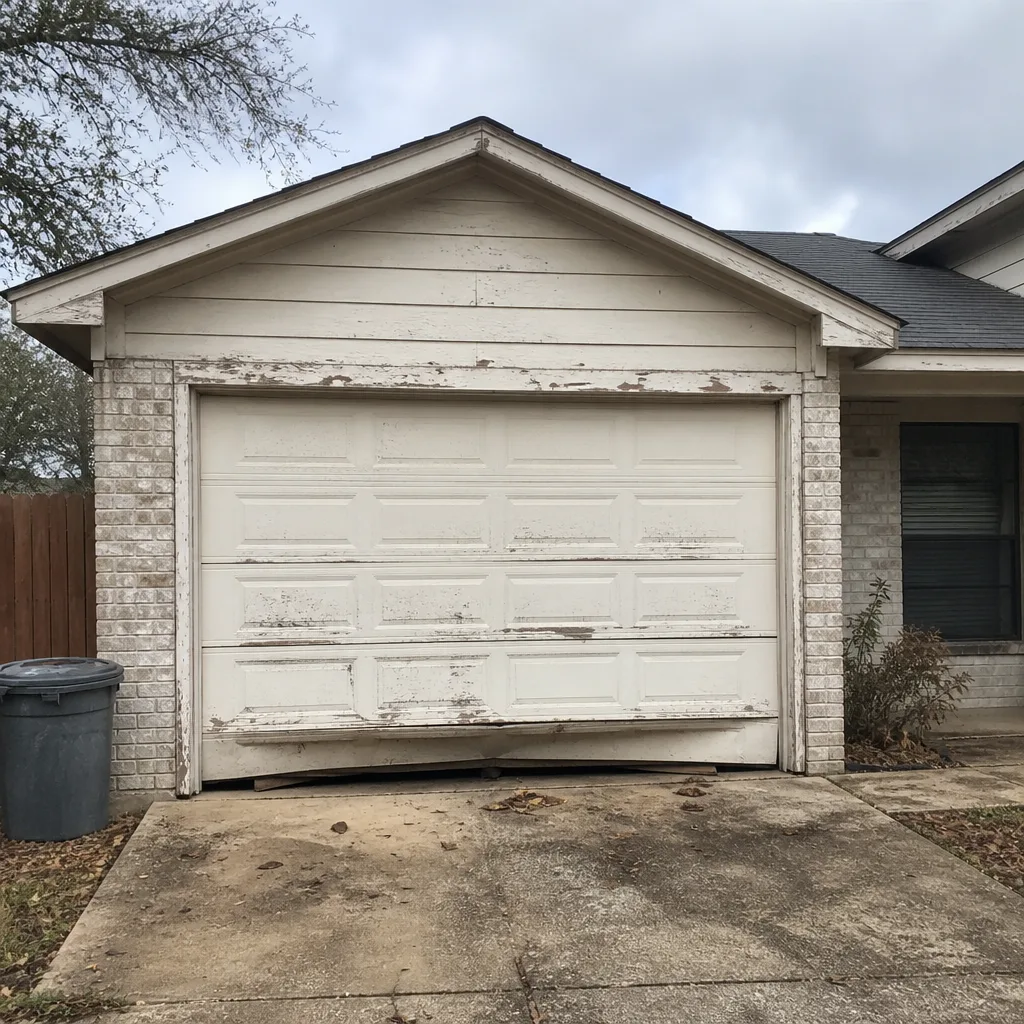
See the difference
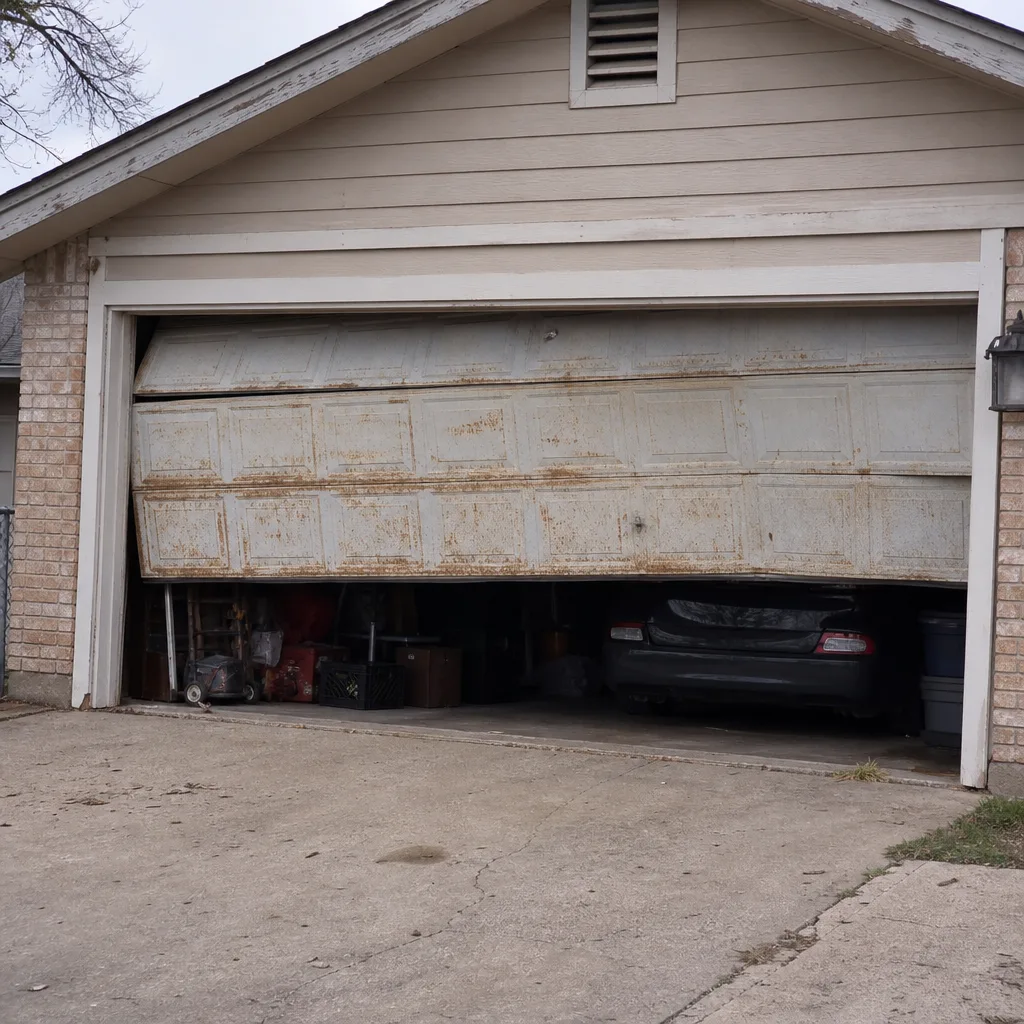 Before
 After
 Before
 After
 Before
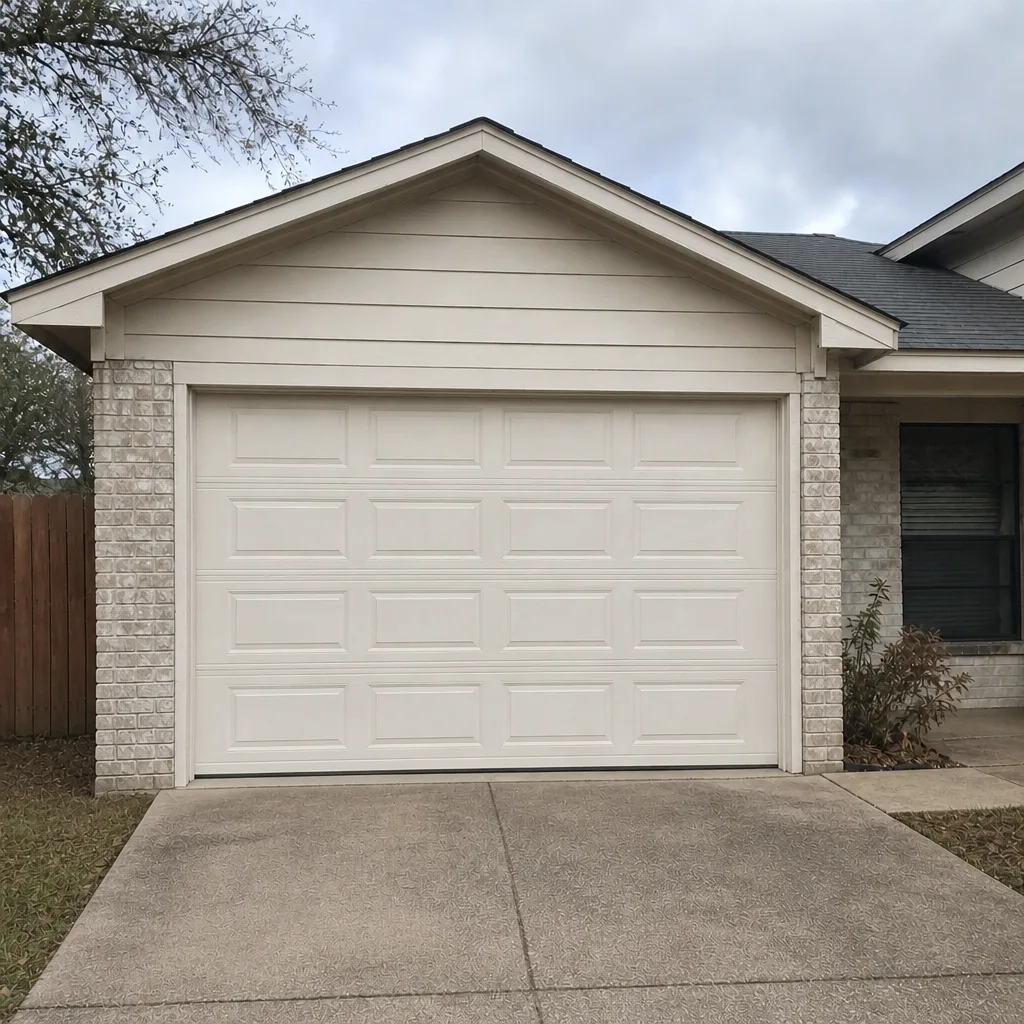 After
When to Call a Professional
Some garage door problems are slow and can wait for a scheduled estimate. Others shouldn’t. Call a professional when a door is stuck open and can’t be secured, when a spring or cable has visibly failed, when the opener runs but the door doesn’t move, or when the door reverses unexpectedly. Those are failure scenarios, not maintenance items, and the safe path is a trained technician. Torsion springs and cables are under high tension and can cause severe injury if handled without the right tools and procedure. Don’t try to wind or release a spring yourself.
For routine issues, a written estimate is the right first step. Bluestone Garage Door Repair offers free estimates in College Station, and we handle repair, opener work, and installation in-house. Call (888) 874-4281. We answer 24/7. Fast dispatch from 7am to 7pm, Sunday through Friday.
Frequently Asked Questions
Garage door repair in College Station typically runs on a per-job written estimate, and the price is agreed before work starts. A common repair like a spring or opener issue is quoted as a specific line item, and the written estimate sets the final price. Call (888) 874-4281 for an exact quote – estimates are free.
No. Texas doesn’t require a state trade license for residential garage door work, which means the burden of vetting a contractor falls on you. Ask for proof of general liability insurance, brand familiarity, and a written estimate before any work begins. Those three checks do more to protect you than a license number would. Call (888) 874-4281 and we’ll walk you through what we can verify.
For repair work, same-day service is often available when scheduling allows, and fast dispatch runs from 7am to 7pm, Sunday through Friday. We answer 24/7, and a call outside dispatch hours is booked into the next opening. Call (888) 874-4281 and we’ll tell you what we can do today.
The written estimate sets the price, and it’s agreed before any work starts. If something different turns out to be wrong, we tell you before we begin, not after. Call (888) 874-4281 for a free estimate you can compare line by line.
A garage door specialist is the safer choice for anything involving springs, cables, tracks, or opener logic boards. These are high-tension components and integrated systems that reward brand familiarity; a generalist diagnosing from a manual is a repeat-visit risk. Our technicians have up to 11 years of experience and are familiar with Clopay, Amarr, Wayne Dalton, Craftsman, and four other major brands. Call (888) 874-4281.
We’re insured and bonded, and we’ll provide proof of insurance on request before work begins. Ask for it from any contractor you consider; a company that won’t send a certificate is passing risk to you. Call (888) 874-4281 for a free estimate.
The Bottom Line
The vetting you do before you hire matters more in College Station than the license number that doesn’t exist. Ask about insurance, brand familiarity, the written estimate, and the spring warranty. Read the quote line by line, and walk away from anything vague. A specialist who knows your Clopay, Amarr, or Wayne Dalton door will answer those questions quickly and in writing. If a door or opener needs work, we handle repair, opener service, and installation under one company. You’re dealing with College Station, and the same accountability question applies to every call.
Ready to compare a written estimate? Call (888) 874-4281 for a free estimate from Bluestone Garage Door Repair. We answer 24/7. Fast dispatch from 7am to 7pm, Sunday through Friday. We’re closed Saturday; if a door fails on a Saturday, call and we’ll book you for Sunday. Same-day service for repairs when scheduling allows. The price is quoted and agreed before any work starts.
Written by the team at Bluestone Garage Door Repair.