
Last updated November 15, 2026
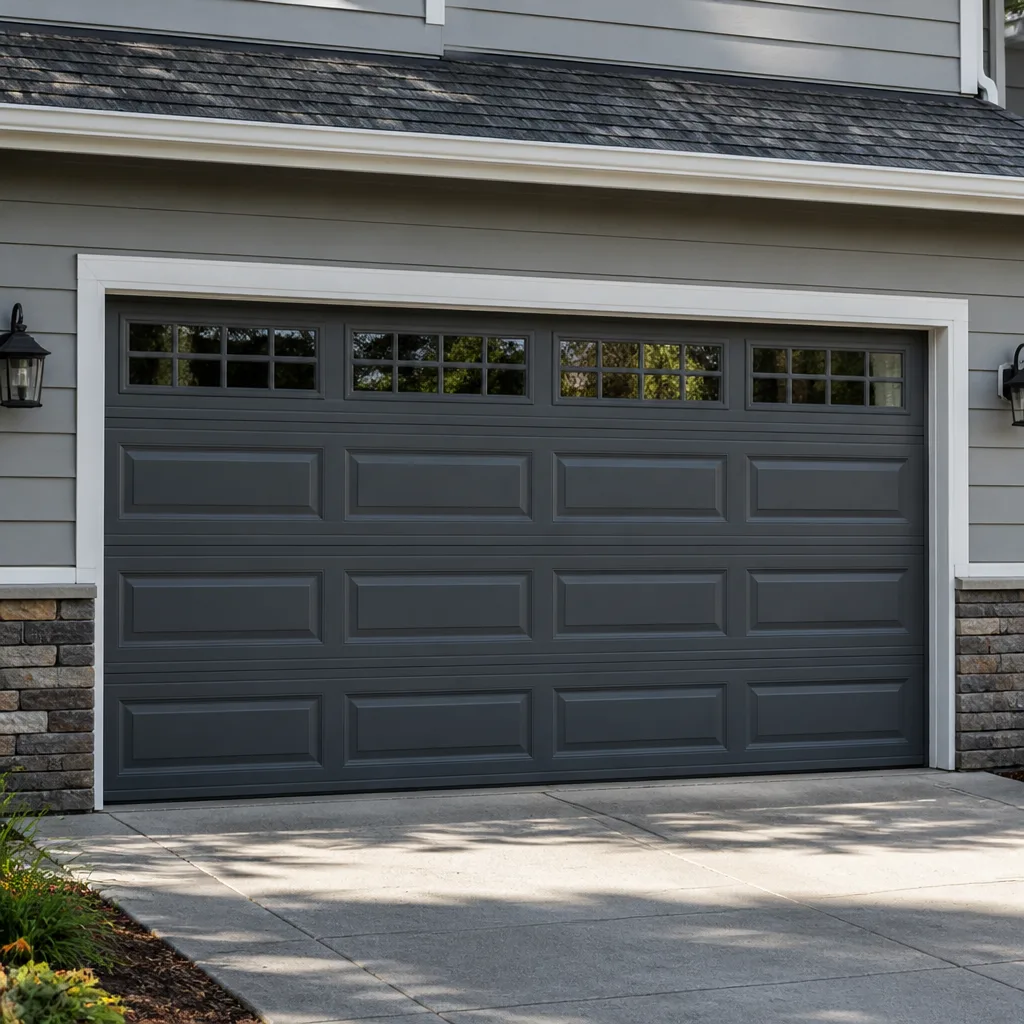 Raised-panel steel
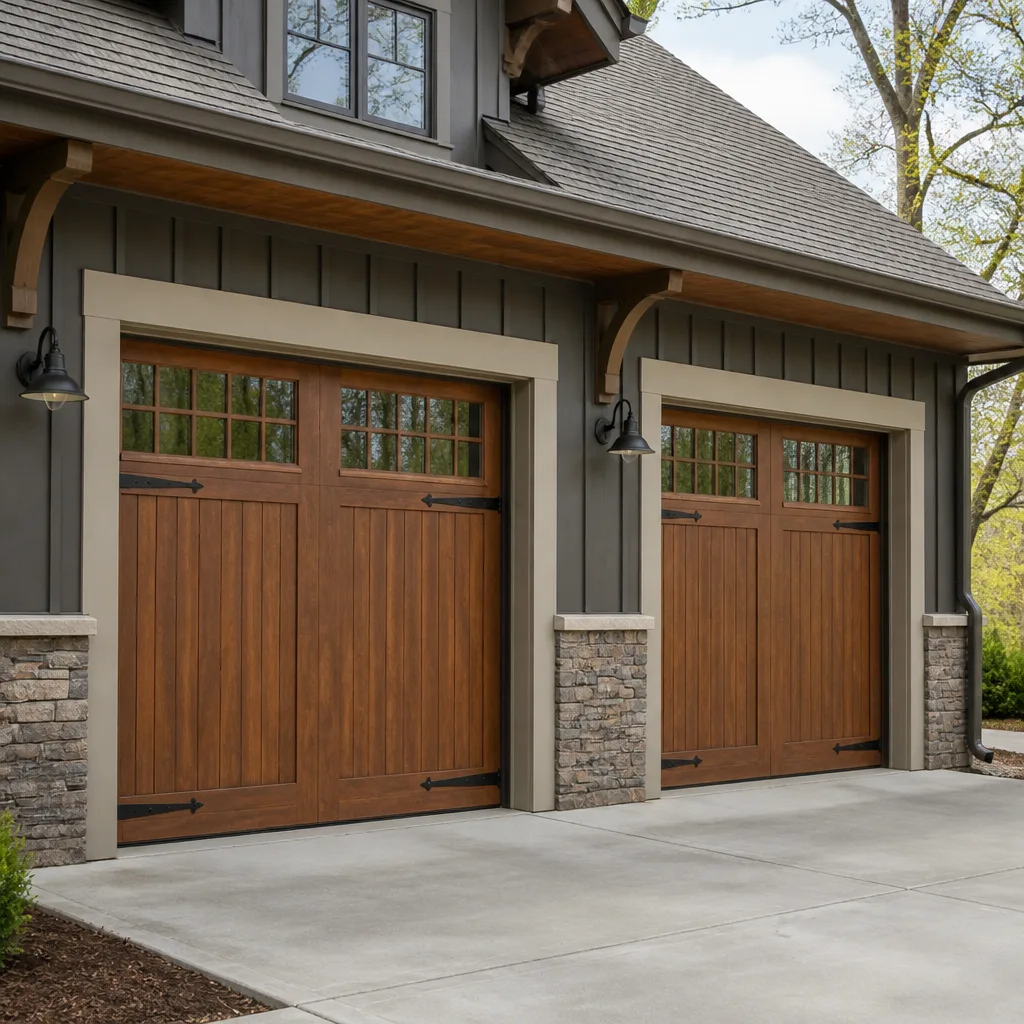 Carriage house
 Modern flush
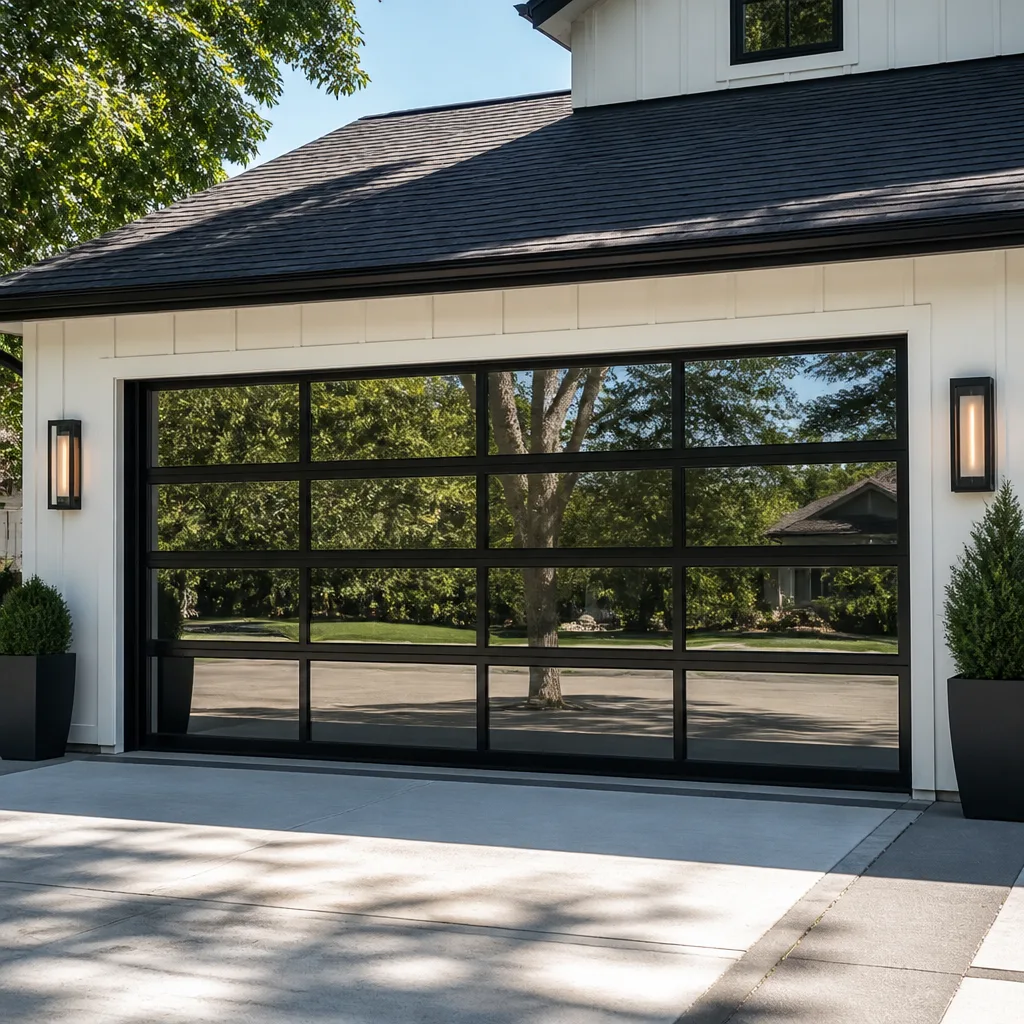 Full-view glass
 LiftMaster openers
 Chamberlain openers
Full 25-point door and opener safety check with every visit - springs, cables, rollers, tracks, and your LiftMaster or Chamberlain opener included
You get a price before we start. It does not change when the pro arrives.
Get your free estimateGarage Door Repair Troubleshooting in College Station: Common Problems and How to Fix Them
Most homeowners troubleshoot their garage door by chasing the symptom. The door reverses, so they fiddle with the close limit. The door strains, so they assume the opener is dying. That approach fails because symptoms cross systems: a binding door and a dead opener can produce the same sluggish motion, and a door that reverses before closing is blamed on the opener when the real fault sits in a photo-eye. By the time you’ve guessed at three parts, you’ve spent a weekend and still don’t know what’s wrong. This guide gives College Station homeowners a diagnostic framework instead: five mechanical categories, what lives in each, how to tell them apart safely, and where the hard line is between what you can inspect and what you should never touch.
Styles & brands we work with
- Raised-panel steel
- Carriage house
- Modern flush
- Full-view glass
- LiftMaster openers
- Chamberlain openers
Quick Answer
Garage door problems in College Station almost always trace back to one of five systems: the spring and cable assembly, the opener and drive, the track and rollers, the sensor and limit settings, or the panels and bottom seal. Locate the system before chasing the symptom. If you find a broken spring, a snapped or slack cable, or a track bent more than about a quarter inch, stop and call a technician: those are dangerous to touch and the door stays closed until the repair is done. For everything else, the five-category framework below will tell you what you’re looking at.
Table of Contents
- The 5-System Diagnostic Framework: Locate the System Before the Symptom
- Safe to Inspect, Safe to Touch, Never Touch: The Spring Line
- Spring and Cable Problems
- Opener and Drive Problems: Why Error Codes Mislead
- Track and Roller Problems
- Sensor and Limit Problems
- Panel, Seal, and the College Station Humidity Factor
- The Stop Here Decision Tree
The 5-System Diagnostic Framework: Locate the System Before the Symptom
Every garage door, whether it’s a steel Clopay two-car door or an older wood composite on a Raynor opener, is the same five subsystems interacting under load. When something goes wrong, the symptom hops between them. A swollen panel that binds in its track drags on the opener and mimics motor failure. A drifted limit switch makes a perfectly healthy door reverse. If you learn what belongs to each system, you stop guessing and start narrowing.
Here’s the framework:
- Spring system. Torsion springs on the header above the door, extension springs along the sides, and the cables that connect them to the bottom bracket. This system carries the door’s weight. Failures here show up as a door that won’t lift, lifts a few inches and stops, or slams down hard.
- Opener and drive. The motor, the logic board, the gear and sprocket, the belt, chain or screw rail. Failures here mean the door is fine but the motor runs without moving it, moves it partway, or doesn’t respond at all.
- Track and rollers. The vertical and horizontal tracks, the hinges, and the nylon or steel rollers. Failures here show up as scraping, jumping, binding, or a door that travels crookedly.
- Sensor and limit settings. The two photo-eyes at the bottom of the track, the close limit, the open limit, and the force adjustment. Failures here mean the door reverses before closing, opens only partway, or stops on nothing.
- Panels and bottom seal. The door sections themselves, the hinges between them, the bottom rubber seal and the weatherstripping. Failures here show up as drafts, water intrusion, or a section that drags against the frame.
A door that won’t lift at all points you to system one or two. A door that runs but strains points you to three or five. A door that reverses points you to four, almost every time. Write down which system reacts wrong before you touch anything.
Safe to Inspect, Safe to Touch, Never Touch: The Spring Line
Homeowners ask us constantly what they can safely do themselves. The honest answer is that there are three tiers, and the line between the second and third is hard. It isn’t about skill. It’s about stored energy.
Safe to inspect from the ground
Look at the door’s condition without climbing. Is the door level at the bottom? Are the panels visibly bent or bowed? Are the rollers seated in the track, or is one popped out? Does the bottom seal meet the floor? Are the photo-eyes both lit? These checks use nothing but your eyes, and they’ll already point you to one of the five systems.
Safe to touch with the power off
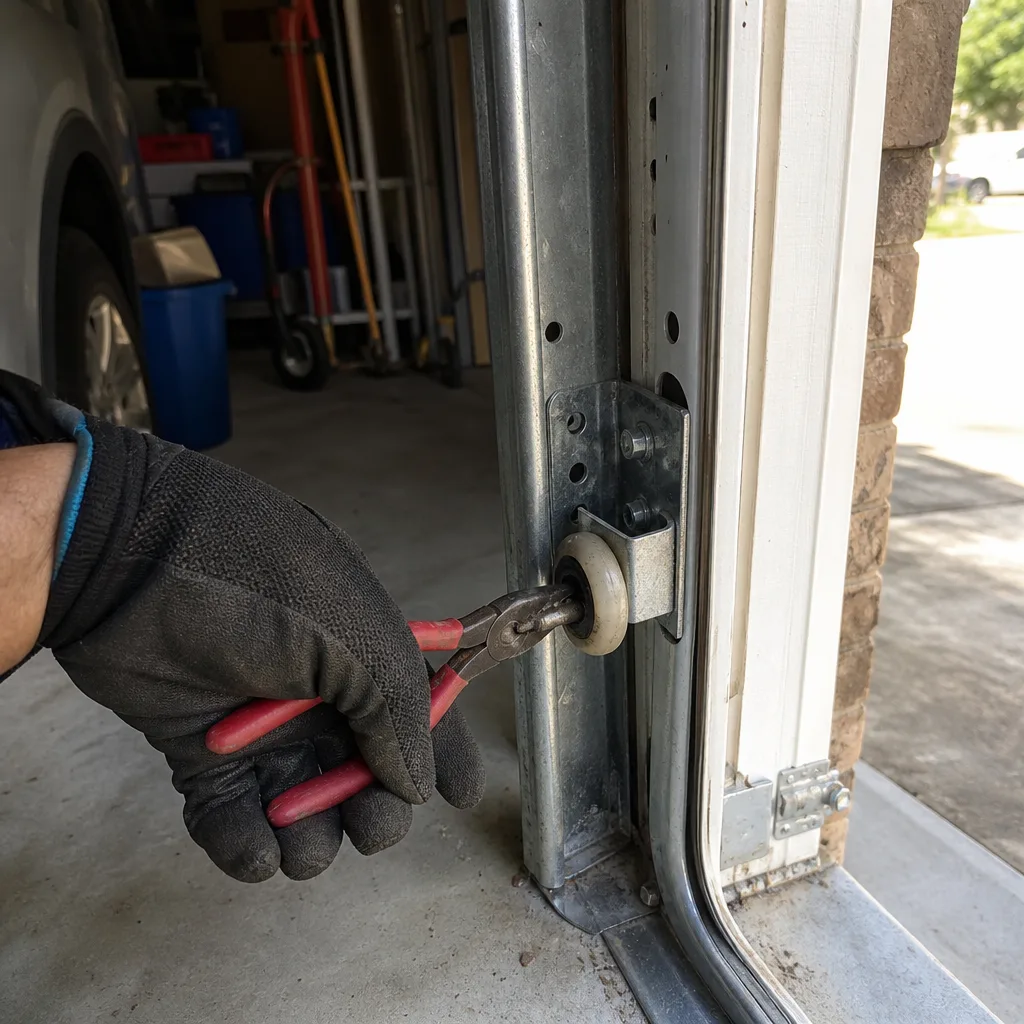
With the opener unplugged, you can safely wipe the tracks with a rag, check that the wall-mounted push button works, test the manual release (with the door fully closed and the springs intact), and clear obstructions from the photo-eye lenses. If the door lifts easily by hand when disconnected from the opener and stays put at mid-height, the springs are doing their job. If it feels heavy, springs or cables are the problem and you’re done inspecting.
Never touch
Torsion springs hold their tension through a winding bar and set screws, and the energy stored in a wound torsion spring is enough to cause serious injury if you don’t know exactly what you’re doing. Extension springs and their cables are under similar tension, and a snapped cable can whip. Never wind a spring, never disconnect a bottom bracket, never cut a cable, never try to bend a track straight while the door is attached, and never pull a stuck door by the bottom section. Our technicians have up to 11 years of experience precisely because this work is the part of the trade that takes training. The single most common mistake we see from homeowners isn’t choosing the wrong part; it’s deciding to touch the spring.
Spring and Cable Problems
Spring failure is the most common mechanical breakdown on any residential garage door, and it typically doesn’t announce itself. A torsion spring snaps with a loud pop and the door stays down. An extension spring can break with a bang that sounds like a gunshot and the door suddenly weighs two hundred pounds. On any door with damaged spring tension, the door stays down until a technician arrives.
What spring and cable failure looks like:
- Door won’t lift at all, or lifts a few inches under motor power and then stalls. The opener is straining against a door it can no longer lift.
- A visible gap in the torsion spring above the door, or two spring halves hanging apart.
- A slack, hanging, or visibly kinked cable along either side of the door.
- Door slams down hard with no cushion at the bottom.
- Loud bang followed by a door that won’t open: classic spring snap.
Springs are rated in cycles, not years. A daily-driver door on a College Station home cycles four times a day, and the standard spring is cycled out somewhere around ten thousand cycles. Doors that run only once or twice a day can last much longer than that, so comparing springs by age is misleading. Springs should be replaced in matched pairs when they’re on the same torsion bar, since a new spring paired with an old one will fail prematurely. Cost at a glance: spring repair runs from a range that reflects a single spring, and a matched pair costs about double.
If you suspect the spring system, call before you touch anything. A garage door repair visit is the right call for a broken spring, not a weekend project.
Opener and Drive Problems: Why Error Codes Mislead
A modern LiftMaster or Chamberlain unit throws a code when something goes wrong, and homeowners often read that code as a diagnosis. It isn’t. The error code is a starting point, not an answer, and the codes commonly misattribute. A “logic board failure” code can appear when the real problem is a binding door loading the motor; a “sensor error” code can appear when the real problem is a damper misalignment in the housing. Chasing the code without finding the system is why so many homeowners install a new opener and find the door still doesn’t work.
What opener failures look like:
- Motor runs, door doesn’t move. Usually a stripped gear, a snapped belt, or a broken trolley. Diagnostics start at the drive, not the board.
- Door opens a few inches and stops. Could be the travel limit, could be binding from a swollen panel, could be a failed sprocket. Load counts matter here.
- No response to any remote. First check the wall button. If the wall button works and the remote doesn’t, you’re looking at a remote or logic receiver issue, not a drive issue.
- Opener clicks and hums but doesn’t move the door. Nearly always a drive component, not the logic board.
Openers on older doors need dedicated attention, and this is where a contractor who only sells doors falls short. Opener work on a Raynor or a Craftsman system is not the same job as a new opener on a modern Chamberlain. Our technicians service LiftMaster, Chamberlain, Genie, Craftsman, Raynor and four other major brands, so when the call is for a garage door opener repair we test the drive, the board, and the force setting together instead of swapping boxes until the door cooperates.
Two things to keep in mind. First, if the door itself is binding, no opener replacement will fix it, and you’ll burn through a new motor in a few months. Second, if the opener’s force adjustment has been raised repeatedly to compensate for a straining door, the correct fix is to correct the drag at the door, then reset the opener to factory force.
Track and Roller Problems
Track and roller problems masquerade as opener failures more than any other category. A door that jumps or shudders as it rises is usually a bent track or a worn roller, not a failing motor. The difference matters because replacing the opener costs far more than straightening a track or replacing a set of rollers.
The most common track and roller symptoms:
- Grinding or scraping as the door moves. Usually a roller that’s popped out of the track or a hinge that’s bent.
- Door travels crookedly, with one side ahead of the other. Indicates a bent vertical track or a broken roller.
- Door jumps as it approaches the top. Typically the horizontal track or a worn roller.
- Visible dents or bends in the track. A dent of more than about a quarter inch is enough to jam a roller.
Minor alignment issues you can handle by loosening a track bracket by half a turn and tapping the track back into alignment. Anything more than that isn’t a DIY job. A severely bent track has to be replaced, not straightened, and it has to be replaced with the door supported. That’s a technician job on a supported door, not a homeowner job on a live one.
Rollers wear differently here than in colder climates because College Station humidity stresses the nylon bearing and can cause the roller shaft to rust. Steel rollers are common on older doors and tend to flat-spot; nylon rollers are quieter and longer-lived, but they crack in the cold when they’re worn and then jam. If your rollers are noisy, chalky, or have visible flat spots, replace them as a set.
Sensor and Limit Problems
The safety sensors at the bottom of the door are the single most common cause of “the door reverses before it closes.” Two small photo-eyes sit on either side of the opening, and if they aren’t aligned, or the lens is dirty, or the wiring has slipped, the opener reads an obstruction and sends the door back up. The most misleading s
See the difference
 Before
 After
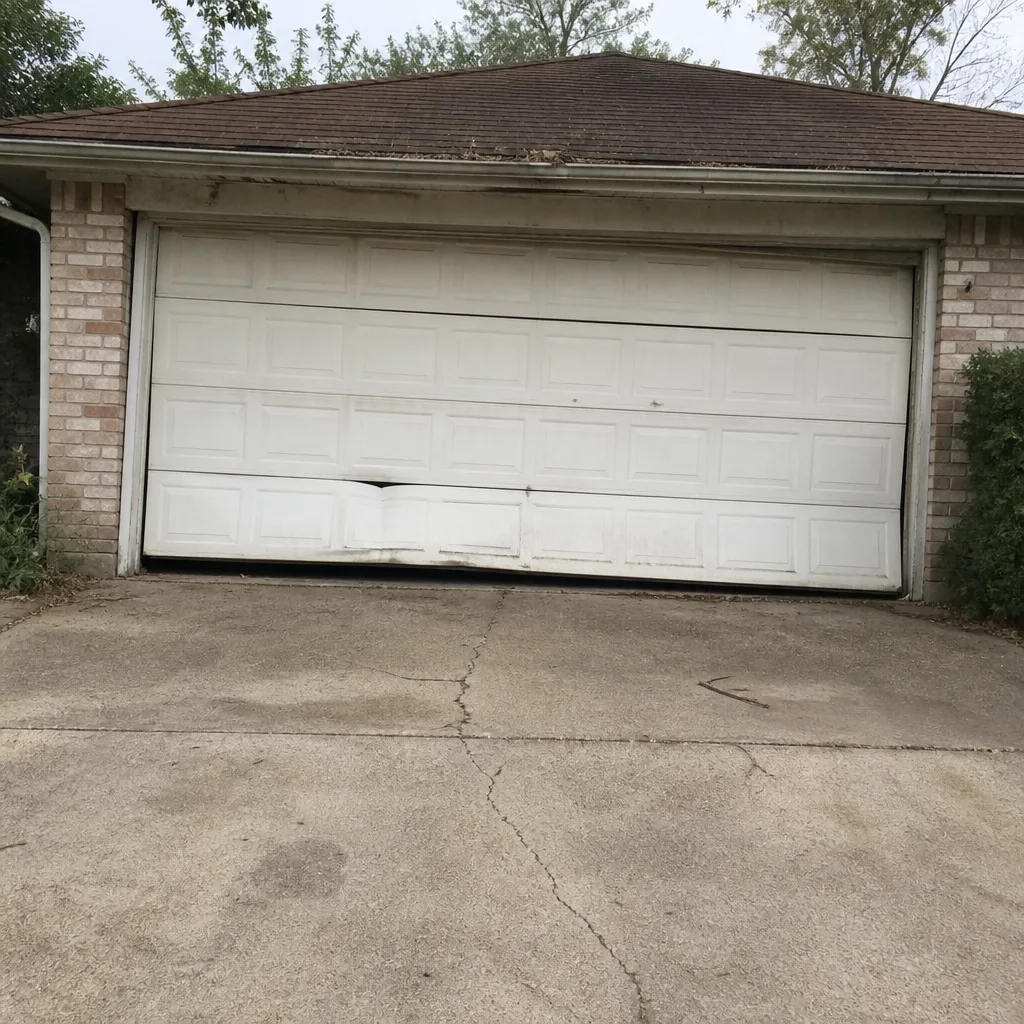 Before
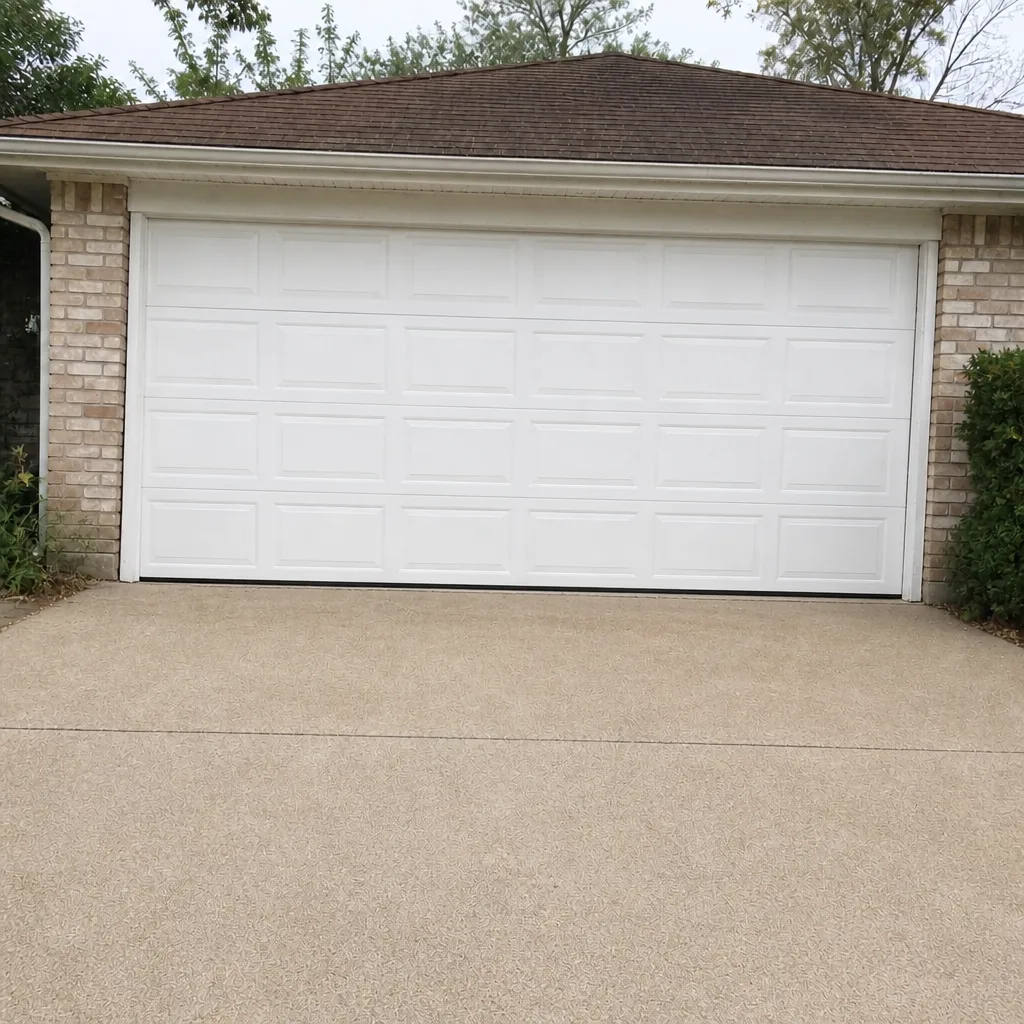 After
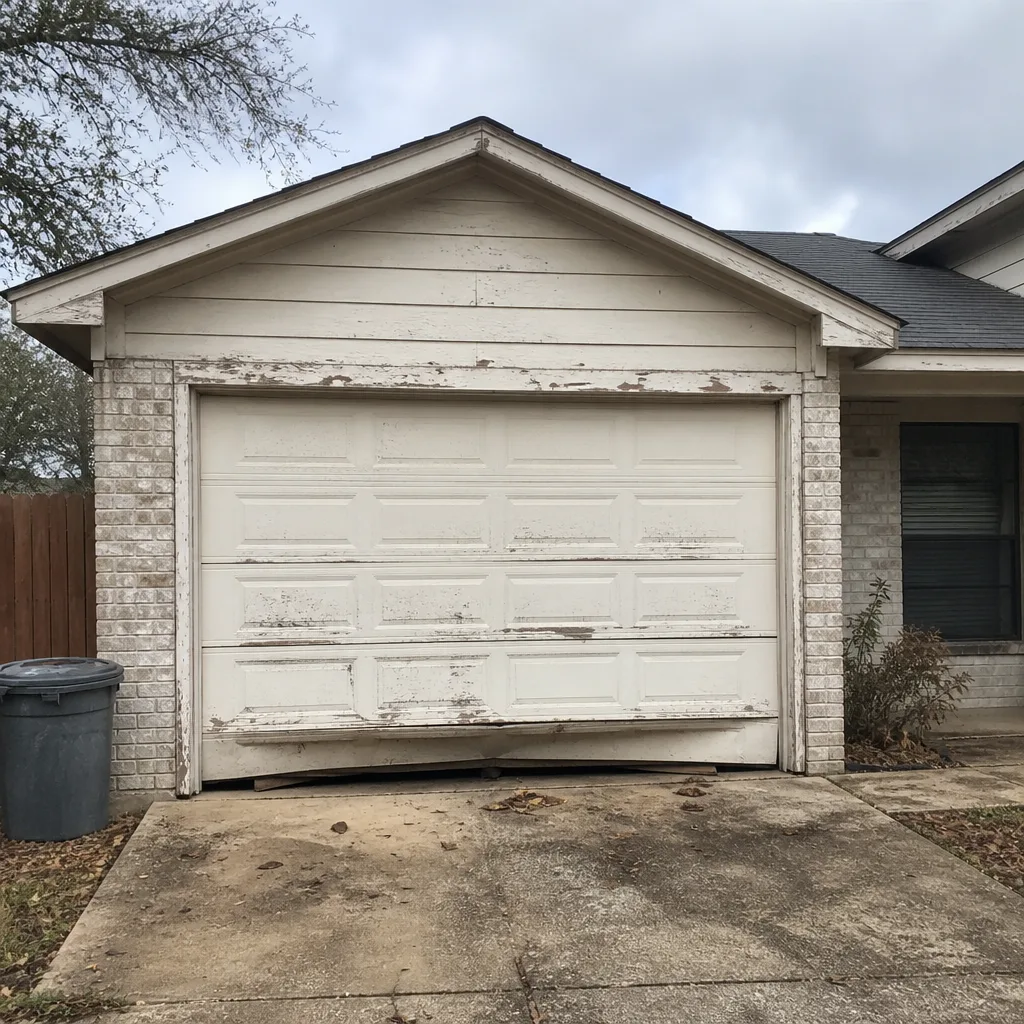 Before
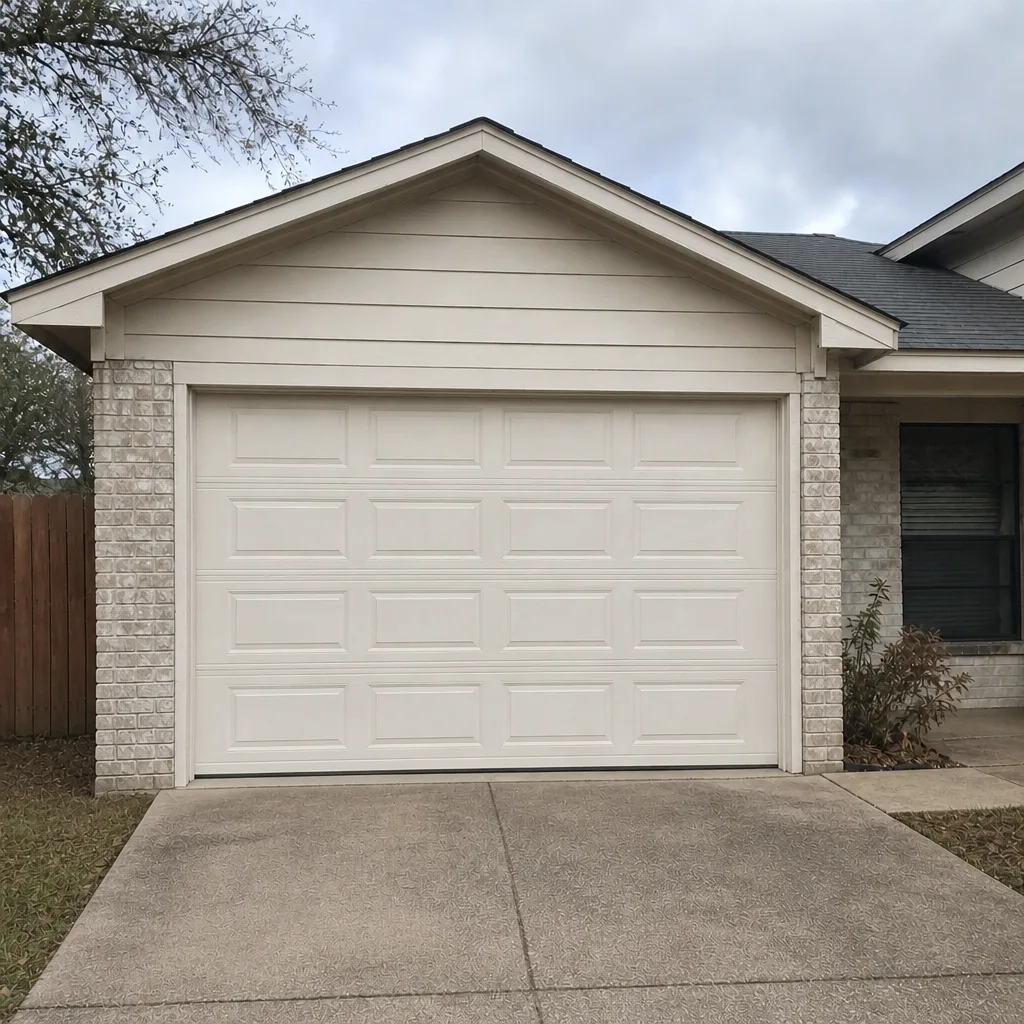 After