
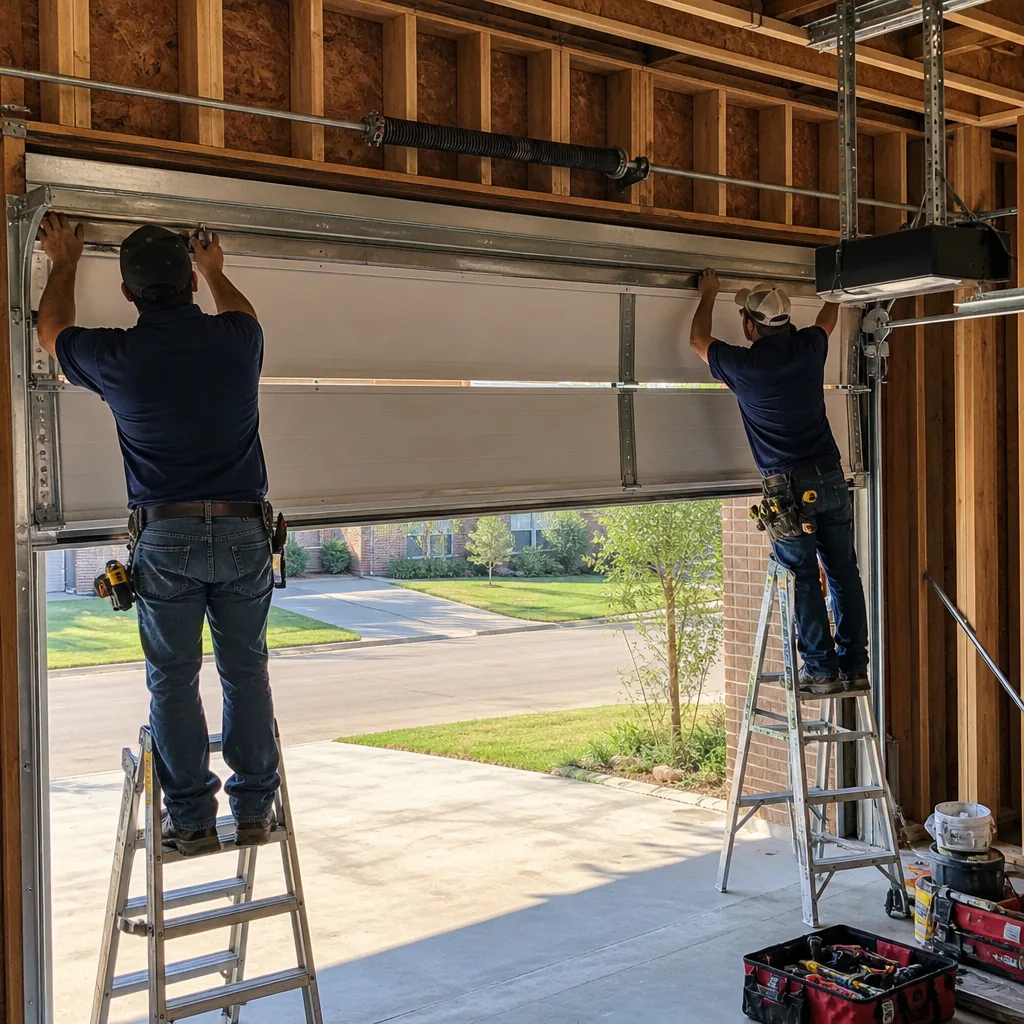
Last updated November 15, 2026
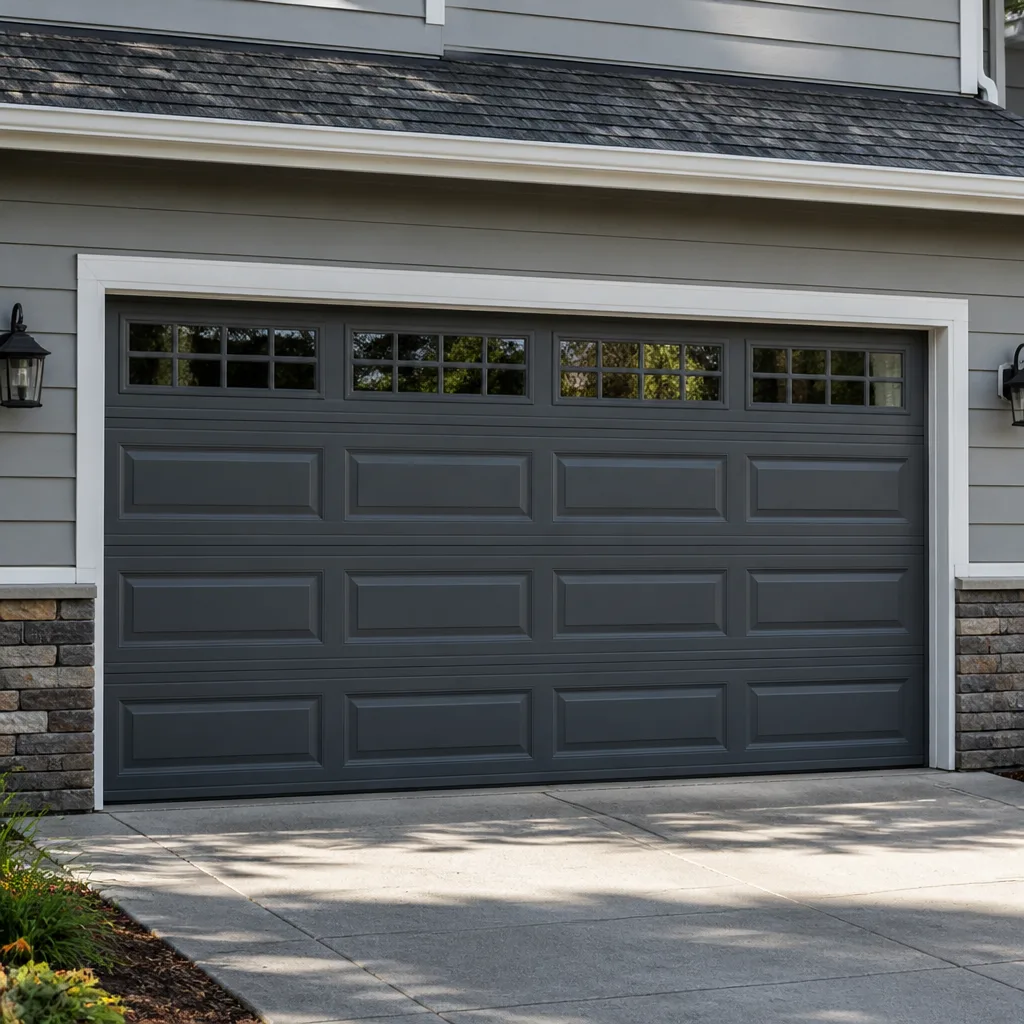 Raised-panel steel
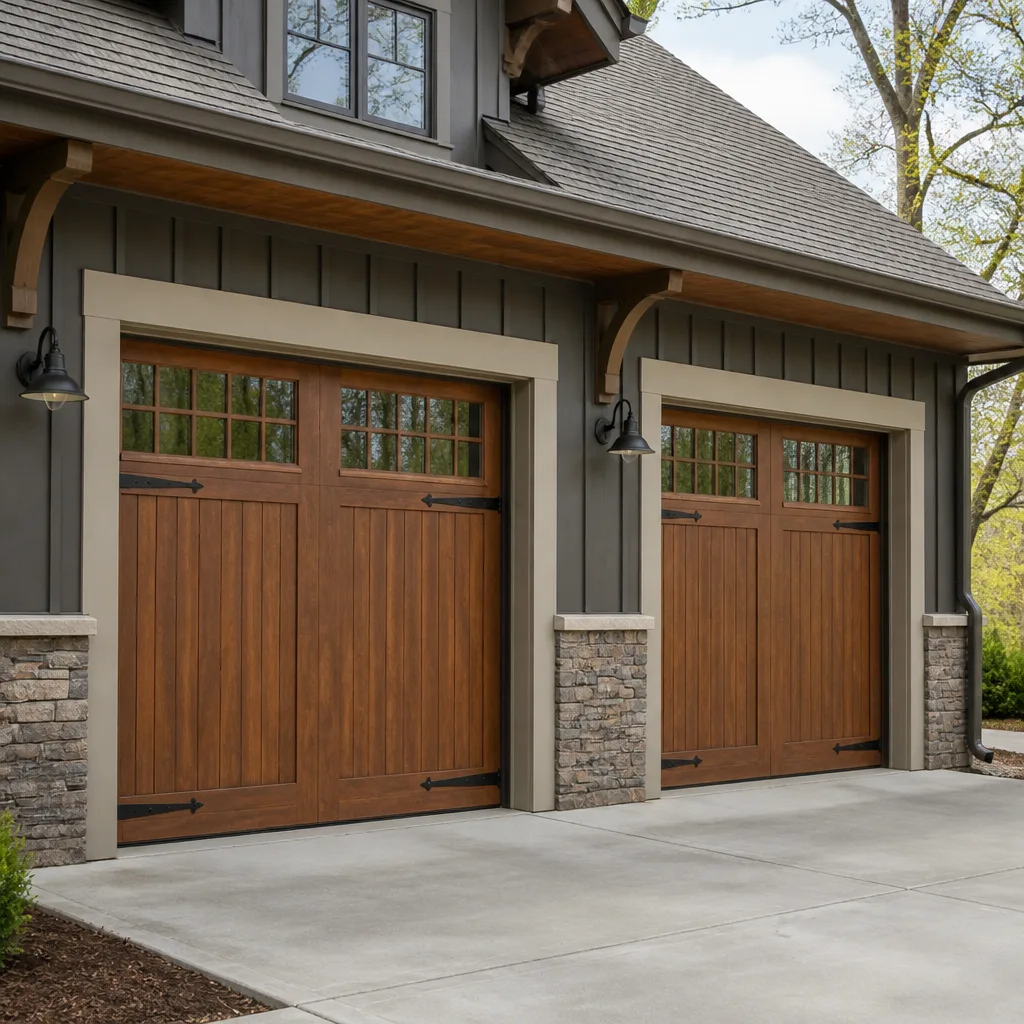 Carriage house
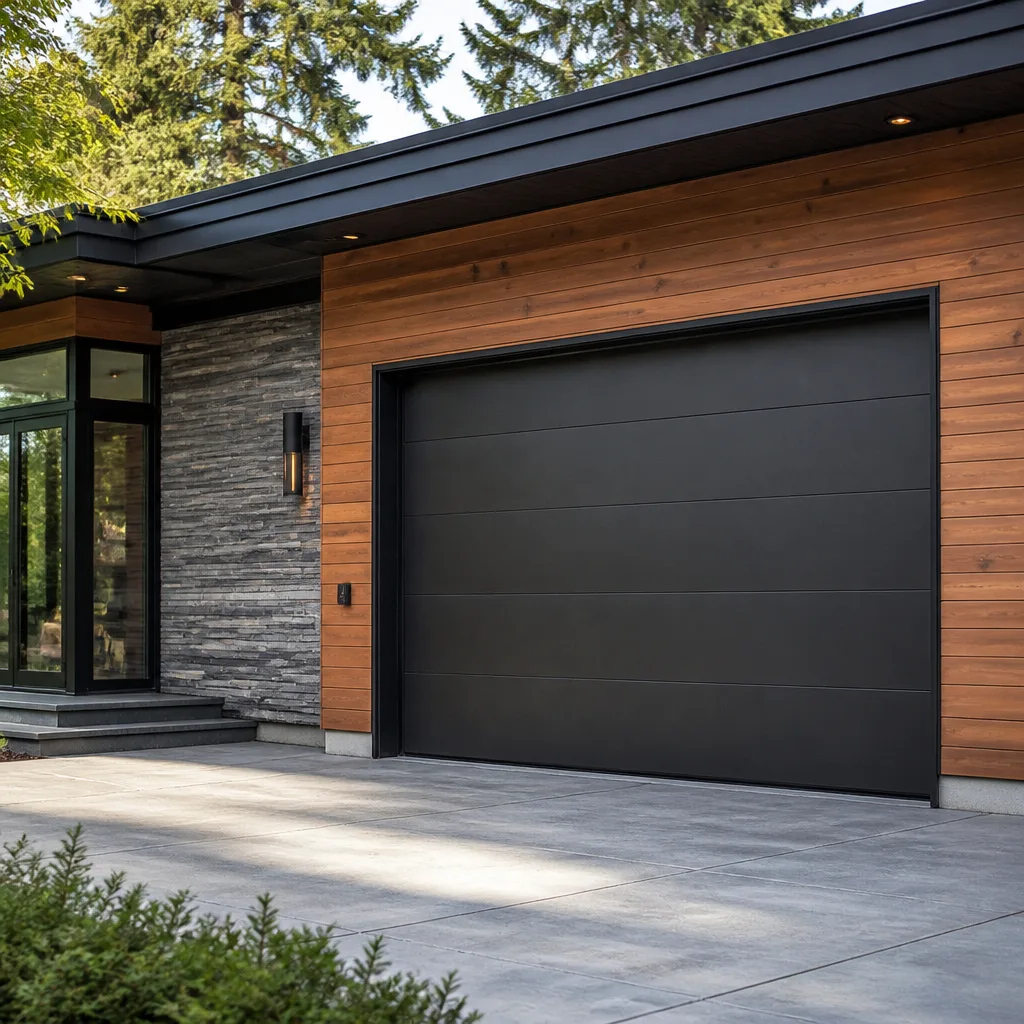 Modern flush
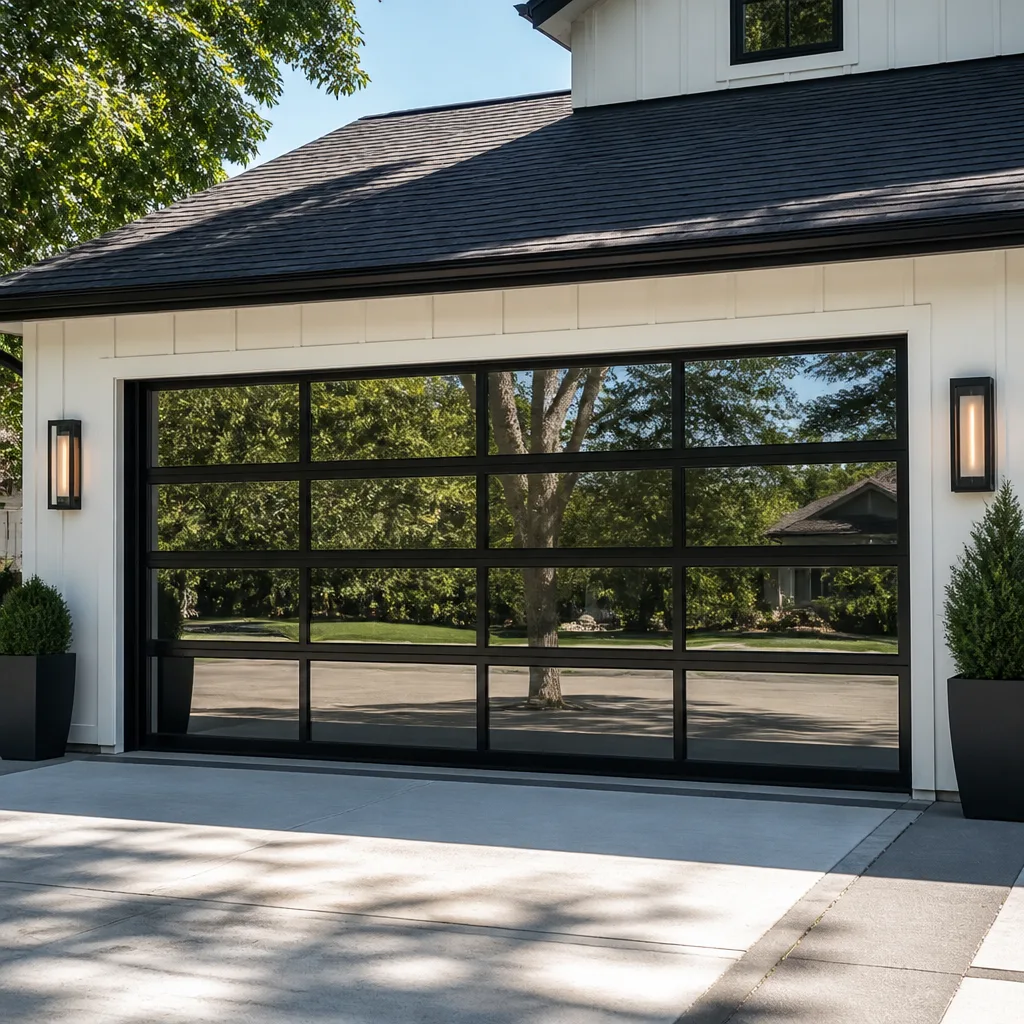 Full-view glass
 LiftMaster openers
 Chamberlain openers
Full 25-point door and opener safety check with every visit - springs, cables, rollers, tracks, and your LiftMaster or Chamberlain opener included
You get a price before we start. It does not change when the pro arrives.
Get your free estimateGarage Door Repair Maintenance Schedule: What to Do and When
Spraying WD-40 on your garage door tracks is one of the most common maintenance moves homeowners make, and it’s the wrong product in the wrong place. That thin solvent oil attracts grit, and grit on a steel track grinds your rollers down faster than doing nothing at all would. The bigger problem is what that habit reveals: most people treat garage door care as one vague chore instead of a schedule with real intervals. This guide lays out a maintenance calendar built around mechanical reality. You’ll learn what deserves five minutes a month, what needs a real test every few months, what belongs to a professional once a year, and which lubricant goes on which part. We’ll keep the College Station climate in view, since our heat changes the timing on a few of these tasks.
Quick Answer
A garage door needs three tiers of maintenance: a five-minute visual check once a month, mechanical tests (balance and force) every three months, and one professional service visit a year. Lubricate springs, hinges, and rollers with white lithium grease, use silicone spray on weatherstripping and the bottom seal, and keep oil off the tracks entirely. In College Station, add a bottom-seal and weatherstripping inspection in late spring, before summer heat makes old rubber bind or tear.
Styles & brands we work with
- Raised-panel steel
- Carriage house
- Modern flush
- Full-view glass
- LiftMaster openers
- Chamberlain openers
Table of Contents
- Tier One: The Monthly Five-Minute Visual Check
- Tier Two: The Quarterly Mechanical Tests
- The Right Lubricant for Each Component
- How Long Parts Last, and When to Expect Replacement
- The Annual Professional Service Visit
- A College Station Maintenance Calendar
- Opener and Smart-Drive Maintenance
- Common Mistakes to Avoid
Tier One: The Monthly Five-Minute Visual Check
Once a month, walk up to your closed door and look at it the way you’d look at a tire before a long drive. No tools, no ladder, no grease. You’re checking for changes, not fixing anything yet. This is the tier most people skip, and it’s the one that catches problems while they’re still cheap.
Start with the door itself. Look across the panels for dents, separation at the seams, or a gap where a section meets the one beside it. On a steel door like a Clopay or Amarr model, panel seams that start to spread tell you the door is flexing more than it should, which usually points back to worn rollers or a hinge that’s pulling loose. Next, look up at the springs. You don’t need to touch them. A torsion spring that has broken will show a clean gap in the coil, and a door with a snapped spring usually won’t lift at all.
Then look down and to the sides. Check the bottom seal for cracks, missing chunks, or a spot where it’s pulled away from the door. Scan the tracks for anything that doesn’t belong: leaves, grit, a small toy, washers that worked loose. Finally, listen. Open and close the door once and pay attention to sound. A door that has started to squeak, scrape, or thump is telling you something in the hardware has changed since last month.
Nothing on this list requires a repair. It requires a note. If you spot a broken spring, a bent track, or a cable that looks frayed, stop operating the door and call a professional. Those three parts are under serious tension and are not homeowner repairs. Everything we’ve listed here, you can check in College Station on a Saturday morning if you’d like, though our phone line stays open every day of the week regardless.
Tier Two: The Quarterly Mechanical Tests
Every three months, you run two tests that actually measure how the door is behaving: the balance test and the force resistance test. Together they take about ten minutes and they tell you whether the springs and the opener are still doing their jobs or just covering for each other.
The Balance Test
Close the door, then pull the emergency release cord to disconnect the opener. Lift the door by hand to about halfway up and hold it at the mid-point. Let go. A healthy door stays where you put it, or drifts less than two inches. A door that drops or rises more than two inches has spring tension that’s already degraded. It isn’t “almost fine.” That drift means the springs are no longer counterbalancing the door’s weight, and the opener has been quietly absorbing the difference. Reconnect the opener before you use the door again, and get the springs looked at.
The Force Resistance Test
With the door connected and fully open, lay a piece of wood or a rolled-up towel flat on the ground in the door’s path and press the close button. A correctly adjusted opener reverses when it meets the object. If the door keeps pushing down, the force setting is too high and needs to be dialed back. Genie and LiftMaster openers both have force adjustment controls, though the location differs by model, and a technician can set this correctly in a few minutes. This test is worth running because a door that won’t reverse is a safety problem, not a convenience one.
Run both tests on the same day each quarter. If either fails, that’s your signal to schedule garage door repair rather than wait for the door to fail on its own schedule.
The Right Lubricant for Each Component
Lubrication is where most DIY maintenance goes wrong, and it’s not because people are careless. It’s because “lubricate the garage door” gets treated as one instruction when it’s really four different instructions for four different materials.
- Springs and hinges: white lithium grease. Apply a light coat to the torsion spring coils and to the pivot points of each hinge. Lithium grease stays where you put it and holds up to heat.
- Rollers: a small amount of white lithium grease on the roller bearings, not the roller surface. Nylon rollers need very little; steel rollers benefit from a bit more.
- Weatherstripping and bottom seal: silicone spray, applied to a cloth and wiped along the rubber. Silicone keeps rubber pliable without degrading it, which matters in a hot climate.
- Tracks: nothing. This is the one people get wrong. Tracks should stay clean and dry. Wipe them down with a damp cloth if they collect grit, and leave them bare.
Lubricate twice a year, not monthly. More frequent greasing just collects dust, and dust in a hinge or a roller bearing turns into grit that wears the part faster. In our experience, over-lubrication is a more common problem than under-lubrication on garage doors in College Station, where fine dust from nearby construction and dry summer air finds its way into every moving joint. Once in spring and once in fall is the right rhythm.
Cables are a separate case. Never lubricate a cable. A cable that needs oil is a cable that’s already failing, and oiling it only hides the fraying you want to see.
How Long Parts Last, and When to Expect Replacement
A maintenance schedule is only useful if you know what each part’s working life actually is. Here’s the reference we use when a homeowner asks whether a part should be replaced proactively or just watched.
| Component | Typical Lifespan | What It Means for You |
|---|---|---|
| Torsion springs | 10,000 cycles | A cycle is one open-and-close. Two cycles a day gets you roughly 13 years; six cycles a day gets you under five. |
| Rollers | 10-15 years | Nylon rollers on a lightly used door last longer than steel on a busy one. Squealing or flat spots mean replace. |
| Cables | 8-12 years | A frayed cable is a safety concern, not a maintenance item. Replace at the first sign of strand separation. |
| Weatherstripping and bottom seal | 5-8 years in Texas heat | Heat is the primary enemy of rubber here. Inspect annually and expect replacement mid-decade. |
| Opener | 10-15 years | Motor wear shows up first as slower travel or intermittent response, not as sudden failure. |
The spring number is the one that surprises people. A torsion spring rated at 10,000 cycles sounds like a lot until you count cycles. A household where two cars come and go several times a day can chew through that rating faster than any calendar suggests. That’s why we ask about usage when a homeowner reports spring trouble, not just what year the door was installed. And when a spring does go, it’s replaced as a pair: the ranges supplied by our team are for one spring, and a matched pair costs roughly twice that, because replacing one spring and leaving its partner on the same drum is how you end up doing the job twice.
The Annual Professional Service Visit
Once a year, bring in a technician for the tasks that need training, the right tools, and a trained eye. This visit covers the parts where a mistake is genuinely dangerous and the adjustments that a homeowner can’t make accurately by feel.
- Spring tension check and adjustment. Torsion springs store enough force to cause serious injury. A technician measures and adjusts tension with the proper winding bars. This is the single most important reason for an annual visit.
- Cable inspection. Cables run under the same tension and need a close look for fraying, corrosion, or a drum that’s winding unevenly.
- Track alignment. A track that’s a few degrees out of plumb puts stress on every roller and hinge. Straightening it is a precision job.
- Roller and hinge assessment. The technician checks for wear that’s not obvious from the outside and replaces what’s close to failing.
- Opener force and travel adjustment. Confirms the opener’s safety reverse works and that the door opens and closes fully without straining the motor.
- Overall safety check. Photo-eye alignment, the door’s balance under load, and the condition of the bottom seal.
An annual visit also gives you a heads-up on parts that are near the end of their lifespan, which lets you schedule a replacement rather than react to a failure. If you’re managing a rental property in College Station, putting this visit on the same calendar every year keeps you ahead of tenant calls and lets you plan the expense. We can work with your insurer if a repair turns into something that needs documenting.
A College Station Maintenance Calendar
Here’s how the schedule maps across a year, with the timing adjusted for the College Station climate. The heat here is the local variable that matters most: it expands the door, dries out the weatherstripping and bottom seal, and puts stress on the opener’s motor in summer.
- Every month: the five-minute visual check. Look at panels, springs, tracks, and the bottom seal. Listen to the door once.
- Every three months: the balance test and the force resistance test.
- Spring (March-April): full lubrication of springs, hinges, and rollers; silicone on the weatherstripping.
- Late spring (May): inspect the bottom seal and weatherstripping before the summer heat pushes rubber expansion into tears or binding. This is the local timing that matters most.
- Summer: pay attention to opener strain. A motor working harder in the heat is telling you the springs are losing tension.
- Fall (October-November): second lubrication pass; check that sealing is intact before winter.
- Once a year: the professional service visit.
Residents in neighborhoods like Wellborn and Bryan-adjacent areas, and homeowners in College Station proper, tend to have the same set of issues come summer: a bottom seal that’s gone brittle, and an opener that’s laboring because a worn spring has shifted the load onto the motor. Getting the late-spring seal inspection on the calendar is the single highest-value local adjustment to this schedule. It’s also the easiest task to push to fall and forget about, which is why we mention it here.
Opener and Smart-Drive Maintenance
Your opener is the part of the system homeowners think about least, until it starts acting up. It deserves a small share of the maintenance schedule because it does most of the daily work.
Twice a year, wipe down the opener’s photo-eye lenses and confirm the two sensors are aligned. A misaligned or dusty eye is behind a surprising number of “my door won’t close” calls. Check the wall control and any remotes for weak batteries at the same time, and if you have a smart-drive opener with app control, verify that it still responds and that its firmware is current. Genie and Chamberlain both post firmware updates; applying them solves a lot of intermittent connection complaints before they start.
Don’t oil the opener’s rail. Chain-drive and belt-drive rails get a light dry lubricant at most, and belt drives generally need nothing. The motor itself needs no maintenance from a homeowner. What it needs is to not be fighting a door with weak springs, which brings you back to the balance test. If the door passes the balance test and the opener still struggles, the problem is in the opener, and garage door opener repair covers logic boards, capacitors, travel limits, and remote pairing. That’s a separate scope from door hardware, and not every contractor handles it, so it pays to know who to call before your opener dies.
Common Mistakes to Avoid
- Oiling the tracks. This attracts grit and wears rollers and hinges faster. Clean the tracks dry and leave them alone.
- Lubricating springs, hinges, and rollers if you only do one thing. A dry spring or hinge is the noise you hear; a greased one runs quietly for years. Choose the correct lubricant once and use it twice a year.
- Ignoring drift under two inches. Many homeowners feel a door that drops a small amount is fine. It isn’t. Drift means spring tension is already degraded, and the opener is covering for it.
- Replacing one spring and not the pair. A matched pair wears at the same rate. Replacing one leaves a mismatched spring on the drum and guarantees a second call.
- Skipping the late-spring seal check in College Station. The summer heat is the part of the schedule that can’t be pushed. Brittle rubber left alone through summer fails completely.
- Running a door after a balance test fails. Operating a door with degraded or broken spring tension strains the opener and puts stress on the cables. Fix the balance first.
- Assuming your opener is universal and call-anyone will do. Legacy systems like Wayne Dalton openers and less-common brands are sometimes declined by door-only contractors. Confirm the contractor services your brand before you book.
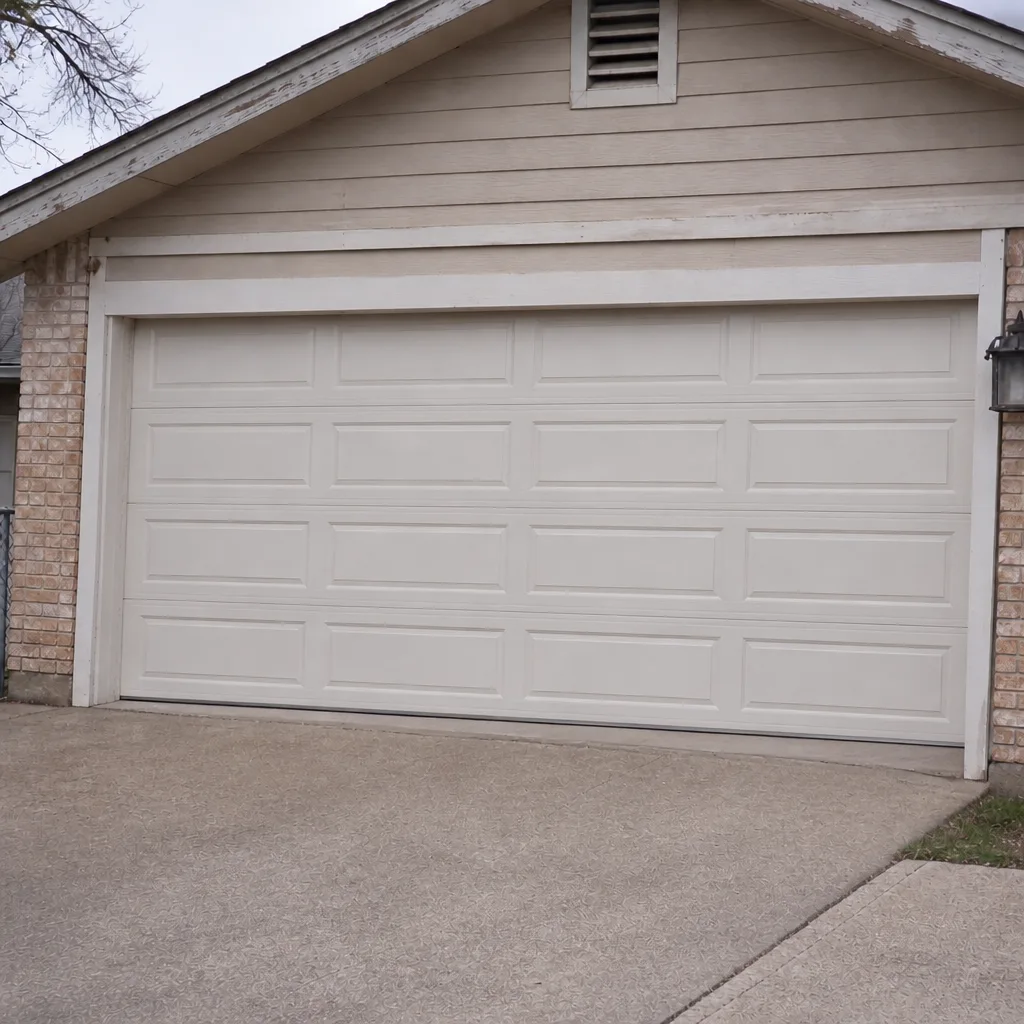
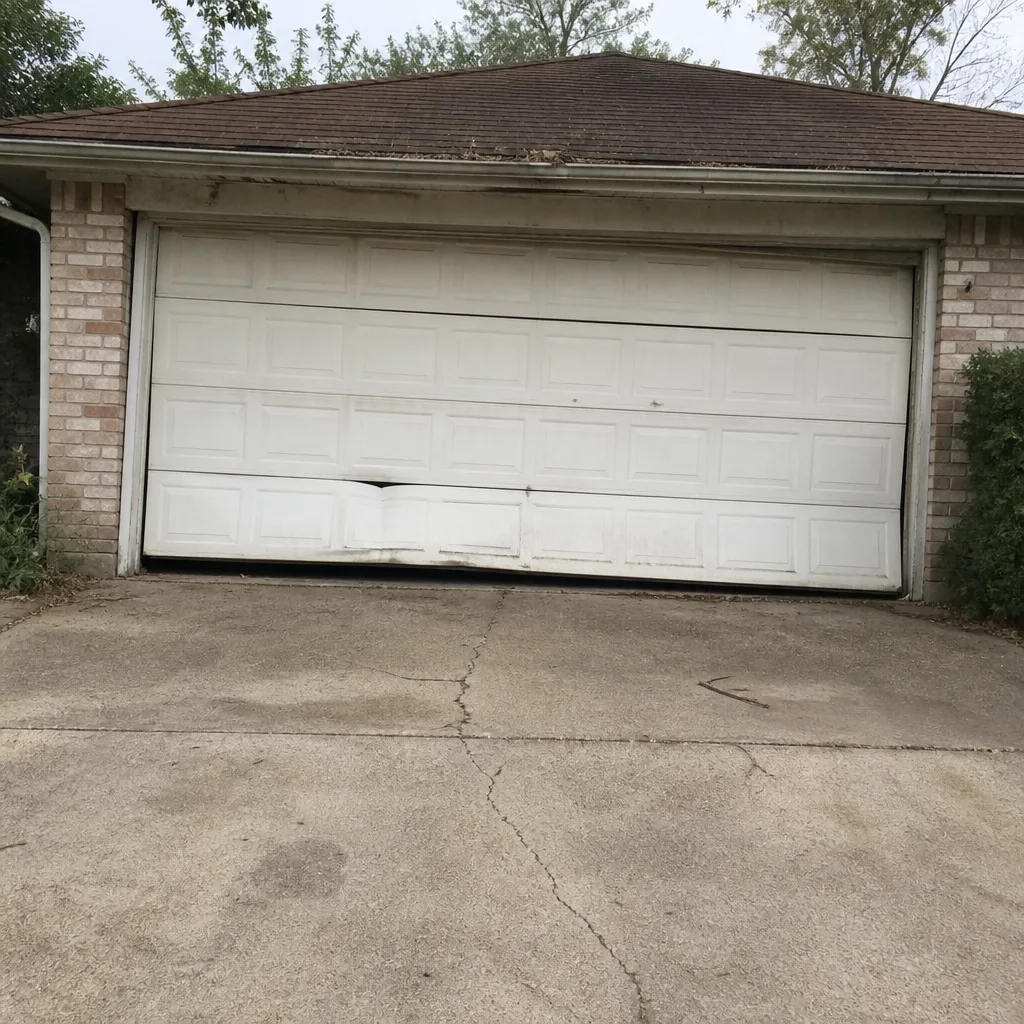
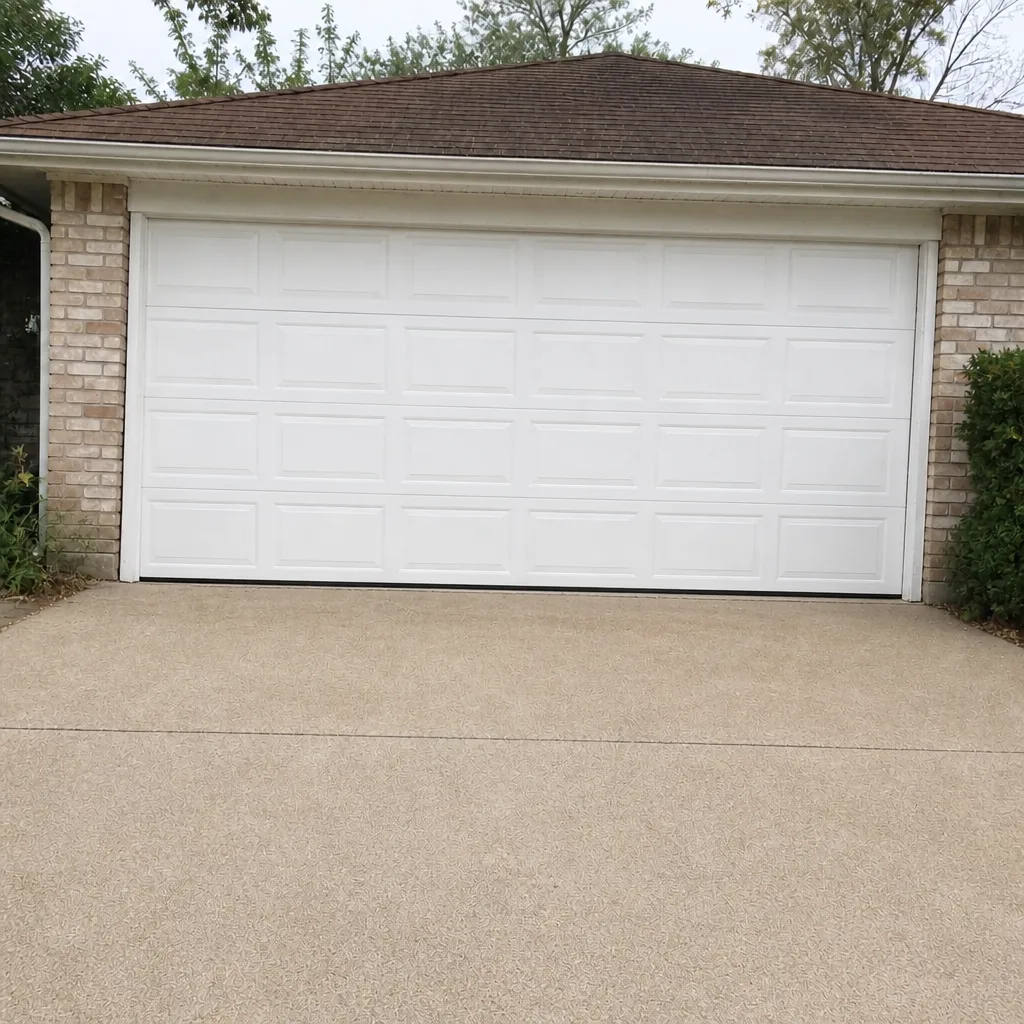
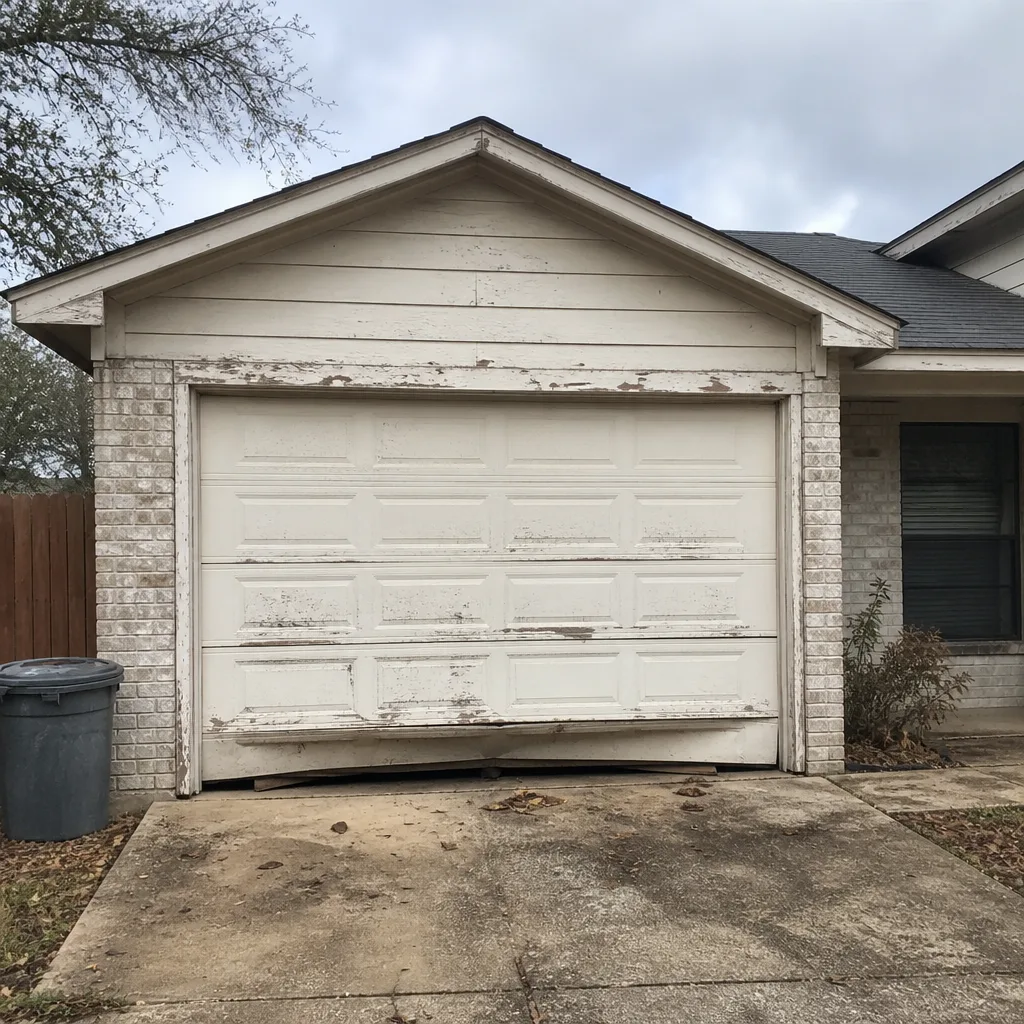
See the difference
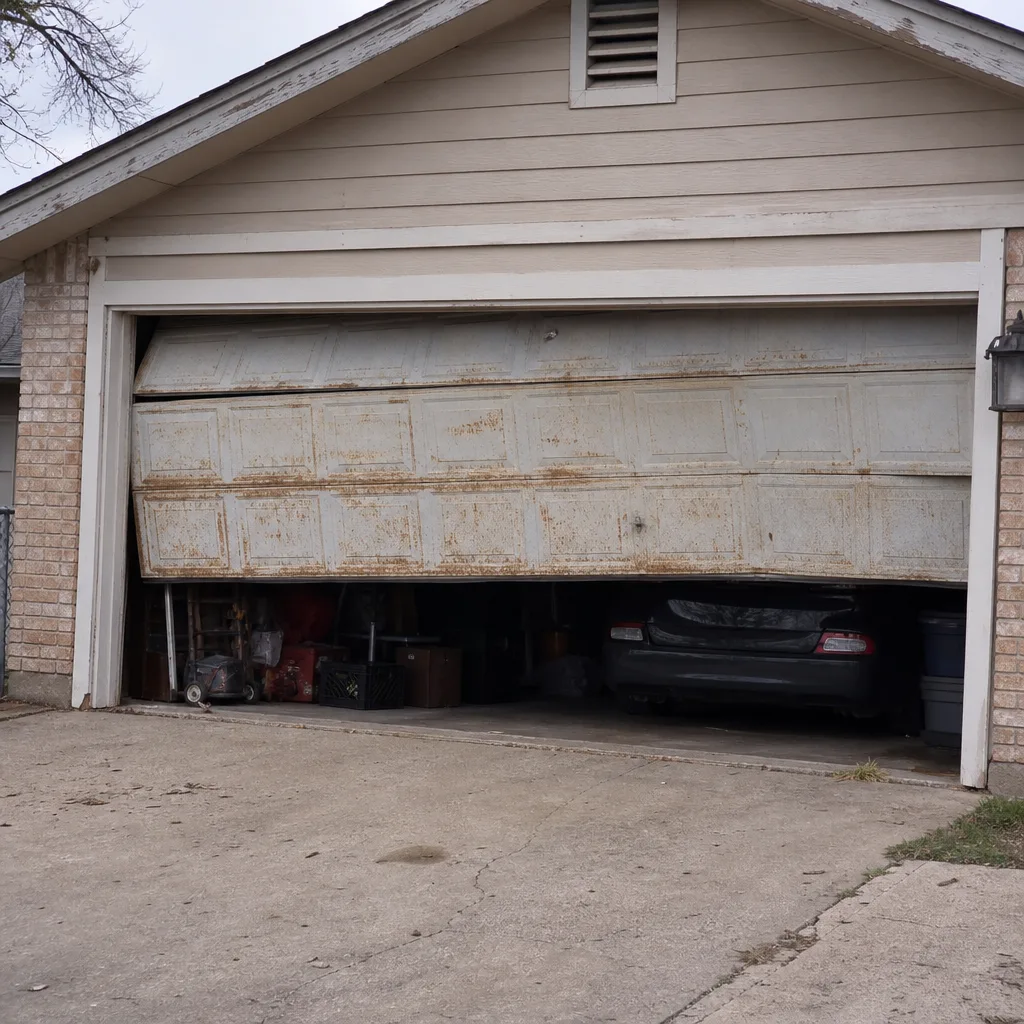 Before
 After
 Before
 After
 Before
 After
When to Call a Professional
Some tasks belong on your calendar. A few belong on ours. Call a professional if you hear a loud bang from the garage and the door won’t lift (a broken spring), if you see a frayed or separated cable, if the door is off its tracks or visibly crooked, if the balance test shows more than two inches of drift, or if the opener won’t reverse under load. Don’t attempt a spring or cable repair yourself; those parts are under enough tension to cause serious injury, and the safest move is to stop using the door and get it looked at.
Bluestone Garage Door Repair is a full-service garage door specialist. We handle repair, opener and smart-drive work, and installation as one company, and we’re factory-familiar with eight major brands including Clopay, Amarr, Genie, Wayne Dalton, LiftMaster, Chamberlain, Craftsman, and Raynor. Our technicians have up to 11 years of experience, and we diagnose right the first visit. Free estimates in College Station are available. Call (888) 874-4281. We answer 24/7. Fast dispatch from 7am to 7pm, Sunday through Friday.
Frequently Asked Questions
Once a year is the standard interval for a residential garage door, though a heavily used door (six or more cycles a day) benefits from a visit every six to nine months. The annual visit covers spring tension, cables, track alignment, rollers, and the opener’s safety reverse. Call (888) 874-4281 to schedule yours; estimates are free.
You can lubricate the springs, hinges, and rollers yourself with white lithium grease, and wipe silicone spray on the weatherstripping and bottom seal. What you shouldn’t touch is the cables or the spring tension adjustment. Both are engineered for a professional. Call (888) 874-4281 if a spring or cable is involved.
Drift means the springs are no longer counterbalancing the door’s weight. A door that moves more than two inches from midpoint has degraded spring tension, and the opener is carrying the difference. Schedule garage door repair rather than waiting for a failure; a worn spring puts strain on the opener and cables.
Late spring is the best window locally. The bottom seal and weatherstripping need inspection before summer heat causes rubber to expand, bind, or tear, and getting the spring tension checked before the motor works hardest through summer keeps small issues from turning into big ones. Call (888) 874-4281 to book a visit.
If lubrication didn’t solve it, the noise is coming from a worn part rather than a dry one. A squeal that persists usually means a worn roller bearing or a hinge pivot that’s developed play. A technician can pinpoint the source; call (888) 874-4281 and we’ll take a look.
Spring pricing is quoted per job in writing before any work starts, and the written estimate is the price. A matched pair is usually replaced together, so a pair costs about twice the price of a single spring. Call (888) 874-4281 for an exact quote; estimates are free, and we quote and agree on the price before we start.
The Bottom Line
A garage door doesn’t need monthly attention across the board. It needs the monthly visual check, the quarterly mechanical tests, the correct lubricant on the correct part, and one professional visit a year. Get those right and you’ll catch wear before it becomes a repair, replace parts on your schedule instead of the door’s, and avoid the most common mistake of all: greasing the tracks. Here in College Station, add the late-spring seal inspection to your calendar, because the heat is the local factor that moves the timing. And when a spring, cable, or opener goes beyond maintenance, that’s the moment to hand it to a specialist.
If you’re ready to schedule a service visit or a free estimate, call Bluestone Garage Door Repair at (888) 874-4281. We answer 24/7, with fast dispatch from 7am to 7pm, Sunday through Friday. Whether you’re in College Station proper or nearby, one call covers repair, opener work, and installation, with the same team from diagnosis through completion.
Written by the team at Bluestone Garage Door Repair.