
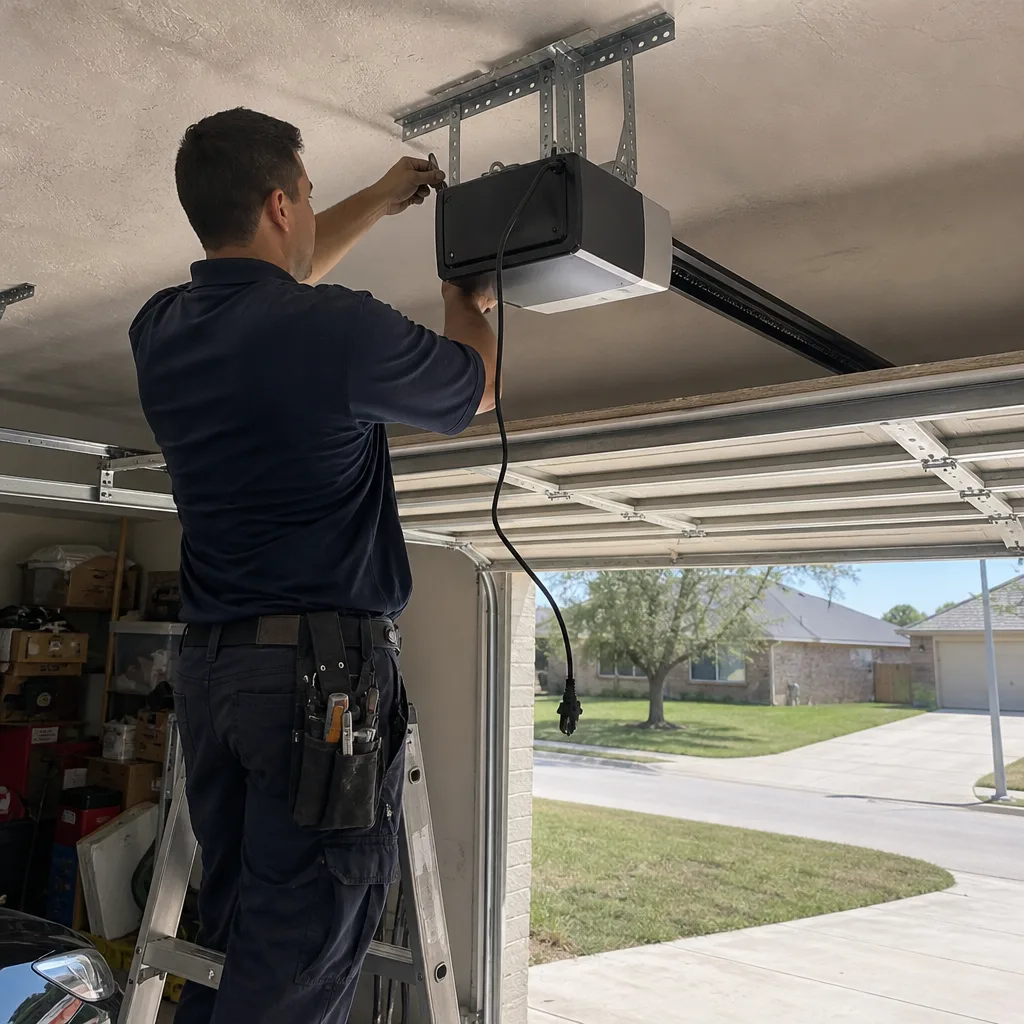
Last updated November 15, 2026
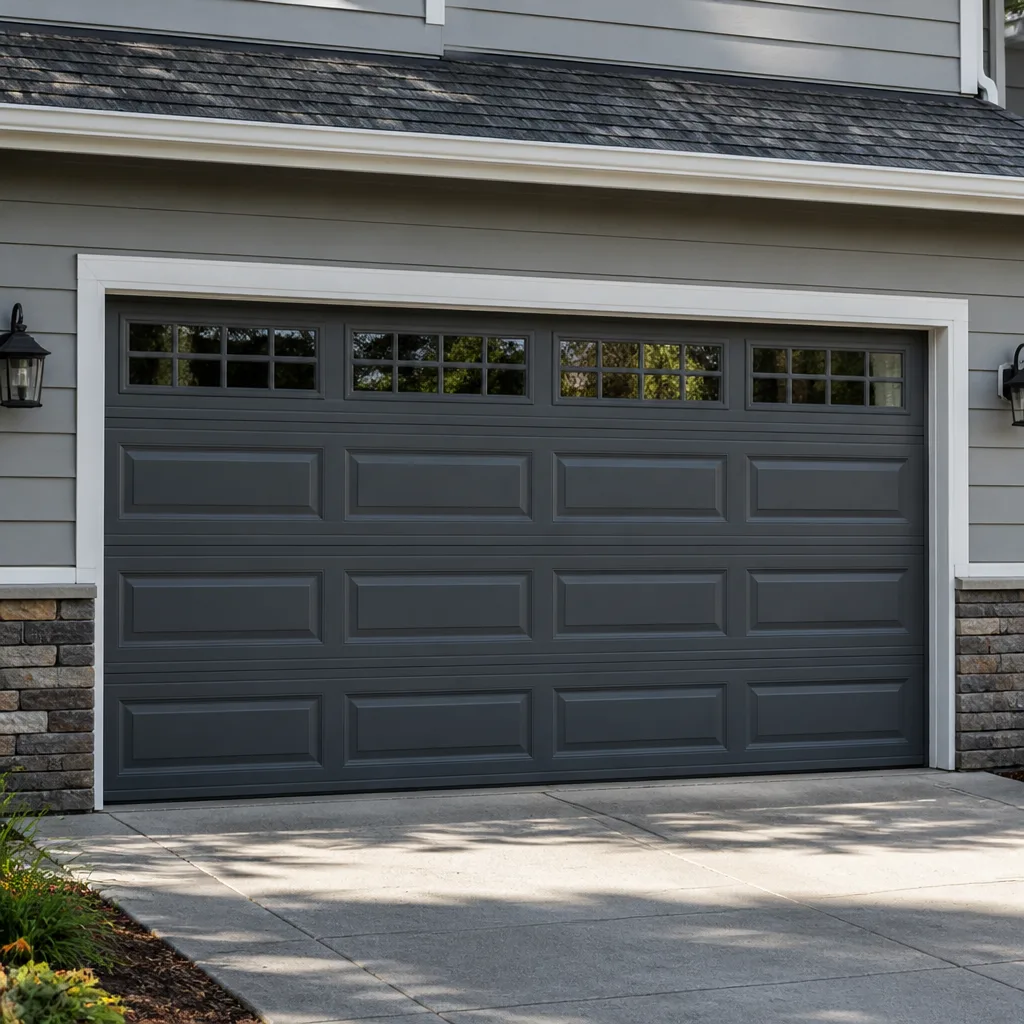 Raised-panel steel
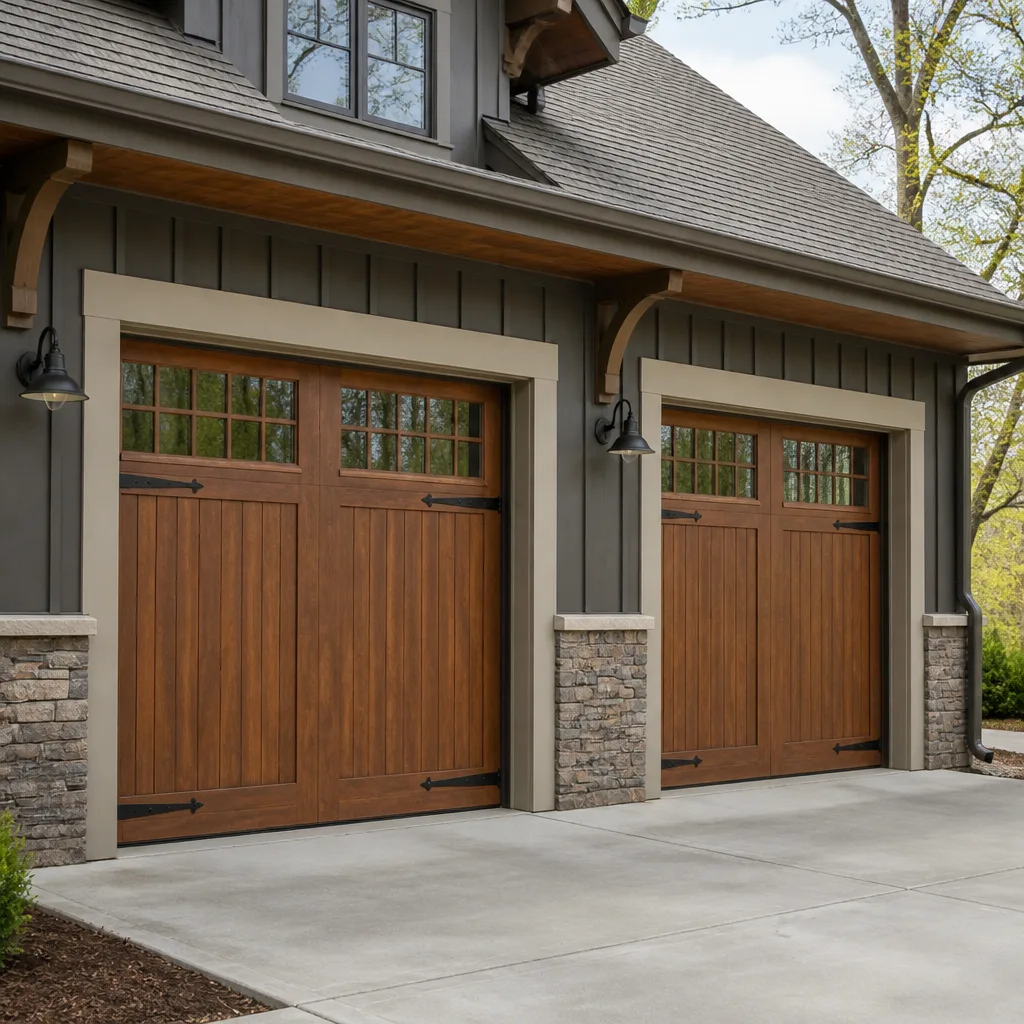 Carriage house
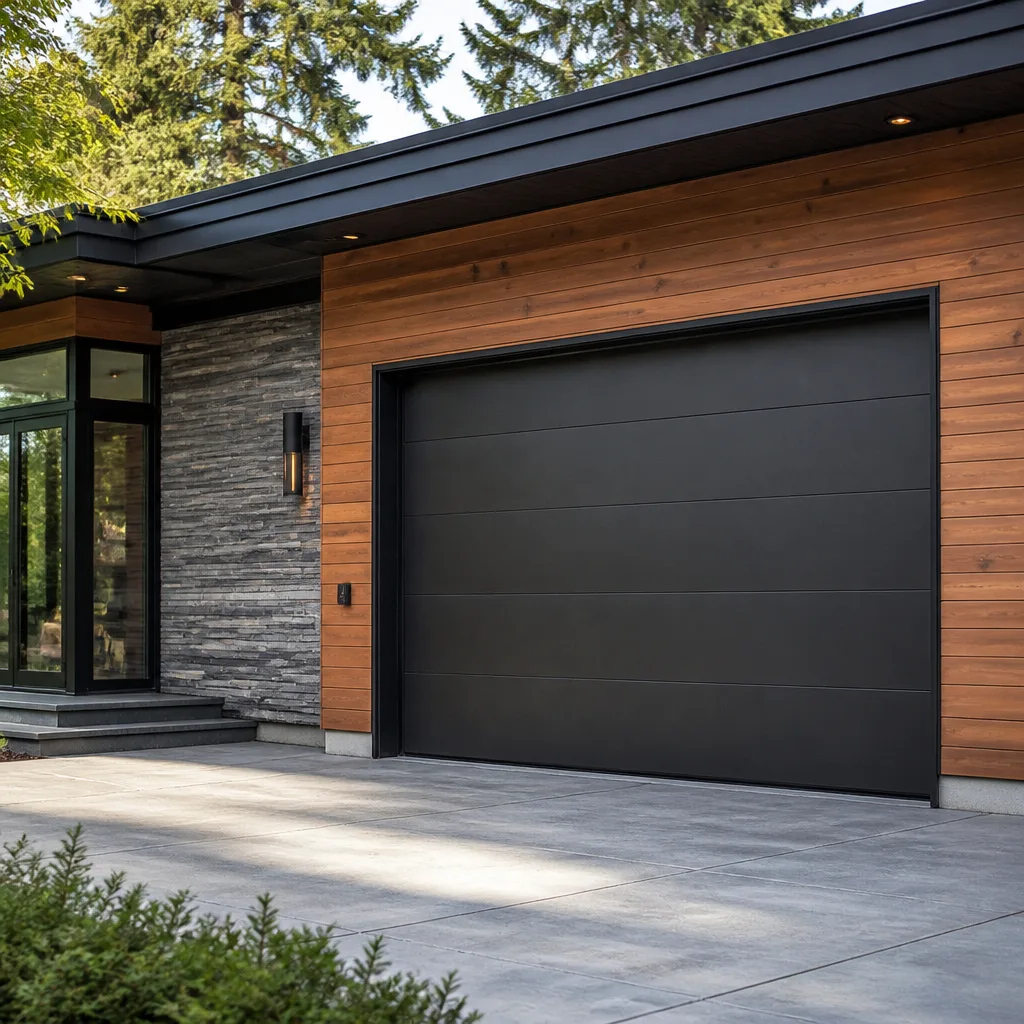 Modern flush
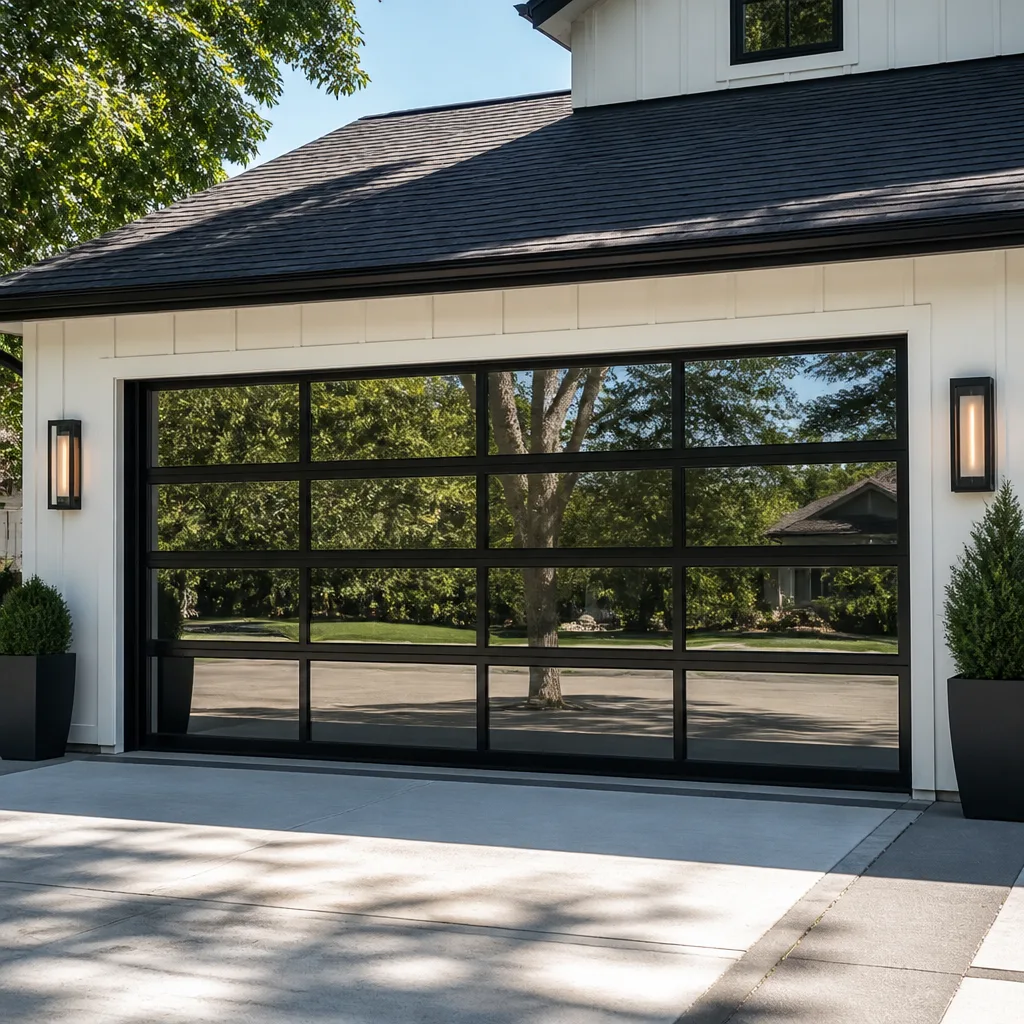 Full-view glass
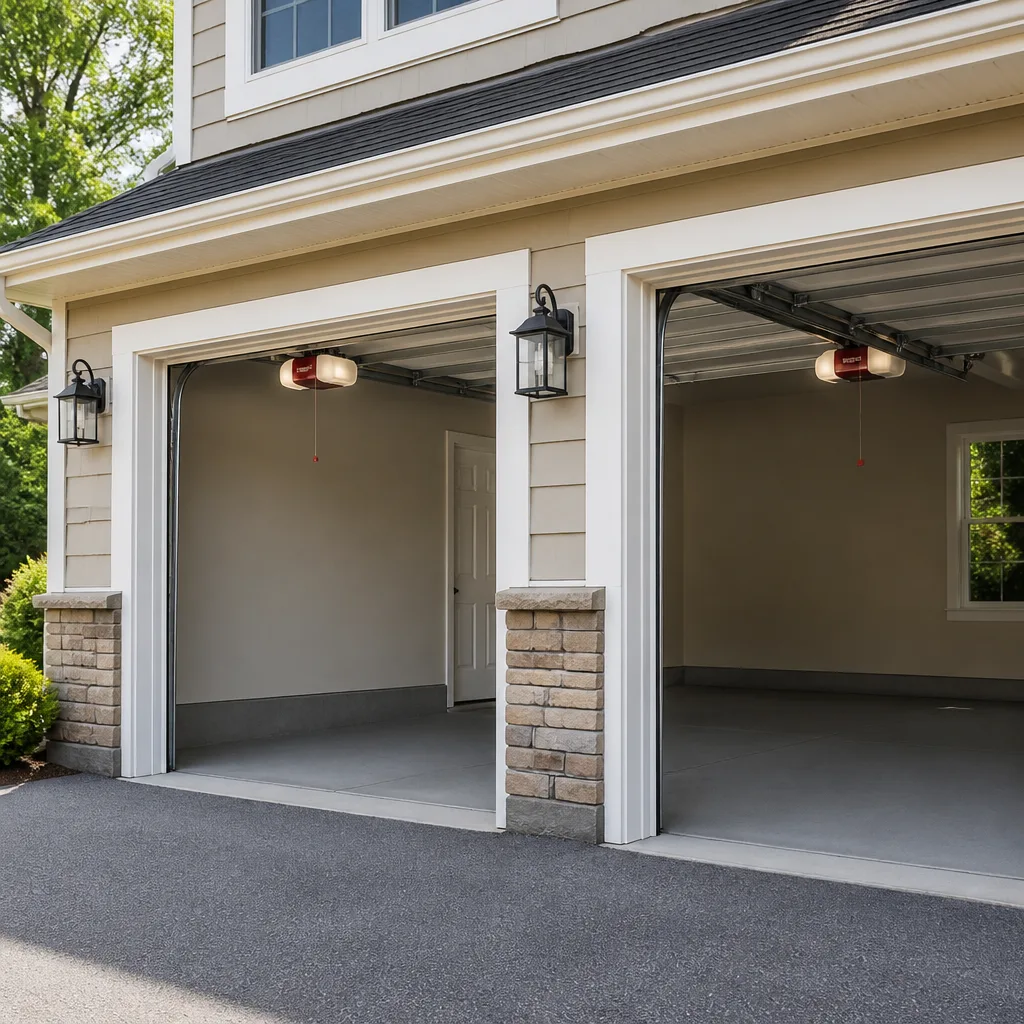 LiftMaster openers
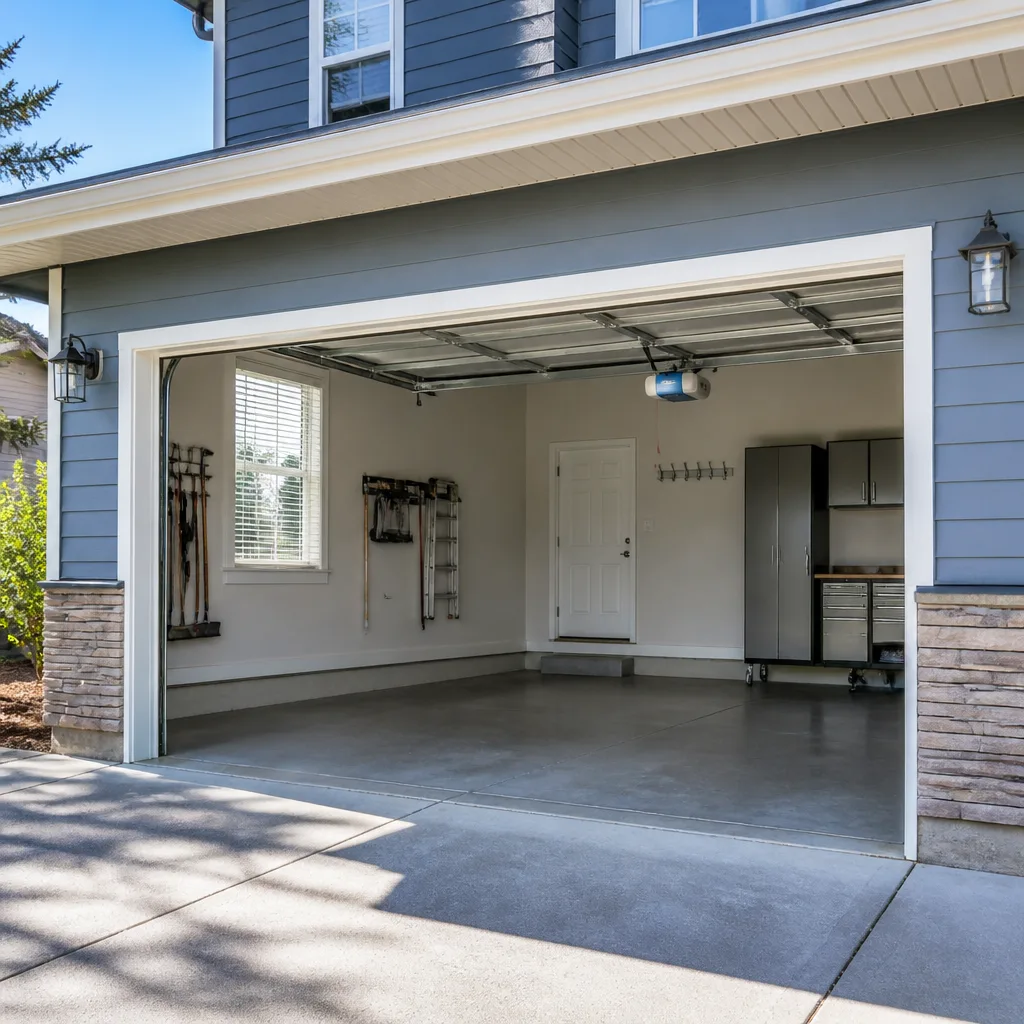 Chamberlain openers
Full 25-point door and opener safety check with every visit - springs, cables, rollers, tracks, and your LiftMaster or Chamberlain opener included
You get a price before we start. It does not change when the pro arrives.
Get your free estimateGarage Door Emergency Preparedness Guide for College Station Homes
During a power outage, the most common reason people can’t manually open their garage door isn’t a broken door. It’s that they’ve never pulled the emergency release cord, and they don’t know the door is locked in the down position from the inside. That single gap in preparation turns a routine storm into a genuine problem. College Station sits in a storm corridor where power outages, severe weather, and mechanical failures tend to arrive together, and the garage door is usually the last thing anyone thought about until it’s the only way in or out. This guide walks you through the specific scenarios that happen here and what to do before, during, and after each one, so the next outage or failure is an inconvenience instead of a crisis.
Quick Answer
Garage door emergency preparedness in College Station comes down to four things: knowing how to use your manual release, understanding whether your door’s wind rating suits Brazos County storms, having a plan for power outages and spring failures, and keeping an emergency card with the two phone numbers, one key location, and one procedure every adult in the home should know. Most emergencies aren’t caused by the door itself, they’re caused by nobody in the house knowing what to do with it.
Styles & brands we work with
- Raised-panel steel
- Carriage house
- Modern flush
- Full-view glass
- LiftMaster openers
- Chamberlain openers
Table of Contents
- How Do You Manually Release a Garage Door When the Power Is Out?
- What If the Release Cord Is Stuck or the Carriage Won’t Disengage?
- Is Your Door Rated for Brazos County Storm Events?
- Power Outage Protocol: Before, During, and After
- What to Do When a Spring Breaks Mid-Operation
- How Do You Safely Re-Engage the Opener When Power Returns?
- Building Your Household Garage Door Emergency Card
- Why Brand Familiarity Matters in an Emergency
How Do You Manually Release a Garage Door When the Power Is Out?
The manual release is a cord hanging from the trolley that connects your opener to the door. Pulling it disengages the door from the motor so you can lift it by hand. The catch is that it only works if the door is fully closed, the springs are intact, and you pull straight down with steady force rather than yanking sideways. Here’s the correct sequence for the opener models found in most College Station homes:
- Make sure the door is fully closed and nobody is standing under it.
- Locate the release cord, usually red and hanging from the trolley near the door’s center track.
- Pull the cord straight down firmly until you feel the carriage disengage. You’ll hear a distinct click.
- Lift the door by hand with a smooth, controlled pull. A door with healthy springs should rise with steady pressure.
- Raise it fully and prop it open if you need it to stay up. Don’t leave it half-open.
- To close it, lower it slowly and let it settle. Don’t let it drop.
If the door feels unusually heavy or won’t lift with normal effort, stop. That’s a sign the springs aren’t doing their job, and forcing it can bend panels or, worse, bring the door down under its own weight. A trained technician should take over from there.
What If the Release Cord Is Stuck or the Carriage Won’t Disengage?
A release cord that won’t pull or a carriage that stays locked to the rail is more common than people expect, especially on older openers where the trolley has seized from lack of use. If you pull and nothing happens, don’t keep yanking. The cord is attached to a small lever, and repeated force can snap it, leaving you with a door you can’t release at all.
Here’s what to check, in order:
- The door’s position. The release won’t engage cleanly if the door is partly open or the opener is mid-cycle. Get the door fully closed first.
- Manual lock. Some older doors have a physical slide lock on the inside. If it’s engaged, no amount of cord pulling will free the door.
- Trolley tension. If the cord pulls but the carriage stays connected, the trolley may be jammed on the rail. That’s an opener issue, and it needs garage door opener repair rather than a workaround.
- Broken cord. If the cord has snapped off, the lever is still there but hard to reach. A technician can release it without damaging the mechanism.
In our experience, a stuck release on a Genie or Chamberlain unit usually traces back to a trolley that hasn’t been exercised in years. It’s a quick fix once someone knows what they’re looking at. If you’re locked out or in and can’t free the door, call for help. We answer 24/7, and fast dispatch runs from 7am to 7pm, Sunday through Friday.
Is Your Door Rated for Brazos County Storm Events?
Most residential garage doors aren’t tested for high wind unless they were specifically sold that way. A standard door is rated for everyday conditions, not the straight-line winds and severe thunderstorms that roll through this part of Texas. If your door came with the house and you’ve never checked its wind rating, you genuinely don’t know what it can handle. That’s worth finding out before storm season rather than after.
Wind load ratings for garage doors are expressed in miles per hour and typically range from about 90 mph for basic reinforced doors up to 130 mph or higher for impact-rated models. The rating depends on three things: the door’s construction, the reinforcement built into the panels, and how the tracks are anchored to the framing. A door rated for 110 mph on paper won’t perform at that level if the track brackets are loose or the hinges are worn.
To assess where your door stands:
- Find the manufacturer label on the inside of the door. Clopay, Amarr, and Wayne Dalton all print the model and any wind rating there.
- Look at the track brackets. Are they secured with lag bolts into solid framing, or are they loose or pulling away?
- Check for a center reinforcement strut. Doors rated for higher wind almost always have one; unreinforced doors usually don’t.
- Inspect the hinges and rollers for wear. A door that rattles in a light breeze is telling you something.
- Ask your city’s building department whether any wind provisions apply to your door’s original permit or replacement.
If your door needs reinforcement, options range from adding a strut and heavier brackets to upgrading to an impact-rated door outright. That’s a scheduled job with a written estimate, not a same-day repair, so plan it before the season rather than during a storm warning.
Power Outage Protocol: Before, During, and After
Power outages in College Station tend to arrive with the weather that caused them, which means they often happen when you most need to get the car out or secure the house. The good news is that a power outage doesn’t have to mean a locked door if you’ve prepared for it. Here’s how to think about it in three phases.
Before an Outage
- Test your manual release once a season, with the door closed and nothing under it. Just pull the cord, feel the disengage, then re-engage the carriage and run the opener through one cycle.
- If you’re buying a new opener, consider a battery backup model. LiftMaster and Chamberlain both make units with built-in battery backup that keep the door operating for a period after the power drops.
- Keep a physical key to the garage’s side door somewhere accessible, not inside the garage.
During an Outage
- Use the manual release as described above. Don’t force a door that won’t lift.
- If your opener has battery backup, leave it to do its job. Running the door manually while the battery is connected can confuse the travel limits.
- Keep the door closed and latched if you’re leaving the house. An open garage during a storm invites wind damage and water intrusion.
After Power Returns
- Re-engage the carriage before running the opener. The door must be fully closed and the trolley aligned with the carriage.
- Run one full open-and-close cycle and watch it. If the door stops short, reverses early, or the opener beeps and quits, the travel limits need resetting.
- Check the safety sensors. Power surges can knock them out of alignment, and a blinking sensor light means the door won’t close.
If the opener won’t behave after power returns, that’s a diagnostic job, not a guessing game. Our team handles Bluestone Garage Door Repair calls for exactly this situation, and we can usually tell you what’s wrong before we arrive if you describe what the opener is doing.
What to Do When a Spring Breaks Mid-Operation
A torsion spring breaking sounds like a gunshot in the garage. It’s loud, sudden, and unmistakable, and it almost always happens while the door is in motion. When it does, the door will drop or slam down under its own weight, and if anyone is underneath, that’s a serious hazard. The springs are the counterbalance that makes a several-hundred-pound door liftable by hand. When one fails, the door becomes dangerously heavy and unpredictable.
Here’s what to do, and what absolutely not to do:
- Don’t try to lift the door. With one spring broken, the door’s weight shifts unevenly and the remaining spring is under extra strain. Lifting it can twist the tracks or send a panel crashing down.
- Don’t run the opener. If you do, the opener will strain against a door it can no longer balance and can burn out its motor or strip the gears.
- Keep everyone clear. Park cars outside the garage, and keep kids and pets away from the door.
- Look before you call. A visible gap in the spring coil, a two-piece spring where there used to be one, or a door sitting crooked all point to a broken spring. Tell the technician what you see.
- Note the door’s brand and any label info. If it’s a Clopay or Wayne Dalton door, that helps the technician bring the right spring on the first visit.
Springs, cables, and the torsion assembly are under extreme tension and are not a DIY job. A trained technician handles them with the right tools and the right technique. If your spring has let go, call us. A single torsion spring repair typically runs from $180 to $340 depending on door size and spring type, and a matched pair is usually replaced together at roughly twice that. We’ll quote you before any work starts, and the written estimate is the final price.
How Do You Safely Re-Engage the Opener When Power Returns?
Re-engaging the opener after a manual release is straightforward, but doing it wrong can strip the trolley or leave the door misaligned. The door needs to be fully closed and the trolley in its home position before you reconnect the carriage. Here’s the sequence:
- Make sure the door is fully closed and resting on the floor.
- Pull the release cord again, or flip the lever back to its original position, to re-engage the carriage. You’ll feel it lock into the trolley.
- Stand clear and run the opener through one full cycle. Watch the door travel up and down without interruption.
- Test the safety reverse. Put a solid object in the door’s path and confirm it reverses on contact.
- If the door doesn’t open or close fully, the travel limits need adjustment. That’s usually a setting on the opener unit itself.
If the carriage won’t lock back in, or the opener runs but the door doesn’t move, the trolley or the carriage may be damaged. That’s a repair, not a reset. A Genie or LiftMaster unit with a damaged trolley will need the part replaced, and continuing to run it can cause further damage. If you’re not sure the door is re-engaged safely, don’t run it. Call and describe the problem.
Building Your Household Garage Door Emergency Card
The single most useful preparedness step for a College Station household is a physical emergency card taped inside a kitchen cabinet or on the wall by the garage door. It’s low-tech, but during a real emergency, nobody wants to be searching for a phone number in the dark. Here’s what goes on it:
- Two phone numbers: your garage door repair line and a trusted neighbor or family member who can help if you’re locked out.
- One physical key location: where the side door key lives, written in a way that only your household understands.
- One manual procedure: a short, plain-language description of how to pull the release cord and lift the door by hand.
- The door’s brand and model, if you know it. This speeds up diagnosis on the phone.
Walk every adult in the home through the manual release once. Not just tell them, actually show them. Pull the cord with the door closed, let them feel the disengage, then re-engage it and run the opener. It takes two minutes and it means the next outage doesn’t leave someone stranded. Update the card with our number: (888) 874-4281.
Why Brand Familiarity Matters in an Emergency
When a door fails, the speed of the fix often depends on whether the technician knows your specific equipment. A Genie opener with a smart-drive rail behaves differently from a Chamberlain belt-drive unit, and a Wayne Dalton door with proprietary hardware takes different parts than a standard Clopay panel. A generalist technician who has to study the manual on your driveway loses time you don’t have during an emergency.
We’re factory-familiar with eight of the leading brands in the trade: LiftMaster, Chamberlain, Genie, Clopay, Amarr, Wayne Dalton, Craftsman, and Raynor. That breadth matters most when your door is older or less common. A homeowner with a legacy Wayne Dalton or a Raynor system shouldn’t hear “we don’t service that.” They should hear a diagnosis. Our technicians have up to 11 years of experience, and because we handle repair, opener work, and installation under one company, there’s no hand-off between trades when a job crosses from one discipline to another.
For homeowners in College Station, that also means the whole job is diagnosed right the first visit. When you call about a door that won’t close, we can tell you whether it’s a spring, a sensor, or a logic board before we arrive, and bring the right parts. Single-company accountability from diagnosis through completion is what keeps a bad night from turning into repeat service calls.
Common Mistakes to Avoid
- Forcing a door with a broken spring. The door weighs several hundred pounds without a working counterbalance, and lifting it alone can cause injury or twist the tracks beyond repair. Call a technician instead of muscling it.
- Yanking the release cord sideways. Pull straight down with steady force. Sideways pressure snaps the lever or jams the trolley, which turns a two-minute release into a repair call.
- Assuming a new door is storm-rated. A door that looks sturdy may have no wind rating at all. Check the manufacturer label and the brackets before storm season, not during a warning.
- Running the opener after a power surge. If the door acts strange after power returns, stop and reset the travel limits before running it repeatedly. Continued operation can burn out the motor.
- Ignoring a blinking sensor light. Safety sensors that get knocked out of alignment during a storm are the most common reason a door won’t close, and it’s a fix you can often spot before calling.
- Skipping the manual release test. Most people never pull the cord until they need it. Test it once a season so the next outage finds you ready, not searching for a flashlight.
- Leaving the side-door key inside the garage. If the power is out and the opener won’t run, a key locked inside the garage is a key you don’t have. Keep a copy in the house.
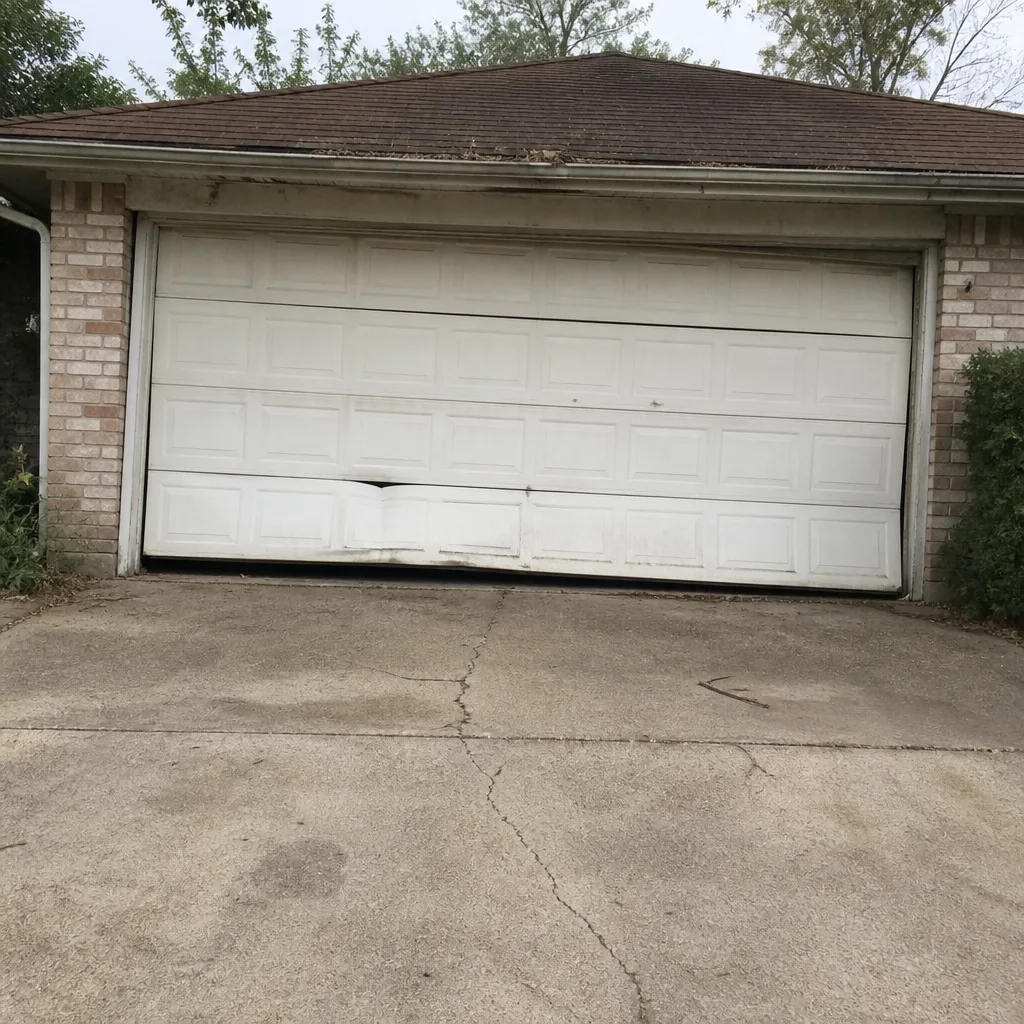
See the difference
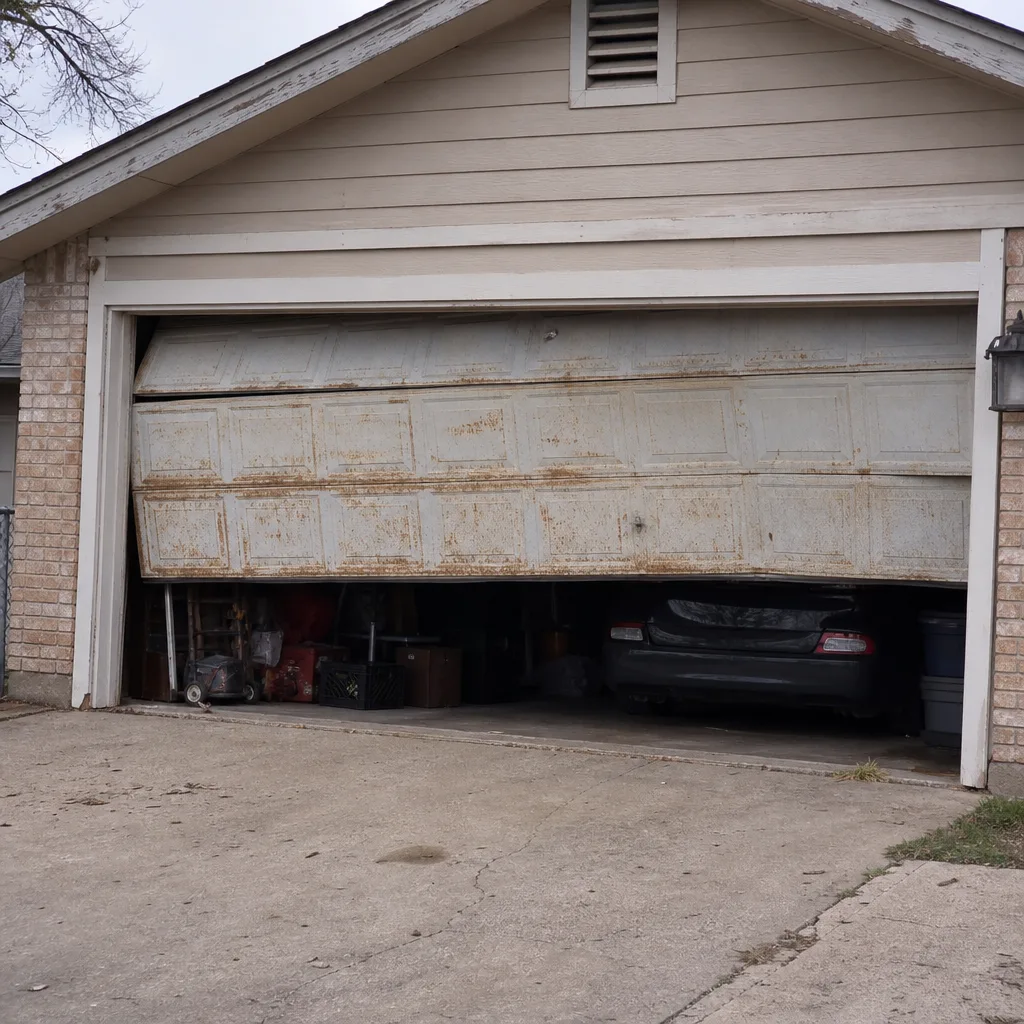 Before
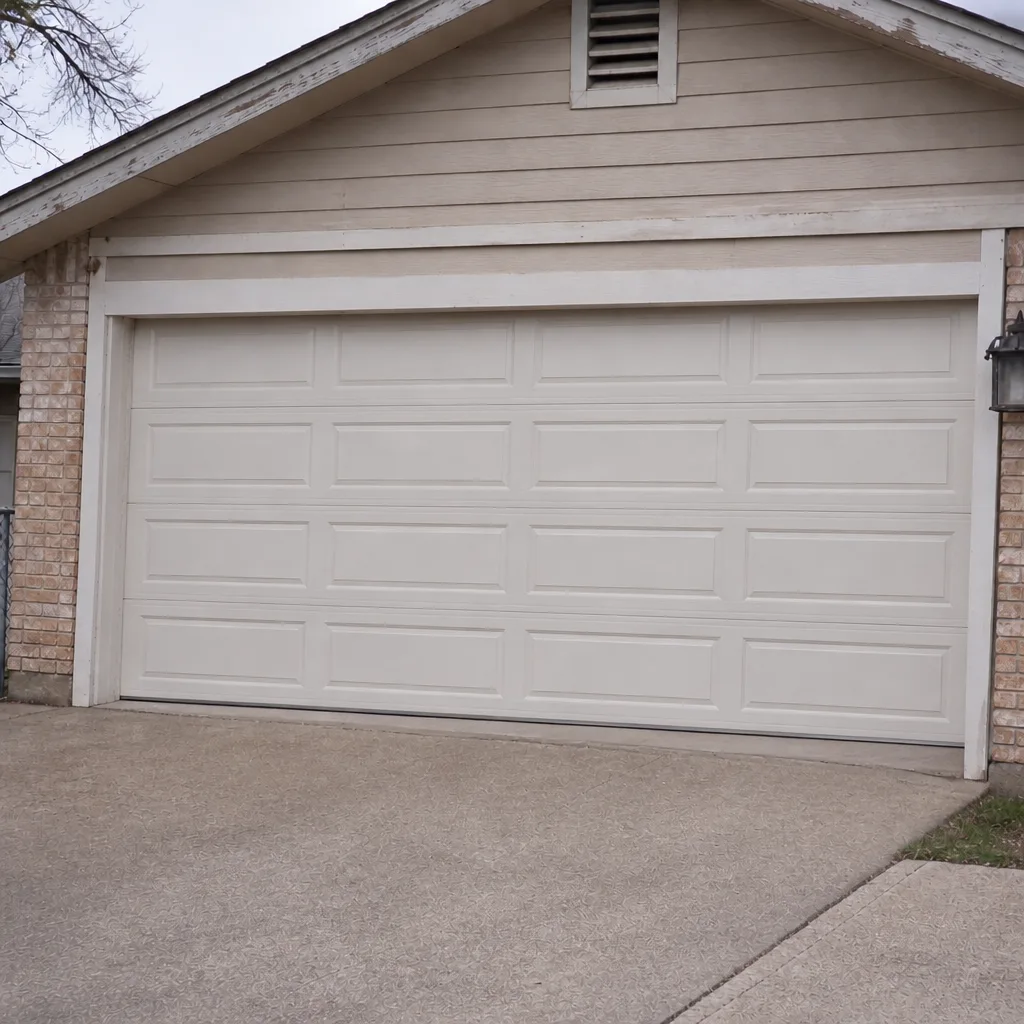 After
 Before
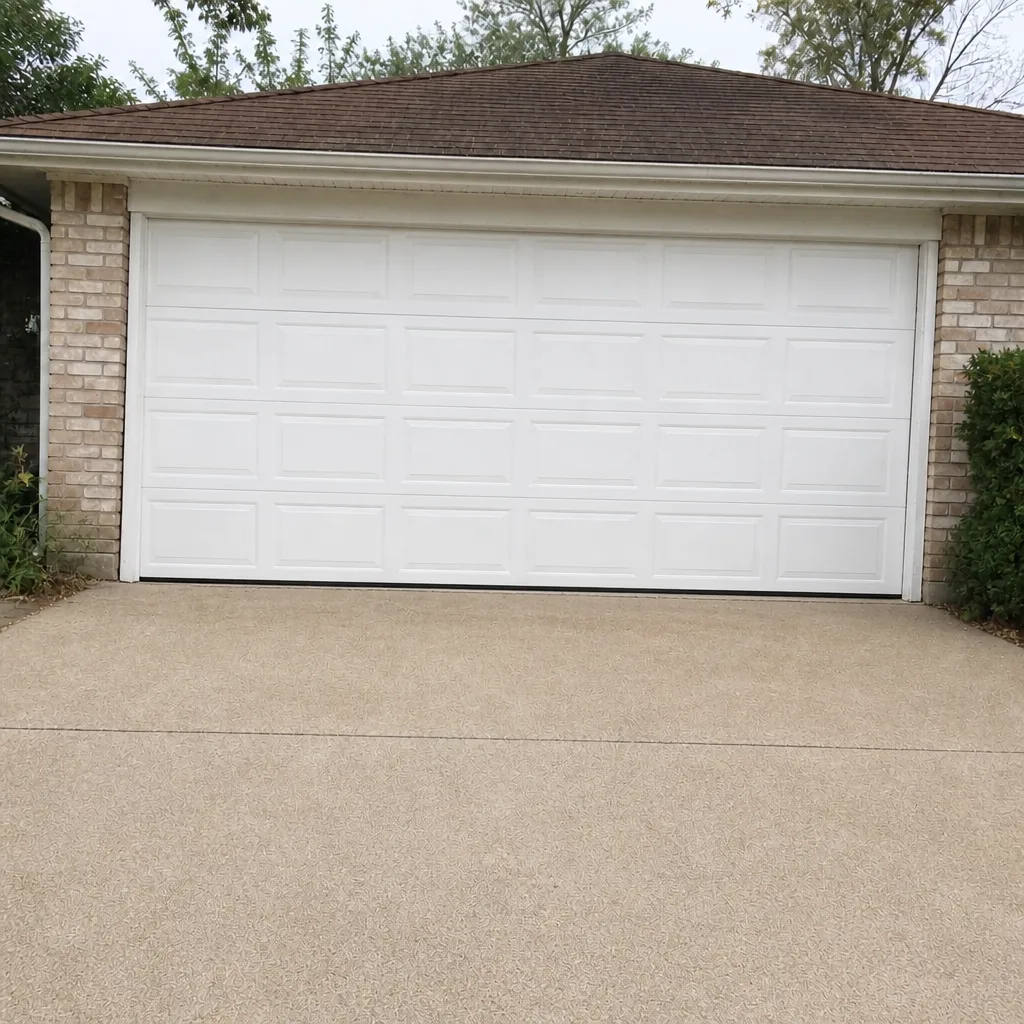 After
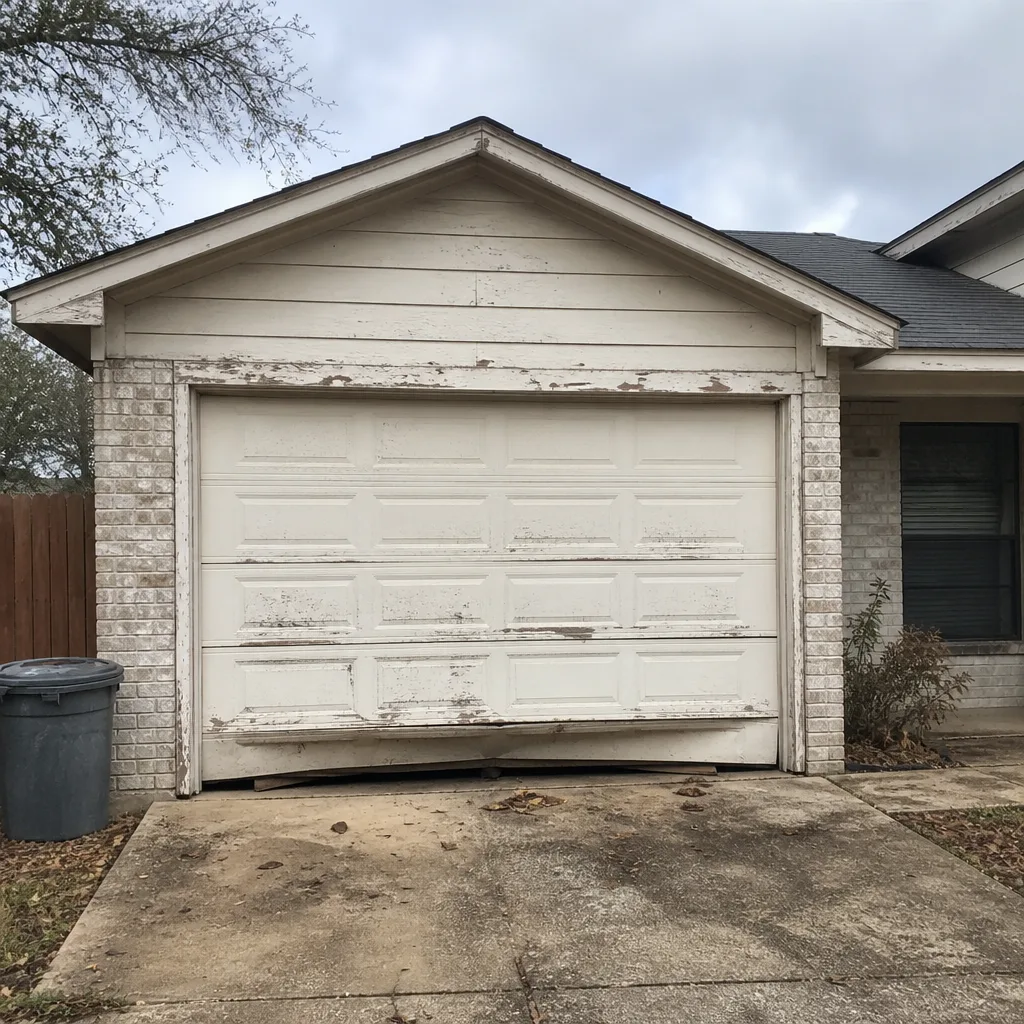 Before
 After
When to Call a Professional
Call a professional when the door won’t lift with normal hand pressure, when a spring has visibly broken, when the opener runs but the door doesn’t move, or when the door reverses or stops partway through a cycle. These are all signs of a mechanical or opener fault that guessing won’t fix. Also call if the release cord has snapped, the carriage won’t re-engage, or the door sits crooked in its tracks. Bluestone Garage Door Repair offers free estimates in College Station, and we’ll quote the price before any work starts. Call (888) 874-4281. We answer 24/7. Fast dispatch from 7am to 7pm, Sunday through Friday.
Frequently Asked Questions
Pull the red release cord hanging from the trolley straight down until you feel the carriage disengage, then lift the door by hand with steady pressure. The door must be fully closed and the springs intact for this to work. If it feels unusually heavy, stop and call for help.
No. Torsion springs and cables are under extreme tension and can cause serious injury if handled without the right tools and training. A trained technician should replace them. In College Station, a single spring repair typically runs from $180 to $340, and a matched pair is usually replaced together at about twice that. Call (888) 874-4281 for an exact quote; estimates are free.
Most residential doors aren’t wind-rated unless they were specifically sold that way. Check the manufacturer label on the inside of the door for a rating, usually expressed in mph, and inspect the track brackets and hinges for wear. If you don’t find a rating, ask your city’s building department what applies to your door.
Close the door fully, pull the release cord or flip the lever back to re-engage the carriage, then run the opener through one full cycle and test the safety reverse. If the door stops short or the carriage won’t lock in, the travel limits or the trolley may need repair.
No. We quote the price in writing before any work starts, and that written estimate is the final price. If the diagnosis changes once we’re on site, we’ll discuss it with you before proceeding. Call (888) 874-4281 for a free estimate.
Our technicians are experienced, with up to 11 years in the trade, and we can work with your insurer where coverage applies. Call (888) 874-4281 to confirm current credentials and to book a free estimate for your College Station home.
The Bottom Line
Garage door emergencies in College Station are rarely about the door itself. They’re about whether anyone in the house knows how to pull the release cord, whether the door’s wind rating suits the storms that roll through, and whether a broken spring is met with a call or a forced lift. Test your manual release once a season. Check the wind rating and brackets before storm season. Keep an emergency card with two phone numbers, one key location, and one procedure every adult knows. When a spring, a cable, a sensor, or an opener fails, call a technician and let the written estimate set the price. Bluestone Garage Door Repair is here to help when the door finds you unprepared. Call (888) 874-4281 for a free estimate. We answer 24/7. Fast dispatch from 7am to 7pm, Sunday through Friday.
Written by the team at Bluestone Garage Door Repair.