
Last updated November 15, 2026
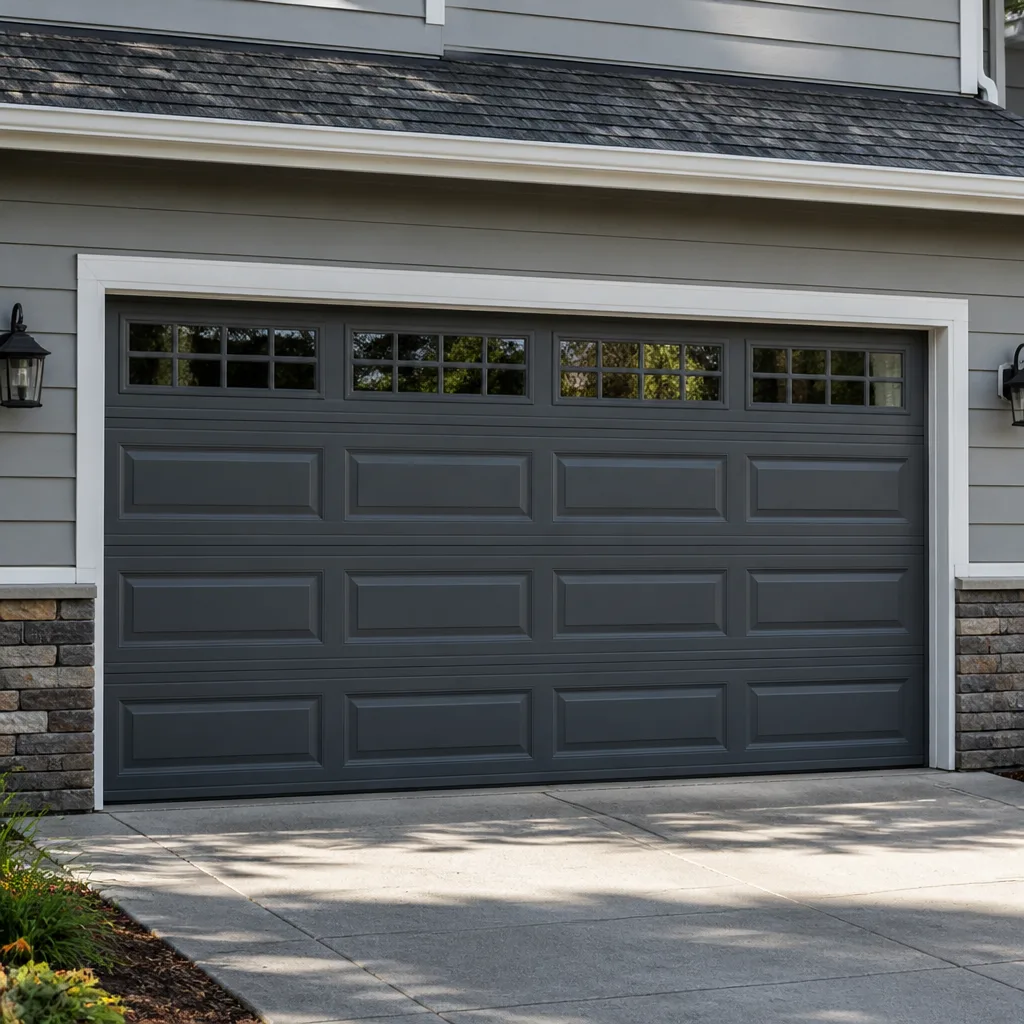 Raised-panel steel
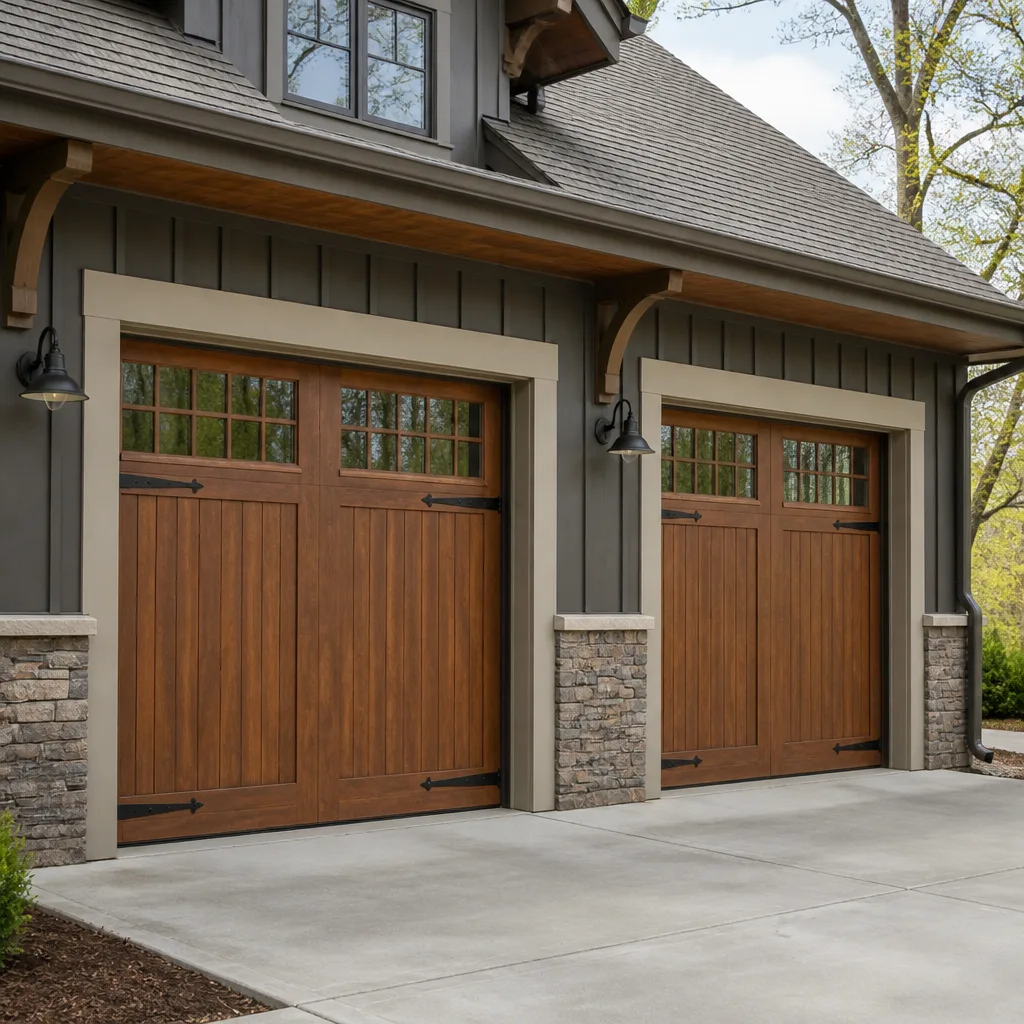 Carriage house
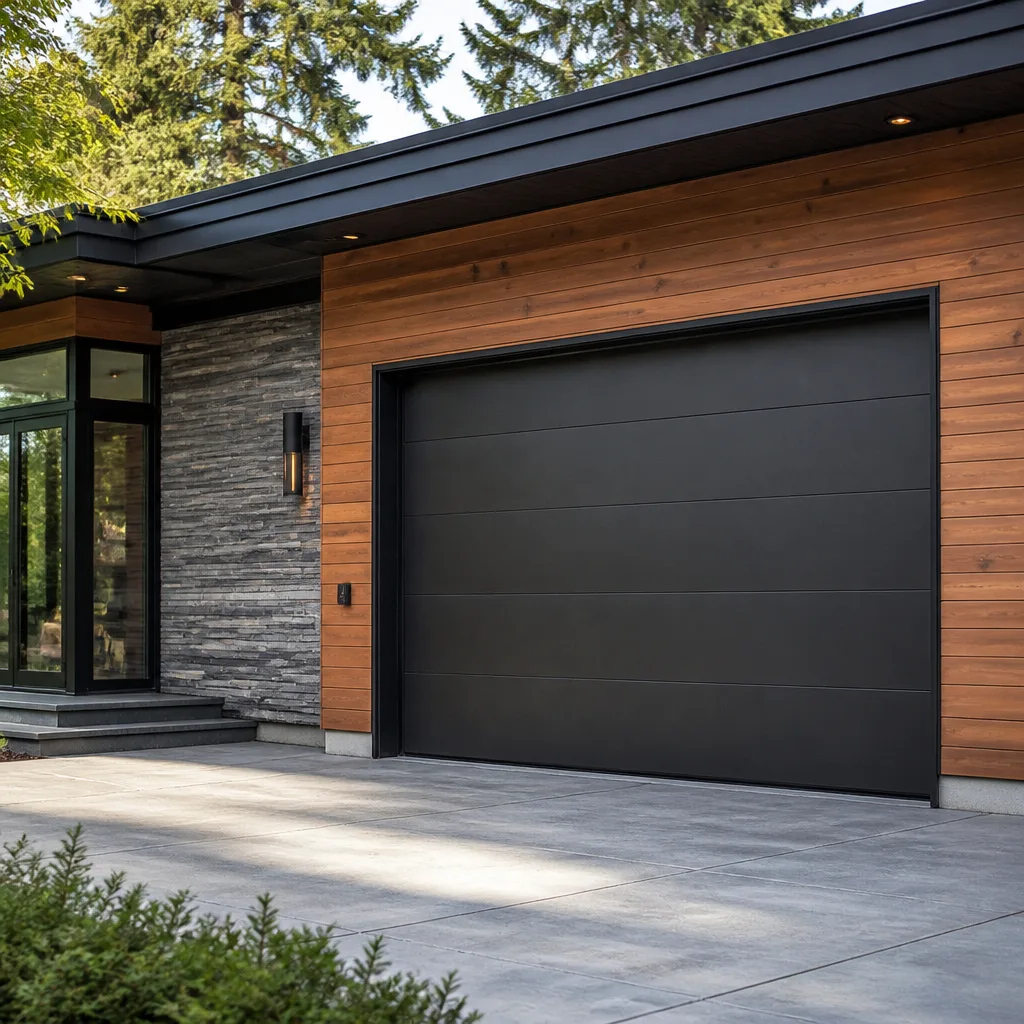 Modern flush
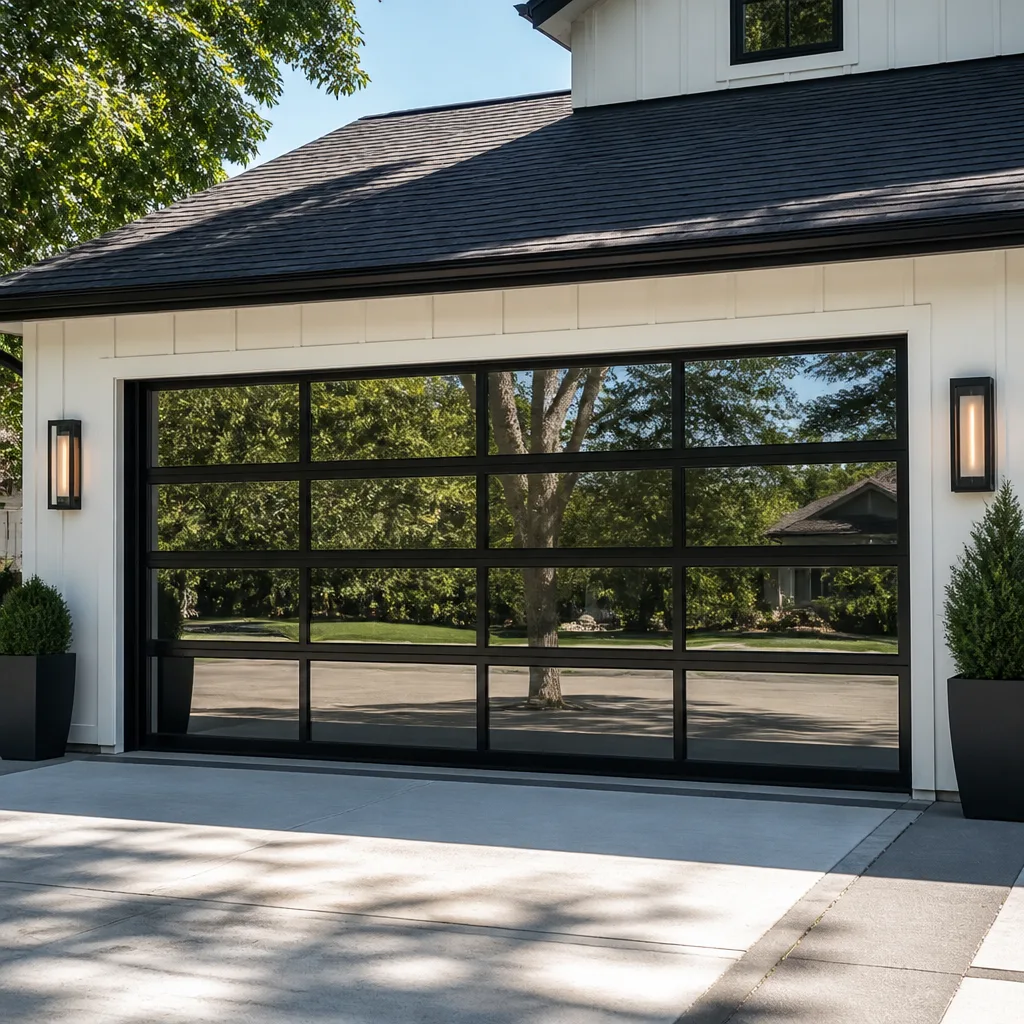 Full-view glass
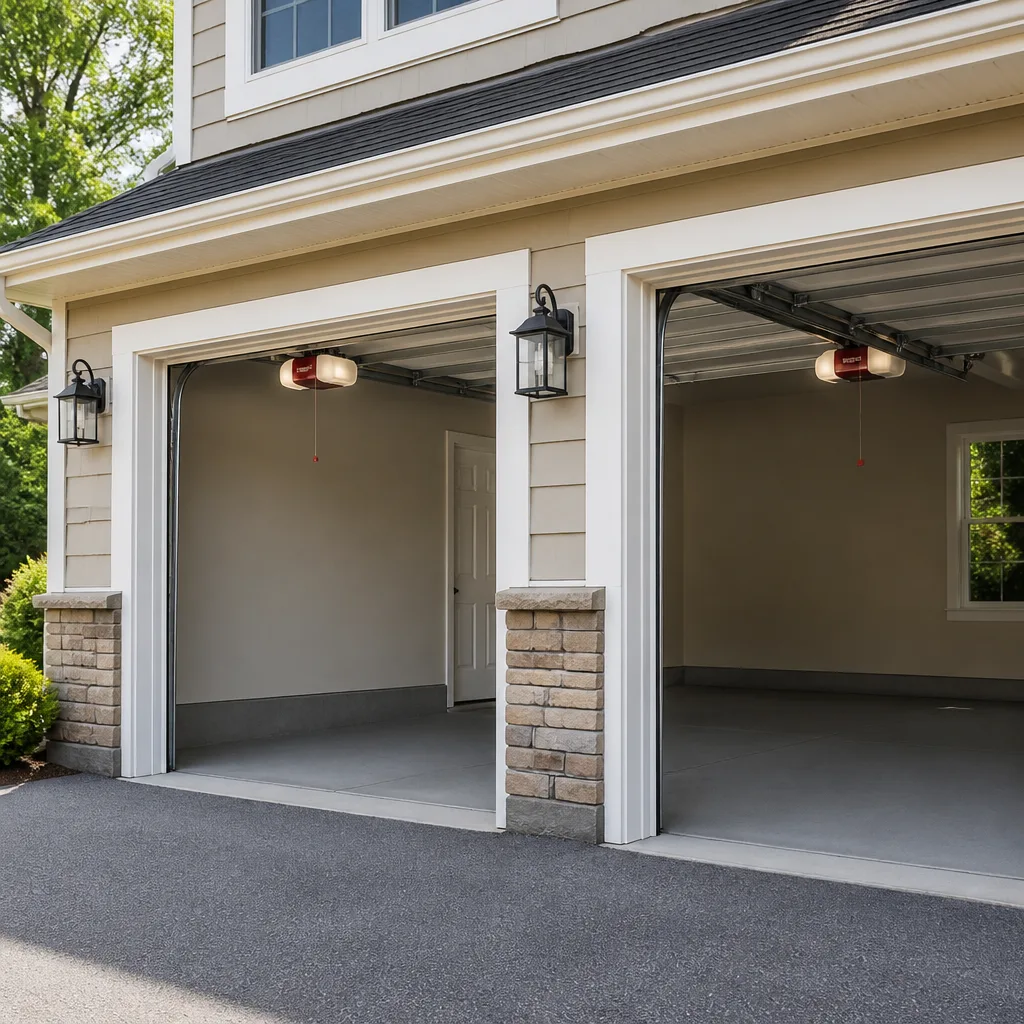 LiftMaster openers
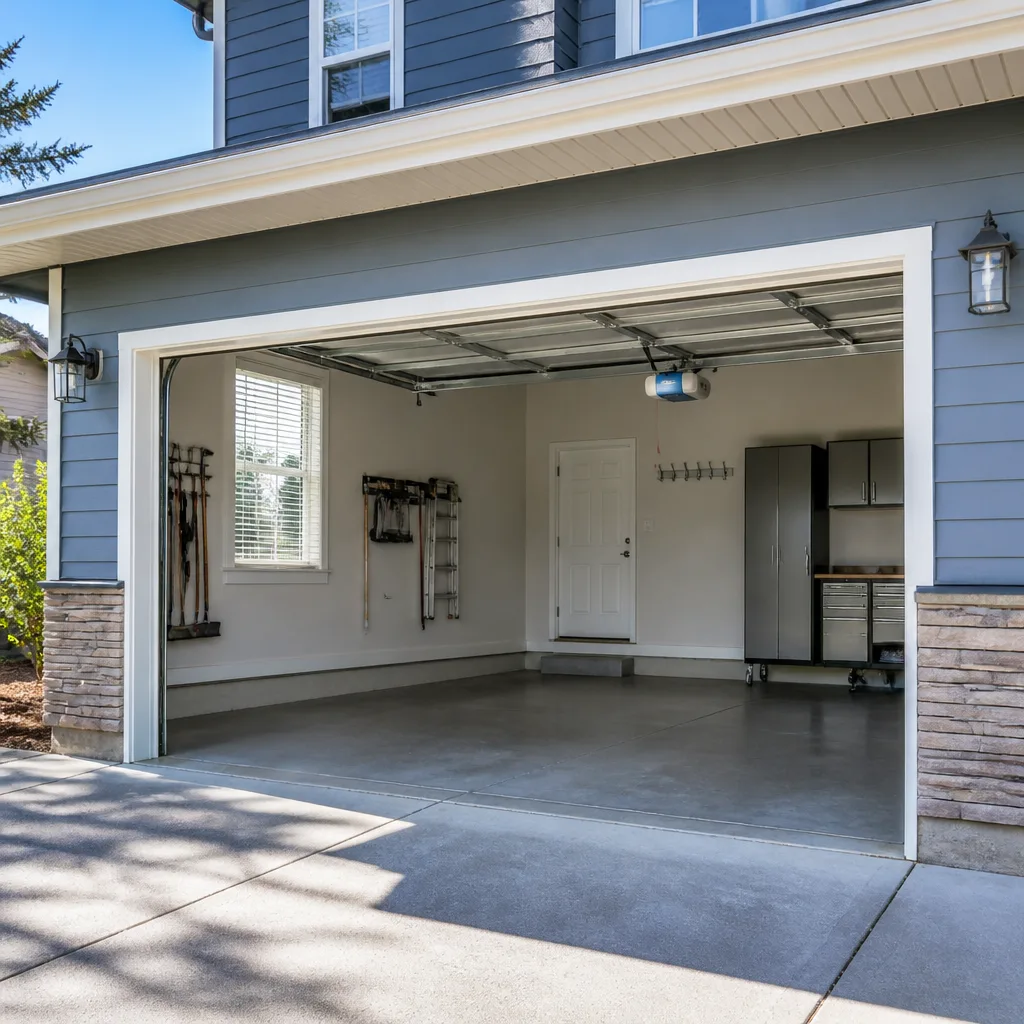 Chamberlain openers
Full 25-point door and opener safety check with every visit - springs, cables, rollers, tracks, and your LiftMaster or Chamberlain opener included
You get a price before we start. It does not change when the pro arrives.
Get your free estimateGarage Door Cost Breakdown: The College Station Homeowner’s Reference for 2026
Two contractors both quote “spring replacement.” One is describing a single extension spring on a lightweight door; the other is quoting a matched torsion pair with new cables and hardware. Neither quote says so out loud, and the spread between them can run several hundred dollars. That gap is usually not a rip-off. It’s a difference in what’s actually being replaced, and you can’t judge a quote until you can see the parts behind it. This reference breaks garage door pricing into its real components – springs, cables, rollers, panels, openers, and full doors – calibrated to what we see in the College Station market in 2026. By the end you’ll know which variables drive the number and which questions to ask before you sign.
Quick Answer
Garage door repair in College Station in 2026 typically runs from about $150 for a simple roller or cable fix up to $700 or more for a torsion spring pair with hardware, while a full new single door installs for roughly $900 to $2,500 and a double door runs $1,500 to $4,000 depending on material and opener. The written estimate you receive before any work starts is the price you pay. The line items below help you read that estimate with confidence.
Styles & brands we work with
- Raised-panel steel
- Carriage house
- Modern flush
- Full-view glass
- LiftMaster openers
- Chamberlain openers
Table of Contents
- What do garage door springs cost in College Station?
- Torsion spring vs. extension spring: why the price difference?
- “Service call plus parts” vs. flat-rate pricing
- What do garage door openers cost in College Station?
- Full replacement by material and size
- Is that add-on in my quote really needed?
- What makes College Station pricing what it is
- How to read a garage door quote
What do garage door springs cost in College Station?
A single garage door spring repair in College Station typically costs $180 to $340 for one spring, and a matched torsion pair usually comes in around $360 to $680 because most doors carry two springs that are replaced together. Extension springs sit at the lower end and torsion springs at the upper end, and that gap reflects both the part and the labor of winding a torsion system safely. Our technicians have up to 11 years of experience, and the single most common surprise we hear from homeowners is that they were quoted for one spring when their door really needs two. A pair costs about twice a single, not a small bump.
Here’s the itemized breakdown we see across College Station in 2026:
- Single extension spring: roughly $180 to $340 installed
- Torsion spring pair with cables: roughly $360 to $680 installed
- Cables (per side): roughly $90 to $200 installed
- Steel rollers (set): roughly $100 to $220 installed
- Hinges (set): roughly $90 to $180 installed
- Bottom seal / weather strip: roughly $80 to $180 installed
Springs are also the most dangerous component on any door. They hold enormous stored tension, and a spring that releases while you’re near it can cause serious injury. That’s why we never walk a homeowner through winding or releasing a torsion spring themselves. If your door won’t lift, is lifting crooked, or you hear a loud bang from the garage, that’s a call to a trained technician, not a weekend project. For a full look at what to expect, our garage door repair team can talk through what fits your door. Call (888) 874-4281 for an exact quote – estimates are free.
Torsion spring vs. extension spring: why the price difference?
Torsion springs cost more than extension springs because they sit on a steel shaft above the door and are wound under tension, which takes more labor, more tooling, and more safety discipline. Extension springs stretch along horizontal tracks and are simpler to swap, which is why they land toward the lower part of the range. The price difference is real, and it’s not just a labor markup. Here’s what you’re actually paying for:
- Longevity. A well-matched torsion pair generally outlasts an extension spring setup under the same daily cycle count. If you use your door four or five times a day, that difference shows up in the years between replacements.
- Safety. Torsion systems carry a built-in containment shaft, and when a torsion spring fails, it releases along that shaft rather than snapping across the garage. Extension springs rely on separate safety cables to contain a break, and those cables only work if they’re installed correctly.
- Balance and wear on the rest of the door. Torsion systems distribute lift force more evenly across the opener and rollers. A door on torsion springs usually wears its opener and hardware more slowly than the same door on extension springs.
- Labor and skill. Winding a torsion spring is genuinely specialized work. The extra cost reflects the training and the risk, not an upsell.
If a quote for “spring replacement” doesn’t tell you which type it covers, that’s the first question to ask. A quote that says “springs” without naming the type is the biggest reason two College Station homeowners can compare invoices and see a $300 gap for what sounds like the same job. Ask what’s on your door now, and ask what the quote replaces.
“Service call plus parts” vs. flat-rate pricing
Flat-rate pricing usually works in the homeowner’s favor on a repair with a predictable scope, while “service call plus parts” pricing can make sense when the diagnosis is genuinely uncertain going in. The reason is simple: flat-rate quotes a single number before the technician touches the door, so the risk of the job running long stays with the company. “Service call plus parts” bills you for the visit, then adds time and material on top, which means a spring that fights its way out costs more than a spring that comes out clean.
Here’s where each model tends to be the better fit:
- Flat-rate is usually cleaner for: a single broken spring, a snapped cable, a roller set, a bottom seal, a hinge replacement. These jobs have a predictable scope and a fair flat price.
- Itemized “service call plus parts” is sometimes reasonable for: a door that won’t move and the cause isn’t obvious. In that case, an itemized first-visit charge lets the technician diagnose before deciding on the repair price.
- Watch for: a “service call” charge that then gets stacked on top of a flat-rate repair. Once the scope is known, one number covers the work.
The one rule that matters more than the pricing model: the price is quoted and agreed before any work starts. If a company can’t tell you that in plain language, that’s your signal to slow down. It’s also a good reason to know your College Station options before you call, so you can compare quotes on the same footing rather than on the same word (“springs”) that can mean two different jobs.
What do garage door openers cost in College Station?
Garage door opener replacement in College Station typically runs $400 to $950 installed for a standard chain-drive or belt-drive unit with a wall button and two remotes, and $650 to $1,300 for a smart-drive or Wi-Fi-connected opener with a battery backup and app control. Opener repair – motor, logic board, sensor, travel limits, or remote programming – is usually cheaper than replacement, and it’s the one discipline that separates a full-service garage door specialist from a door-only contractor. If a company declines motor and logic-board work, they’re sending you to a second contractor and a second estimate.
A few things no quote covers well unless it’s named explicitly:
- Opener type and headroom: a belt-drive opener is quieter and usually costs more than a chain-drive. Smart-drive units land at the top of the range because they add a control board and connectivity.
- Existing wiring and mount: if the old opener’s wiring or mounting bracket needs replacing, that’s sometimes a line item. Ask whether the quote includes it or assumes reuse.
- Safety sensors and photo-eye: a modern opener install includes a working sensor pair. If the quote doesn’t mention it, ask.
- Battery backup: worth asking about if you’re replacing the opener anyway, and worth naming in the quote so you know the price reflects it.
If your opener is failing on its own, our garage door opener repair team handles LiftMaster, Chamberlain, Genie, Clopay, and the rest of the eight brands we work with daily, so a legacy Wayne Dalton or Raynor unit isn’t a “we don’t service that” answer. Call (888) 874-4281 for an exact quote – estimates are free.
Full replacement by material and size
A full garage door replacement in College Station typically costs $900 to $2,500 for a single door and $1,500 to $4,000 for a double, installed with the door only. Adding a new opener pushes the total up by the opener range above. Material and door weight drive the difference more than anything else, and the reason a $400 spread can appear on two “same-size” doors is that one is a lightly insulated steel panel and the other is a heavier composite or an Amarr or Clopay model with a thicker gauge.
Here’s the realistic 2026 range by material and size:
- Standard steel, single: roughly $900 to $1,500 installed. The most common choice for College Station homes, and broadly the lightest.
- Standard steel, double: roughly $1,500 to $2,300 installed.
- Insulated steel (heavier gauge), single: roughly $1,300 to $2,100 installed.
- Insulated steel, double: roughly $2,000 to $3,200 installed.
- Wood composite, single: roughly $1,800 to $2,800 installed. Heavier, and usually needs a stronger spring pairing to match.
- Wood composite, double: roughly $2,500 to $4,000 installed.
- Aluminum (lightweight, common on full-view designs), single: roughly $1,200 to $2,200 installed.
One important thing about College Station’s climate: our summers are long and hot, and our winters are mild. A door that’s exposed to full western sun through a long afternoon gets a lot of expansion and contraction over the years, and that affects the paint, the seal, and sometimes the panel hardware. Wood composite doors handle this well but need consistent finish care; insulated steel typically holds up with less attention. If you’re replacing anyway, ask your installer which material fits your sun exposure, not just which one is cheapest.
New door work is measured, ordered, and scheduled. There’s no fast same-day promise on an install, and any company that offers one is describing a stock part, not your door. The price is set by a written quote after your door is measured, and that written price is what you pay. If you’re weighing a new door against continued repair, our Bluestone Garage Door Repair team can walk through both options. Call (888) 874-4281 for a free estimate.
Is that add-on in my quote really needed?
An add-on in a garage door quote is legitimate when it prevents a second failure or protects you from injury, and it’s padding when it replaces hardware that has plenty of life left. The test is straightforward: ask what happens if you decline it, and listen for whether the answer names a specific failure mode or just “it’s better.” A named failure is a real recommendation. A vague “it’s better” is a line item to push back on.
Here’s how to separate the two:
- Safety cables on extension springs – genuinely needed. If your door runs extension springs, the safety cables contain a broken spring. Replacing springs without cables is asking for trouble the next time one snaps.
- New cables with a torsion spring pair – usually needed. Torsion springs and cables wear together. Replacing springs and reusing tired cables shortens the life of the new springs.
- New bottom seal – usually needed if the old one is torn or flat. This is a real weather and pest item, and the price is low enough that declining it rarely pays off.
- Steel rollers replacing plastic – often real, sometimes not. If your rollers are plastic and cracking, steel rollers are a real upgrade. If they’re already steel and quiet, they’re probably fine.
- New brackets – depends. Ask whether the existing brackets are bent or worn. If they’re straight, replacing them isn’t urgent.
- Opener replacement alongside a spring job – rarely connected. A worn opener is sometimes worth replacing during the same visit, but a spring job doesn’t cause opener failure. Ask for the reason in writing.
The other side of the same coin: a quote that lists springs with no mention of what’s being replaced alongside them (cables, rollers, hinges) can run cheaper up front and then land you back in the same spot in a year. A quote that assumes your hardware has life left should say so, and a quote that includes the replacement should name what and why. Itemization is the whole point of it.
What makes College Station pricing what it is
College Station garage door pricing is shaped by a few things worth knowing before you compare quotes. None of them are dramatic, but together they explain why a number from a company working the local market differs from a number pulled from a national pricing chart.
- Long, hot summers. A garage on a western-facing wall can hit extreme temperatures through the afternoon in July and August. That stresses door seals, opener logic boards, and paint finishes over time, and it’s a common reason we see premature seal and roller wear across College Station neighborhoods.
- Mild winters. There’s no freeze-thaw cycle to design around, so most of the wear we see locally is heat, humidity, and daily cycle count rather than seasonal damage.
- Suburban door sizes. The mix of homes across College Station runs heavily toward single and double doors in standard sizes. That keeps parts more readily available than in areas with more custom sizes, which usually shows up as a slightly lower installed price on common replacements.
- Newer housing stock in some neighborhoods. Homes in newer areas often have matching-brand openers across an entire block – a Chamberlain or Genie unit common to the build phase. That’s useful when a neighbor has the same opener, because parts stay accessible for a long time.
- Older homes with legacy systems. A Wayne Dalton or Raynor system on a home built decades ago isn’t a problem, but it does mean parts compatibility matters. This is exactly where brand familiarity saves a second visit.
None of these change the basic pricing logic. They change which parts your door uses, which is why a quote for “a roller set” can run $100 on one door and $220 on another.
How to read a garage door quote
A garage door quote is fair to evaluate when it names the part, names the labor model, and states a single price before any work starts. If any of those is missing, the quote can’t be compared to anything. Here’s the checklist we’d want a homeowner to run before signing:
- Does it name the spring type? “Springs” alone is too vague. Extension single ($180 to $340) and torsion pair ($360 to $680) are different jobs, and a quote has to say which one it’s pricing.
- Does it say whether the price is flat-rate or labor plus parts? A flat-rate number covers the work, whatever it takes. If the model is labor plus parts, ask what the service visit charge is and whether it applies to the final price.
- Are the add-ons itemized with a reason? Each add-on should have a one-line reason next to it. If it doesn’t, ask for one in writing.
- Does the price match the written total? The estimate you receive before work is the final price. Nothing else should change unless you approve a change in writing.
- Is the company explicit about what they do and don’t handle? A full-service garage door specialist covers repair, opener work, and installation in-house. If a company declines openers or specific brands, that’s useful to know up front.
- Does the quote cover the door’s make and model? If your door is a Clopay, Amarr, Wayne Dalton, or Raynor, the technician should be sizing the part to the door, not to the closest thing on the shelf.
Following this checklist saves the two most common problems we see with garage door quotes: paying for the wrong spring type, and coming back a year later for a second service on the same door. Both are avoidable with a thirty-second read of the line items.
Common Mistakes to Avoid
- Accepting a “spring replacement” quote without asking which type. Single extension and torsion pair quotes are different prices for different jobs, and the gap for a College Station homeowner can be several hundred dollars. Ask the type before you compare.
- Replacing one spring when your door has two. Matched pairs are usually replaced together because mismatched springs wear at different rates. A quote for one spring on a two-spring door will often bring a return visit.
- Skipping safety cables on an extension-spring setup. If your door has extension springs, the safety cables are what contain a break. Springs replaced without cables on an extension system is the one shortcut that can cause real damage.
- Assuming the cheapest quote is the best value. A $400 difference in quotes is often a real difference in scope. Compare what’s included, not just the total.
- Replacing the opener when the door needs a spring. A door that won’t lift is usually a spring or balance problem, not a dead opener. A technician who diagnoses carefully saves you the opener cost entirely.
- Not accounting for sun exposure when choosing a new door. In College Station, a west-facing garage gets hammered by summer sun all afternoon. Material choice and finish care matter more here than they would on a shaded north-facing door.
- Approving add-ons without a stated reason. New brackets, steel rollers, or a new bottom seal should each come with a specific failure mode named. If the reason is vague, push back before signing.
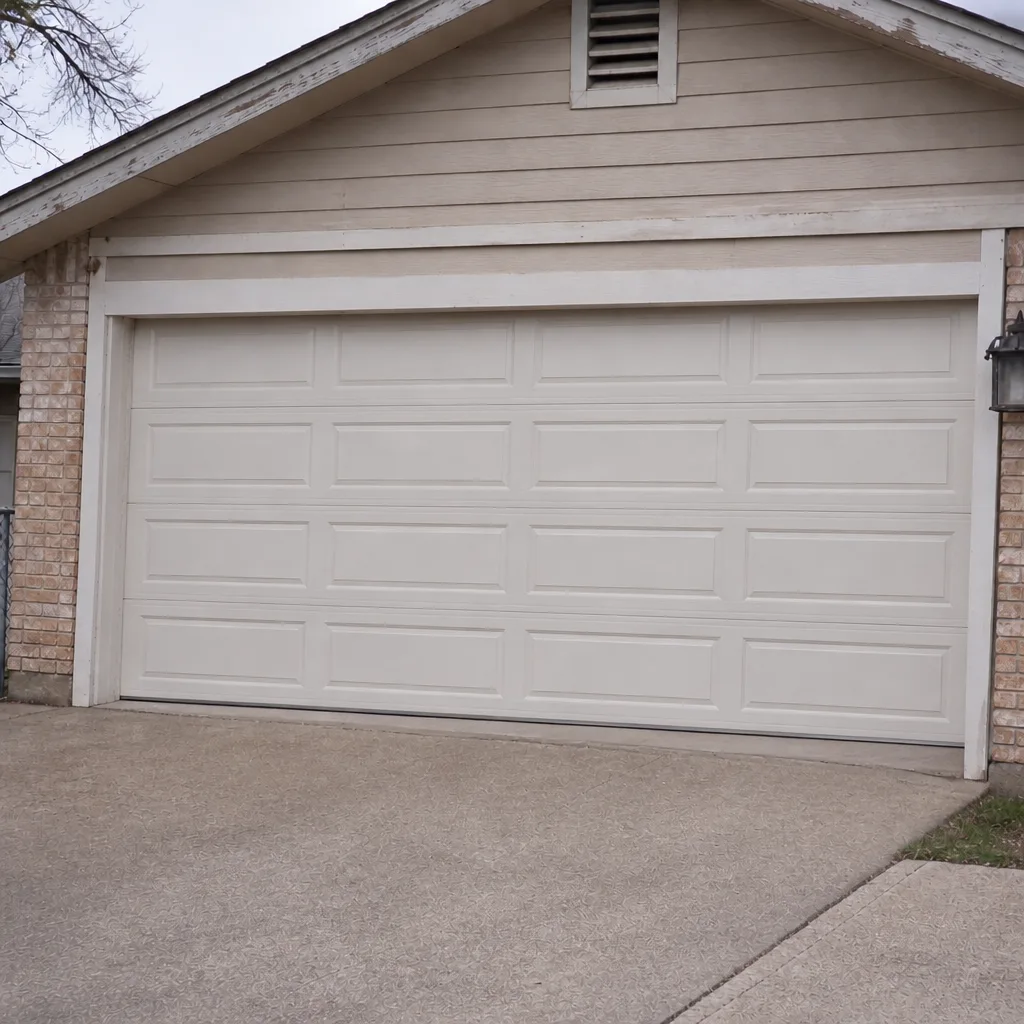
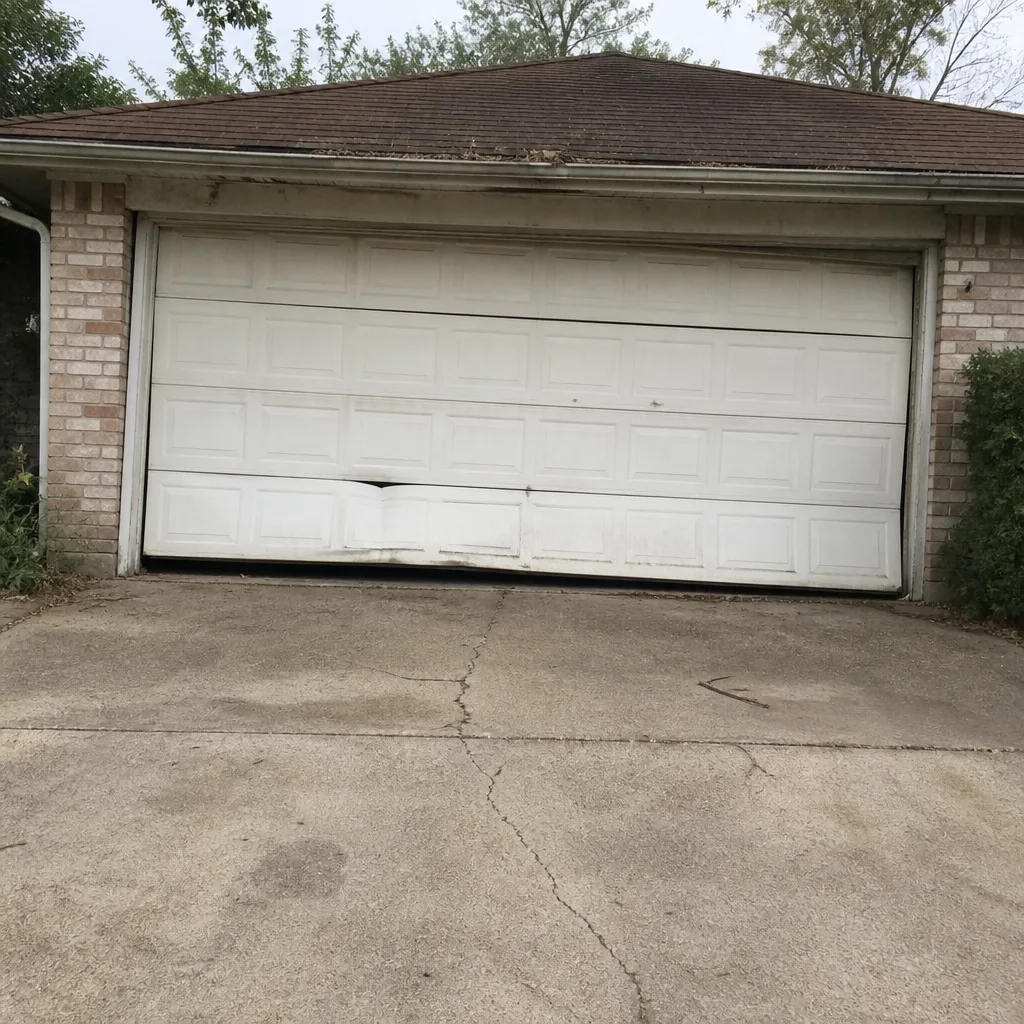
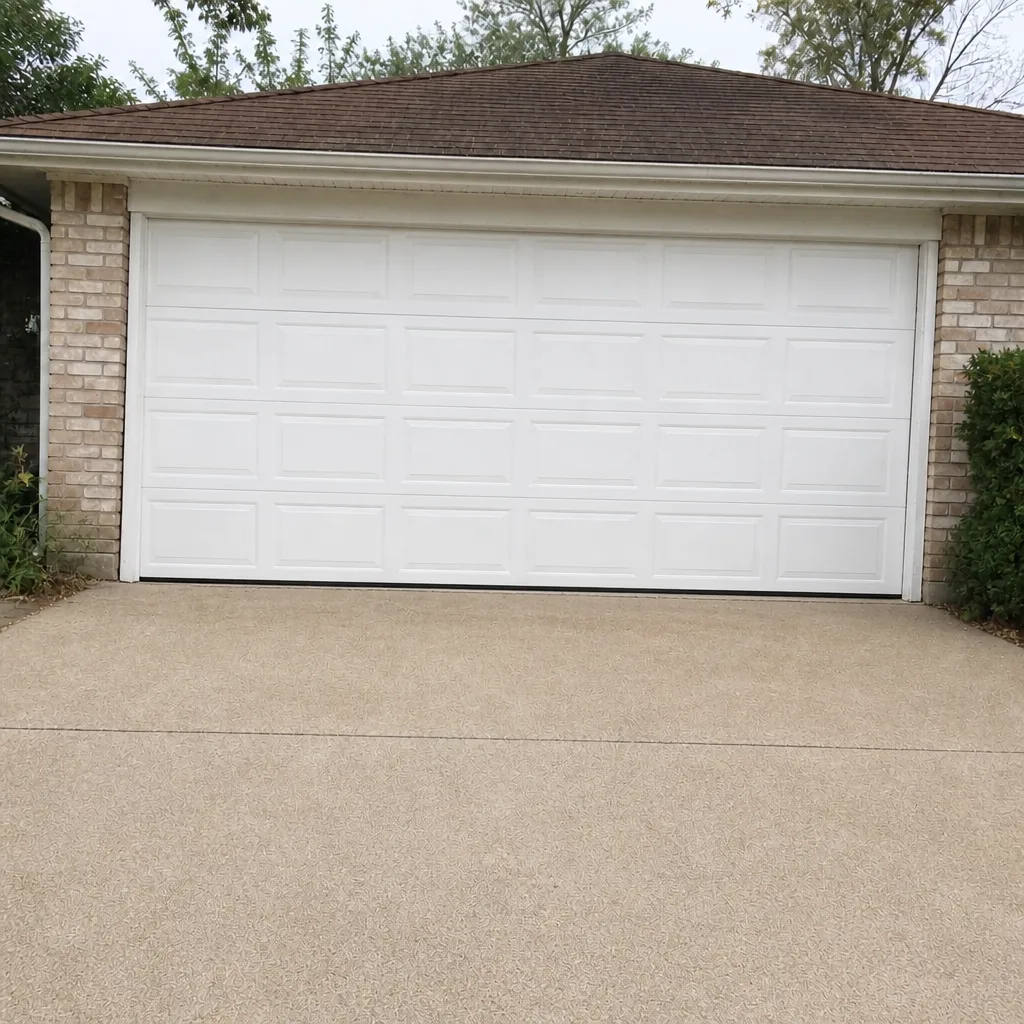
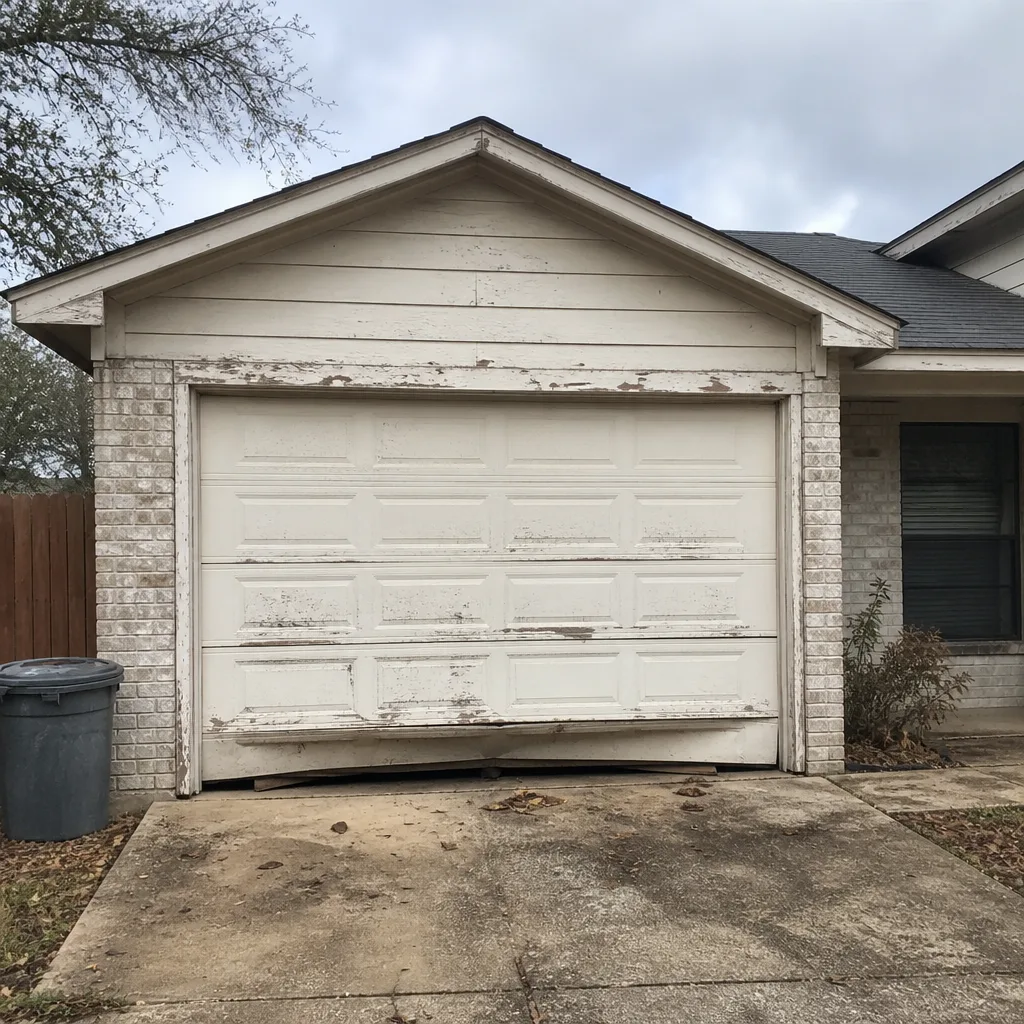
See the difference
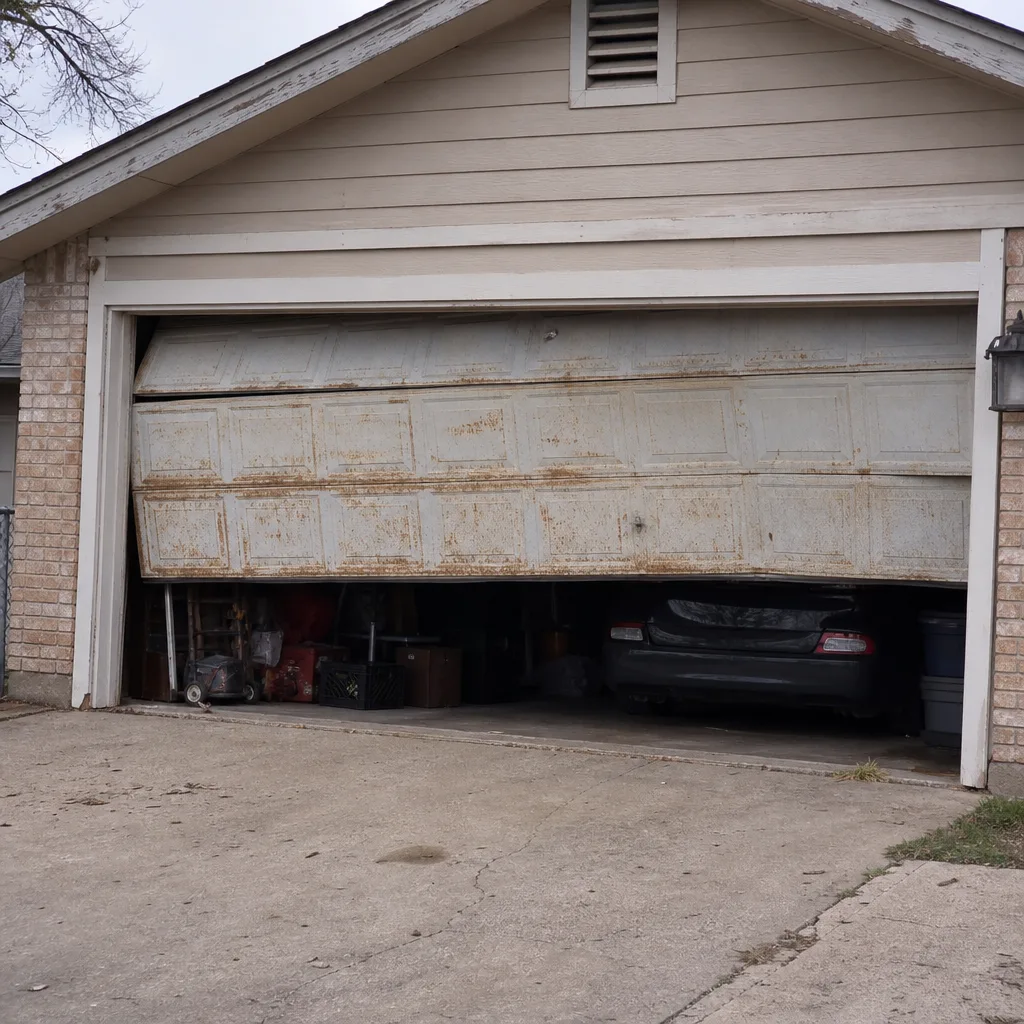 Before
 After
 Before
 After
 Before
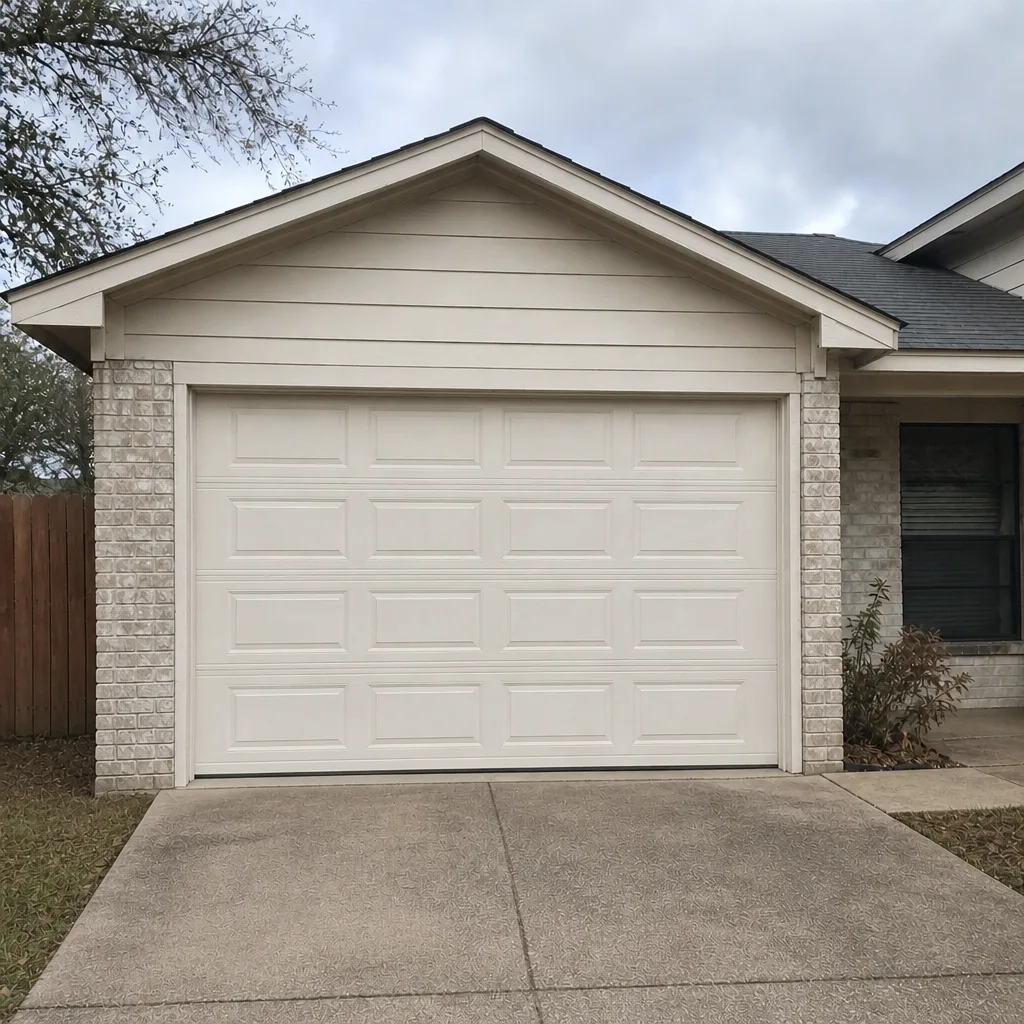 After
When to Call a Professional
Call a garage door professional when the door won’t lift, lifts crooked, or slams down; when you hear a loud bang from the garage and the door is suddenly heavy; when a cable is visibly frayed or off the drum; when the opener works but the door doesn’t move; or when the opener’s lights blink or the door reverses on its own with an obstruction nowhere in sight. Springs, cables, and torsion systems are the dangerous components on any garage door – they’re stored energy waiting to release, and they cause serious injury when they let go near someone working on them. Leave those to a trained technician. A trained technician will diagnose the actual cause first, so you don’t pay for an opener you didn’t need. Bluestone Garage Door Repair offers free estimates in College Station. Call (888) 874-4281 to book one.
Frequently Asked Questions
A single spring replacement in College Station typically costs $180 to $340, and a matched torsion pair usually runs $360 to $680 installed. The pair costs about twice a single, and most doors carry two springs. The written estimate you receive before work starts is the price you pay. Call (888) 874-4281 for an exact quote – estimates are free.
We answer 24/7 and dispatch technicians from 7am to 7pm, Sunday through Friday, closed Saturday, so same-day repair is often possible on spring, cable, roller, and opener failures. A call outside dispatch hours is booked into the next opening, Sunday through Friday, 7am to 7pm. Call (888) 874-4281 to check what’s available for your door.
No. The price is quoted and agreed before any work starts, and the written estimate is what you pay unless you approve a change in writing. If a technician diagnoses something the quote didn’t cover, you’ll hear about it before it becomes a line item, not after. Call (888) 874-4281 for a firm estimate.
We work with insured, state-licensed garage door professionals who handle repair, opener work, and installation under one company. Every job runs from diagnosis through completion with the same team – no hand-offs to a second contractor for opener or logic-board work. Call (888) 874-4281 for details on credentials for your job.
Two quotes for “the same job” are often pricing different things – one a single extension spring, the other a torsion pair with new cables and hardware – and that scope difference can be $400 on two doors that look identical from the driveway. Compare what’s itemized, not just the total. Call (888) 874-4281 and we’ll break down exactly what your door needs.
Repair almost always wins if the door panels, tracks, and hardware are sound and the failure is mechanical – a spring, a cable, a roller set, or an opener. Replacement makes more sense when panels are rusted through, the door is structurally heavy for its hardware, or you’re changing material anyway. In College Station’s long-summer heat, a door on its last finish is often the deciding factor. Call (888) 874-4281 for a free estimate on either path.
The Bottom Line
Garage door pricing in College Station is confusing for a simple reason: the same phrase (“spring replacement,” “roller fix,” “new door”) can describe a $180 job or a $700 job, depending on parts, weight, brand, and scope. The fix isn’t a cheaper quote – it’s a clearer one. Ask what type of spring, ask whether the price is flat-rate or labor plus parts, and ask why each add-on is on the list. A quote that names all three is a quote you can evaluate on its merits. Bluestone Garage Door Repair handles repair, opener work, and installation under one company, with the brand familiarity to diagnose your door the first visit. Call (888) 874-4281 for a free estimate. We answer 24/7. Fast dispatch from 7am to 7pm, Sunday through Friday.
Written by the team at Bluestone Garage Door Repair.