
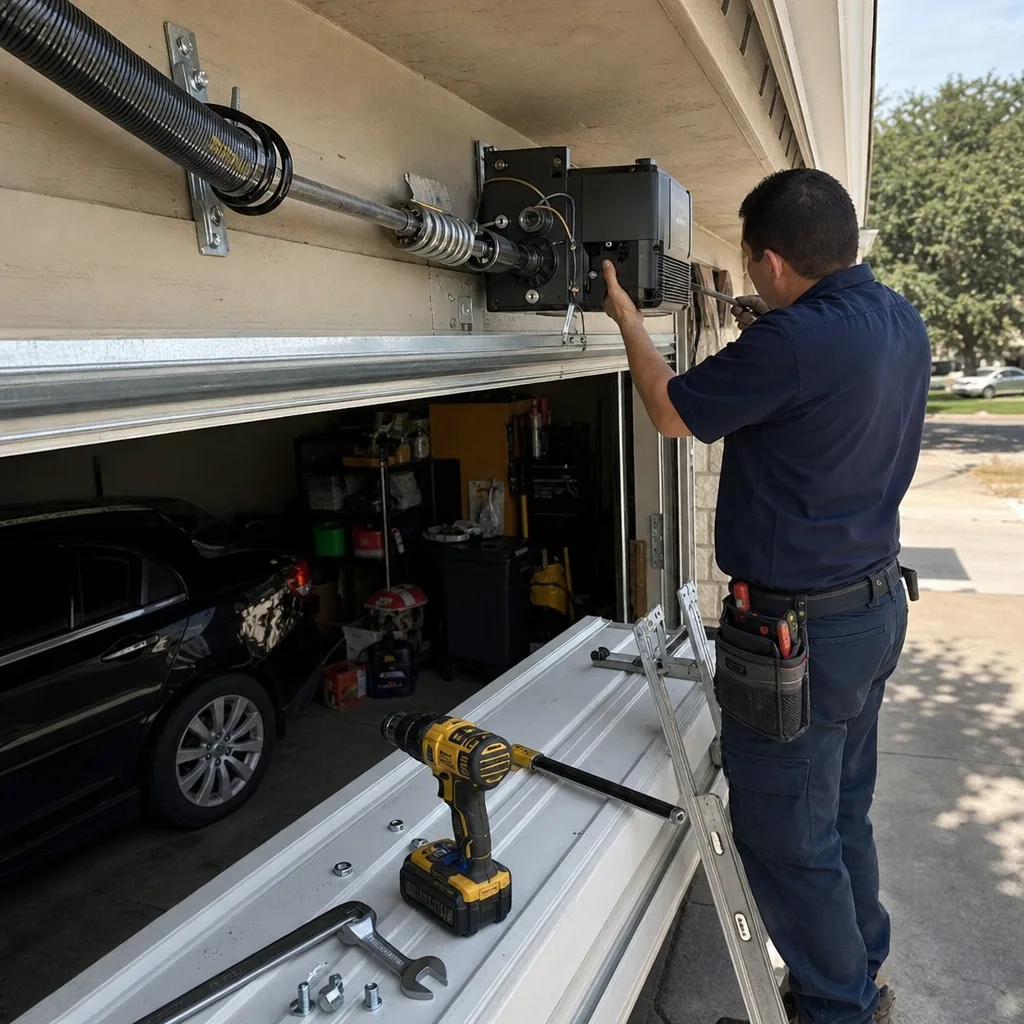
Last updated November 15, 2026
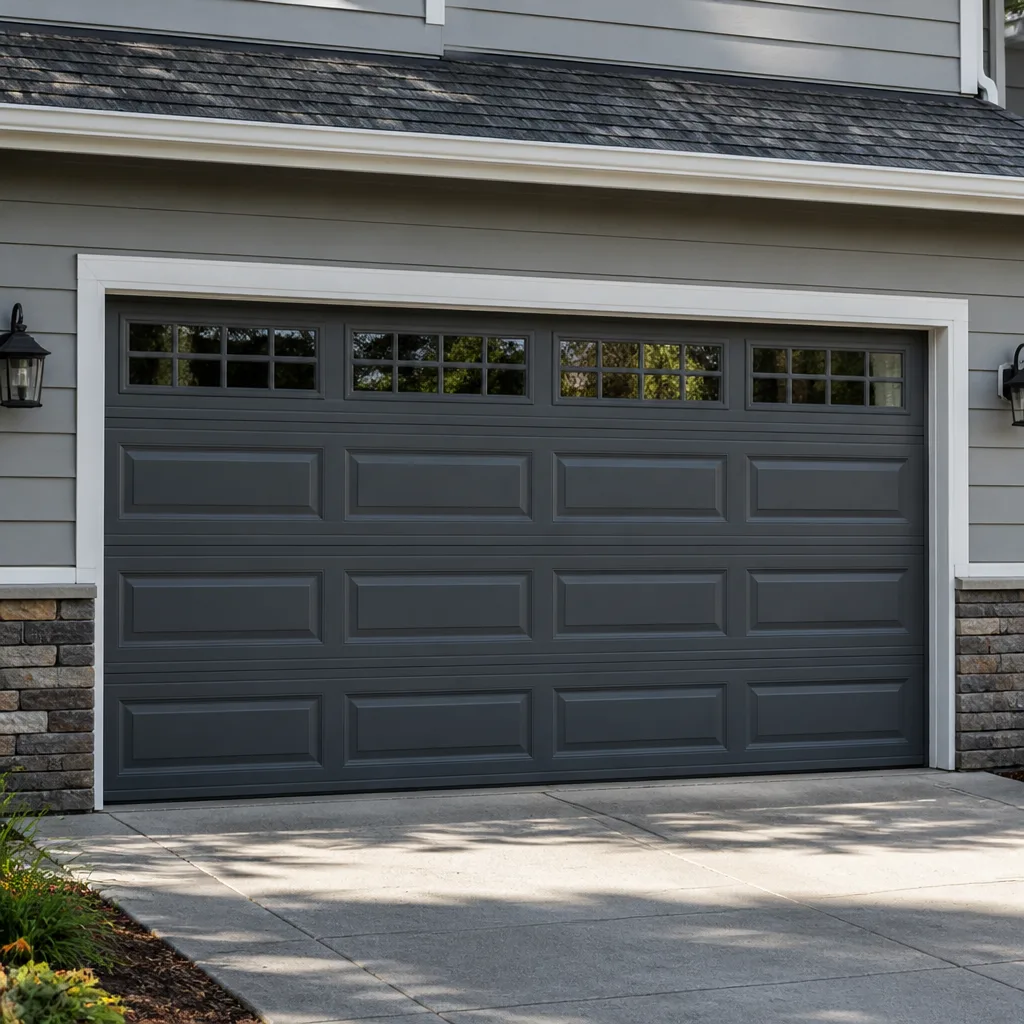 Raised-panel steel
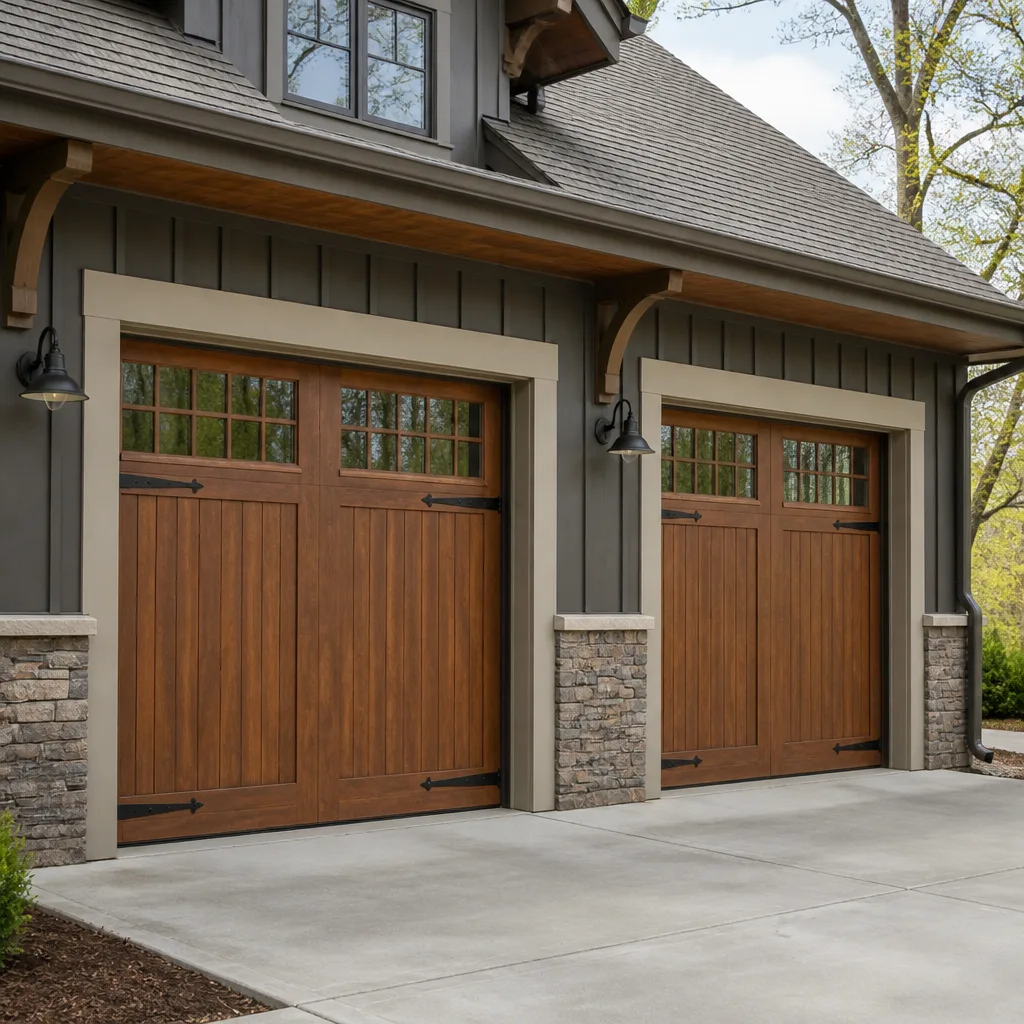 Carriage house
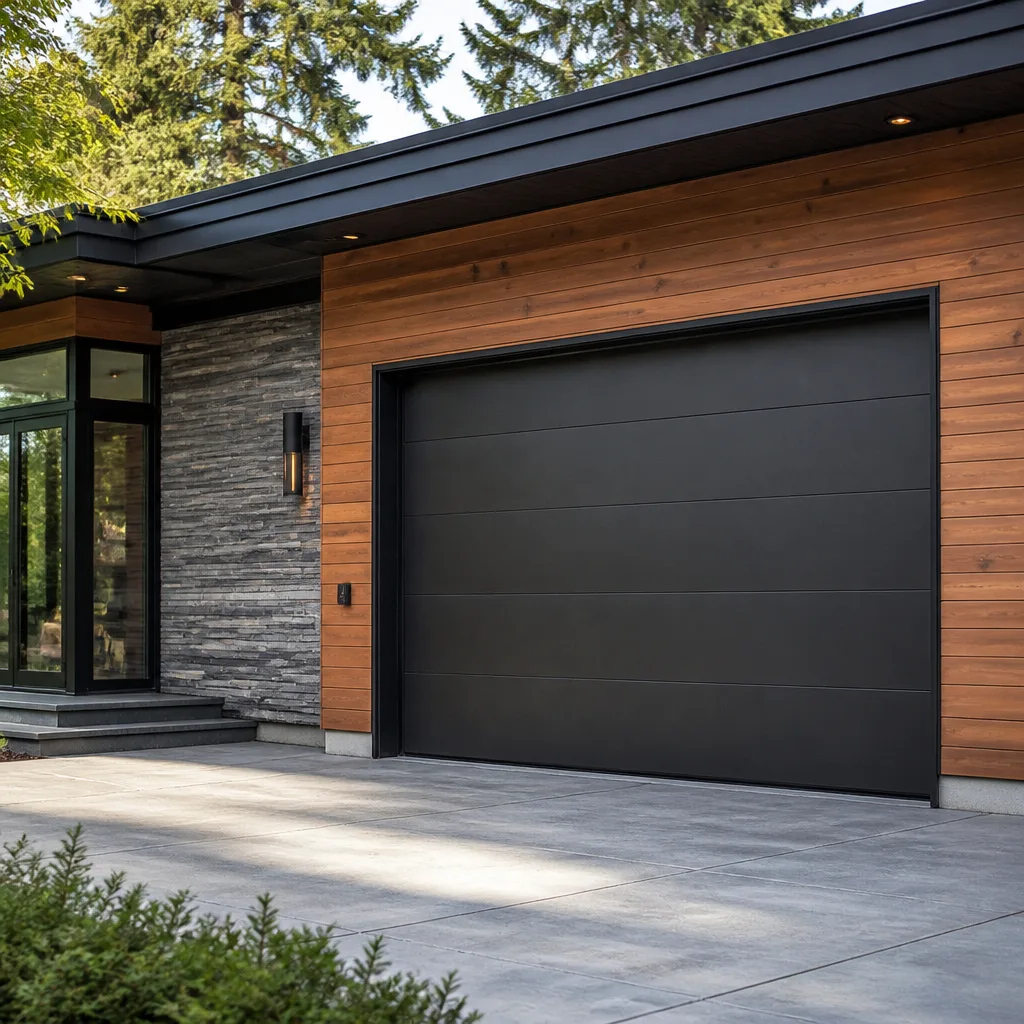 Modern flush
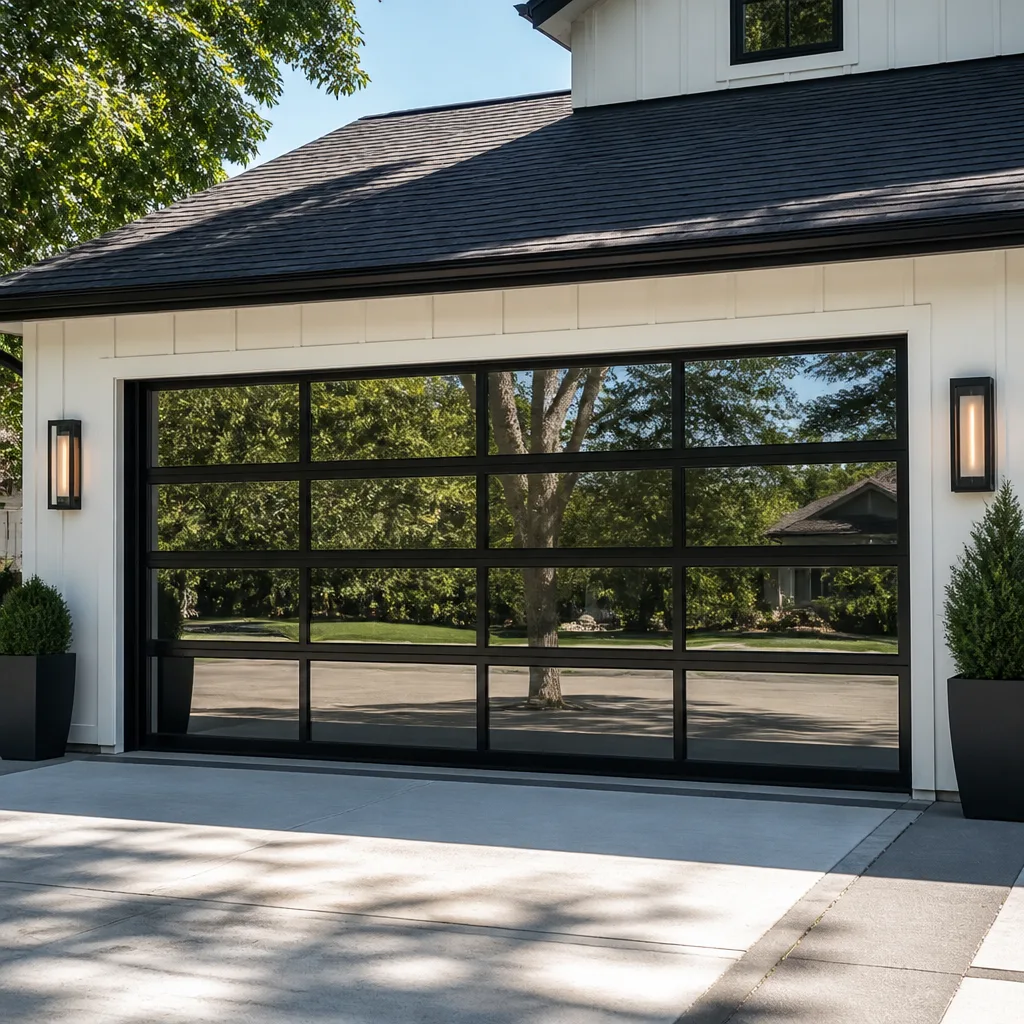 Full-view glass
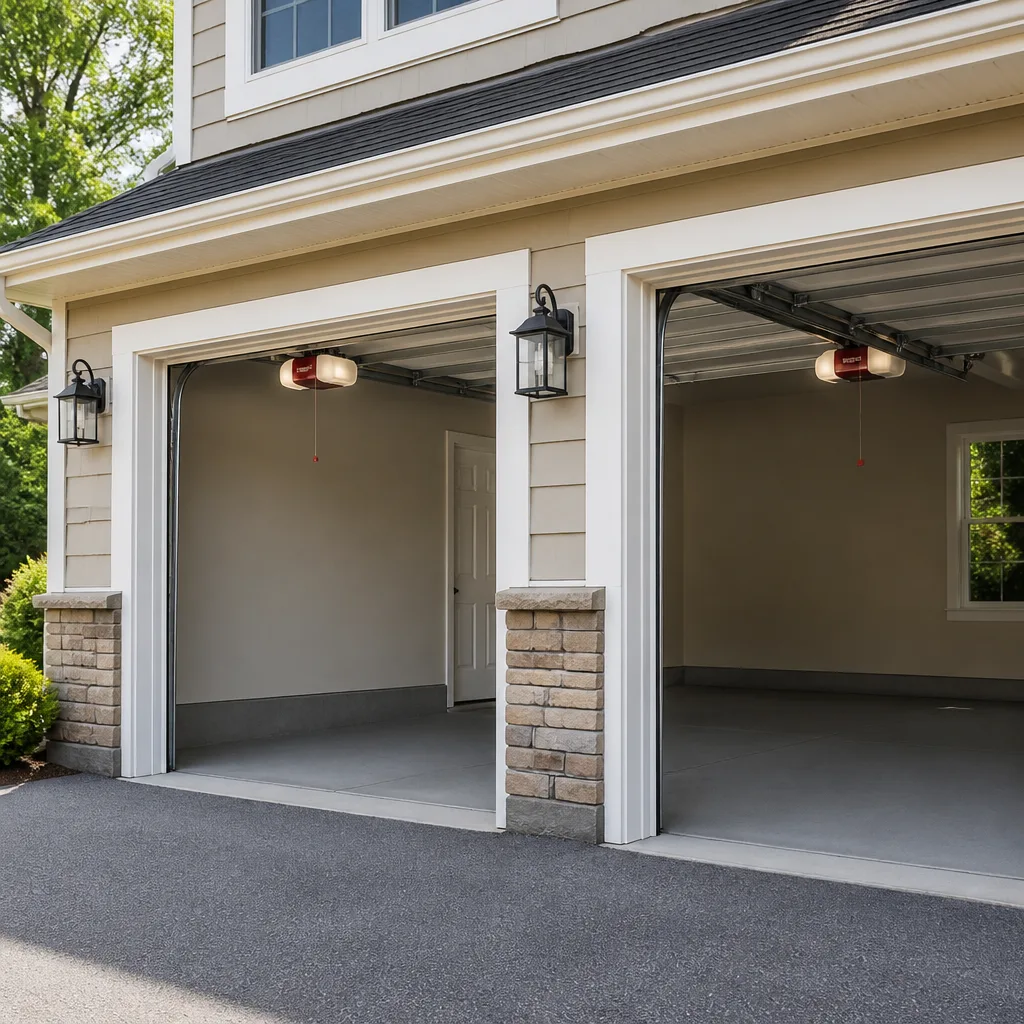 LiftMaster openers
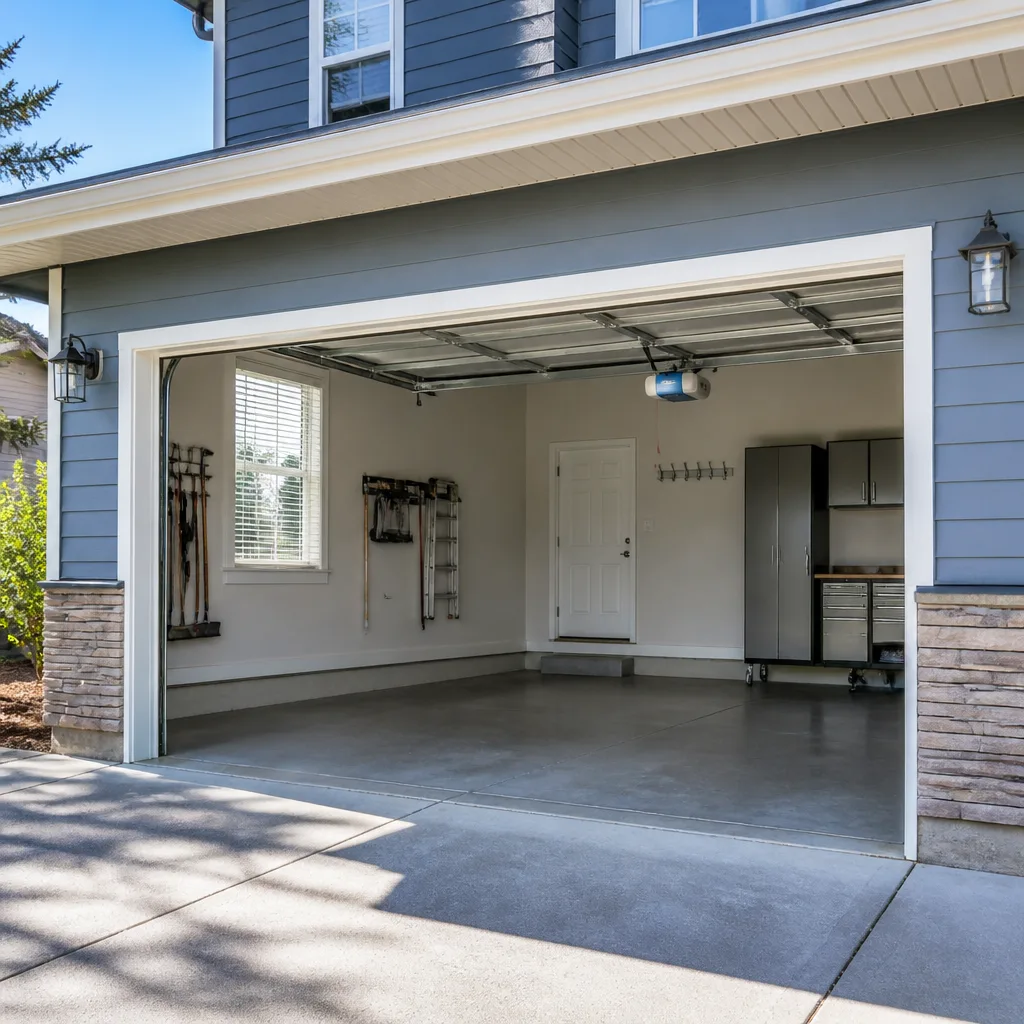 Chamberlain openers
Full 25-point door and opener safety check with every visit - springs, cables, rollers, tracks, and your LiftMaster or Chamberlain opener included
You get a price before we start. It does not change when the pro arrives.
Get your free estimateThe Complete Guide to Garage Doors in College Station
The most surprising thing about garage door failures in College Station isn’t age. It’s neglect that stacks up quietly, then shows itself all at once. A door that sat untouched through two or three tenancy changes can look fine on the outside while its springs are already tired and its cables are quietly rusting behind the jamb. That mismatch between how a door looks and how it’s actually holding up is why so many failures seem sudden when they aren’t. This guide breaks down what actually fails in College Station, why the local climate and housing stock push certain parts harder, and how to plan from a new door all the way to end-of-life replacement.
Quick Answer
Garage doors in College Station fail early mostly because of humidity-driven corrosion, long stretches of skipped service in rental properties, and heat that wears springs faster than dry-climate markets. The doors and openers installed here are well understood by brand, which means a good diagnosis on the first visit is realistic. Most repair work is straightforward once the actual failure is identified; the cost of guessing is repeated service calls and parts replaced twice.
Styles & brands we work with
- Raised-panel steel
- Carriage house
- Modern flush
- Full-view glass
- LiftMaster openers
- Chamberlain openers
Table of Contents
- Why College Station Garage Doors Fail Differently
- How Humidity and Heat Affect Springs and Cables
- Neighborhood Housing Stock and What Wears First
- The Rental Ownership Gap
- A Brand-by-Brand Look at What’s Installed Here
- The Full Door Lifecycle, From Install to Replacement
- What Garage Door Work Typically Costs in College Station
- A Maintenance Routine That Fits the Local Climate
- Opener and Smart-Drive Care
Why College Station Garage Doors Fail Differently
Garage door failure is not the same problem everywhere. In a dry, stable climate, a torsion spring tends to reach the end of its rated cycle count on a fairly predictable curve. Here, heat and humidity bend that curve. Doors that face west or sit on an unshaded driveway take the worst of it. Metal panels heat and cool through wide daily swings, lubricant thins and migrates, and moisture collects in the small places where cables run and hinges pivot. None of those things fails a door on its own. Together they shorten the window between “working fine” and “won’t open.”
The other local factor is how homes are used. College Station has a large student and young-professional rental population, and rentals tend to get reactive service rather than preventive service. When a door binds, the tenant reports it late, or not at all, and the fix gets bigger. By the time a technician sees it, a worn roller has scored a track or a tired spring has started to stretch.
What this means for homeowners is simpler than it sounds. The parts that fail first here are usually springs, cables, rollers, and hinges, in that rough order, with opener logic boards and gears close behind in older units. Understanding which parts wear first in this climate lets you replace the right thing once instead of chasing symptoms. For residents who want the short version of the repair process itself, the details of garage door repair are covered more directly on that page.
How Humidity and Heat Affect Springs and Cables
Springs are the workhorse of the whole system. A torsion spring stores the energy that lifts the door, and every open and close spends a little of its rated life. Heat accelerates that spending. A garage that bakes in summer afternoon sun runs hotter than the outdoor air, and every open-close cycle adds a little more stress than it would in a cooler market. Springs don’t announce that they’re near the end; they simply work until they don’t.
Cables are the humidity story. They’re steel, they’re under tension, and they sit in the most moisture-prone part of the door assembly. In Bryan-College Station, the combination of summer humidity and mild, damp winters keeps a thin film of moisture on metal much of the year. That’s enough to start surface corrosion where cables meet the drum or where they anchor at the bottom bracket. Corroded cable is weaker cable, and a frayed cable is a genuine safety hazard.
What to watch for, without touching anything under tension:
- Doors that feel heavier than they used to, or that need a nudge to start moving
- A bang from the garage when the door is opened, followed by a door that won’t lift
- Visible rust or fraying where cables wrap around the drums
- Squealing or grinding during travel that wasn’t there last season
- A door that drops faster than it rises, or that sits unevenly when closed
Those are diagnostic signals, not repair instructions. Torsion springs and the cables under them hold enough stored force to cause serious injury, so this is one part of the trade where a trained technician with the right winding bars and the right knowledge should do the work. Our technicians have up to 11 years of experience, and spring and cable work is exactly where that experience matters most.
Neighborhood Housing Stock and What Wears First
College Station isn’t one housing market. It’s several, layered by age, and each has its own pattern of wear.
Southside and the older neighborhoods near the university carry some of the city’s earlier housing. Doors in these homes have often been through several families or tenants, and original openers are frequently still in place. When a door from this era fails, it’s usually the opener, not the door. Chain-drive units with worn gears or failing logic boards are common, and the honest fix is sometimes a new opener rather than another round of repairs. Doors in this group also tend to have older sectional panels where hinges and rollers have simply aged out.
The newer developments off William D. Fitch and in the growth corridors south and east of town are a different picture. These homes usually have newer doors and newer openers. Failures here tend to be warranty-era issues or installation-related adjustments rather than worn-out parts. A door that’s only a few years old but binds or reverses is usually a balance, alignment, or opener-travel problem, not a dying spring. Diagnosing that correctly the first time keeps a new-door homeowner from paying for parts the door doesn’t need.
Between those two extremes are the mid-era subdivisions, and that’s where the humidity story shows most clearly: doors old enough to have real miles on them, but new enough that owners expect them to keep going. Those are often the doors that benefit most from a proper tune-up before a busy season.
The Rental Ownership Gap
College Station’s rental density creates a specific problem. When a tenant moves out and a new one moves in, the garage door rarely gets looked at. The landlord may never have laid eyes on it. The tenant inherits a door they didn’t install and don’t feel responsible for. That gap is where deferred maintenance compounds.
A door doesn’t need to be ignored for a decade to fail. A couple of hard, unlubricated seasons is enough to wear rollers and strain springs, and in this climate that happens faster than people expect. Nobody did anything wrong, exactly; the door just never had a checkup. By the time a tenant reports a problem, the fix is often bigger than it would have been.
For landlords, the practical answer is simple: schedule a service check when a unit turns over. For renters, the answer is to report issues as they happen rather than at move-out, when they can get tangled in a security deposit dispute. And for anyone buying or moving into a rental unit in College Station, an inspection of the door and the opener is a small cost that prevents a large surprise. The full range of what a proper repair visit covers is laid out at our main Bluestone Garage Door Repair page.
A Brand-by-Brand Look at What’s Installed Here
The good news about College Station’s garage doors is that the market is well understood. A handful of brands dominate, and each has familiar failure patterns. That matters because a specialist who knows the brand can diagnose faster and source the right part the first time instead of guessing from a manual.
Clopay is one of the most common door brands in the area, especially on newer construction. Clopay doors hold up well, but their springs and rollers carry the same load as any other, and hot garages shorten spring life the same way. We see a lot of Clopay panel and hardware work, and the parts are widely available, which keeps repair turnaround quick.
Wayne Dalton doors appear frequently in mid-era homes. Some Wayne Dalton models use proprietary hardware and openers that general contractors decline to work on. A technician familiar with the brand doesn’t turn those away, and can usually match the correct parts without a workaround.
Amarr shows up on many newer builds and is straightforward to service once you know the panel and hardware line. Homeowners with Amarr doors often assume brand-specific parts mean brand-specific headaches; in practice, a knowledgeable specialist keeps them running without issue.
On the opener side, LiftMaster and Chamberlain dominate. They’re well-understood units, and most failures fall into a few familiar patterns: worn gears, failing logic boards, sensor misalignment, and motor strain from doors that aren’t balanced. Genie openers show up too, often on older installs, and Craftsman units from earlier decades are still running in plenty of garages. Even Raynor doors, which are less common locally, get proper service rather than a shrug. If you’re specifically chasing opener trouble, the details of garage door opener repair are worth reading before you call anyone.
The Full Door Lifecycle, From Install to Replacement
A garage door is a long-lived system with a predictable life. Knowing where a door sits in that life helps you make sensible decisions about repairing versus replacing.
- Installation. A new door is measured, ordered, and installed. This is a project, not a same-day repair: the door has to match the opening, the track has to be set correctly, and the springs have to be wound to balance the door’s actual weight. A correct install is the single biggest factor in how long the door lasts.
- Early years. New doors usually need only light routine service. Rollers, hinges, and tracks get checked and lubricated. Opener travel is verified.
- Middle years. Springs reach their rated life, cables begin to show corrosion, and rollers start to wear. This is the era of targeted repair, where replacing worn parts keeps the door going for years.
- Late years. Panels may start to show rust or dents, opener electronics get harder to source, and repairs start to cluster. A door can keep running here, but the value of each repair should be weighed against replacement.
- End of life. When multiple systems need work at once, replacement is usually the better answer than a stack of repairs.
In College Station, that timeline runs a little faster than in drier markets because of the humidity and heat. Springs wear sooner. Cables corrode sooner. A door that would last fifteen years in a dry climate might show the same wear at twelve here. That’s not cause for alarm; it’s cause for planning.
What Garage Door Work Typically Costs in College Station
Prices vary by brand, part, and door style, and the written estimate is always the final word. Here are the typical ranges you can expect for common work in College Station:
- Spring replacement (one spring): around $180 – $340
- Spring replacement (matched pair, usually replaced together): roughly double a single spring
- Cable replacement: around $150 – $300
- Roller and hinge tune-up: around $100 – $250
- Opener repair (gears, boards, sensors): around $150 – $400
- New opener installation: around $350 – $800
- Full new door installation: around $900 – $3,500, depending on size and material
Two things matter more than any single number. First, springs are almost always replaced in matched pairs because the two carry the door together; quoting a single-spring price for a pair understates the job. Second, the estimate you receive in writing is the price you pay. We agree on the quote before any work starts, so there’s no surprise on the invoice. Costs are set per job by written estimate, and estimates are free.
A Maintenance Routine That Fits the Local Climate
You don’t need to be a technician to keep a door healthy. A handful of habits, done regularly, go a long way in Bryan-College Station’s climate.
- Lubricate rollers, hinges, and the spring twice a year. In a hot, humid market, lubricant thins and migrates faster. A silicone-based product on the right points keeps friction down and slows corrosion.
- Look for rust and fraying. If you see corrosion or fraying on cables, don’t touch them. Note it and call.
- Test the balance. A properly balanced door stays in place when opened halfway. If it wants to slide, something is off.
- Check the safety reverse. A door that doesn’t reverse when it contacts an object needs attention right away.
- Clear the tracks of debris. Leaves, dirt, and small objects in the track cause binding that stresses the opener and hardware.
- Get a professional tune-up once a year. A trained eye catches things you can’t see from the driveway.
The parts that most need attention happen to be the parts that fail fastest here, so a twice-yearly habit aligned to early summer and early winter keeps the door ahead of the climate.
Opener and Smart-Drive Care
Openers get blamed for a lot of failures that aren’t their fault. A binding door, a worn roller, or a misaligned track makes an opener work harder, and the opener takes the blame when it burns out. Diagnosing the door and the opener together, rather than treating them as separate problems, is the difference between fixing the cause and replacing the symptom.
When the opener itself is the problem, the pattern is usually familiar. LiftMaster and Chamberlain units are well understood, and most issues come down to worn gears, failing logic boards, sensor misalignment, or motor strain from an unbalanced door. Genie and Craftsman units behave similarly. Newer smart openers add app connectivity and battery backup, which are nice features but don’t change the fundamentals: the opener has to be matched to the door’s real weight, and the door has to be balanced.
Opener repair is the part of the trade that separates a genuine garage door specialist from a door-only contractor, and it’s work we handle directly rather than sending out. If your opener is the problem, the fix usually comes down to the same few parts, correctly diagnosed.
Common Mistakes to Avoid
- Replacing one spring instead of the pair. The two springs share the door’s weight. Replacing one leaves the older spring to carry more than its share and fail soon after.
- Assuming the opener is broken when the door is. A binding door makes a healthy opener strain. Diagnose the door first, then the opener.
- Ignoring humidity-driven corrosion. In College Station, cables corrode faster than people expect. Check for rust and fraying, and take them seriously.
- Letting a rental door go unserviced at turnover. A missed check at tenant changeover is how small issues grow into expensive repairs.
- Skipping lubrication in a hot garage. Lubricant thins faster in a hot garage, and unlubricated rollers wear tracks and strain openers.
- Paying for a tune-up that doesn’t address the real problem. Quick tune-ups that don’t diagnose the door’s actual condition just defer the failure.
- Calling a general handyman for spring or cable work. Springs and cables hold dangerous force. This is work for a trained specialist with the right tools.
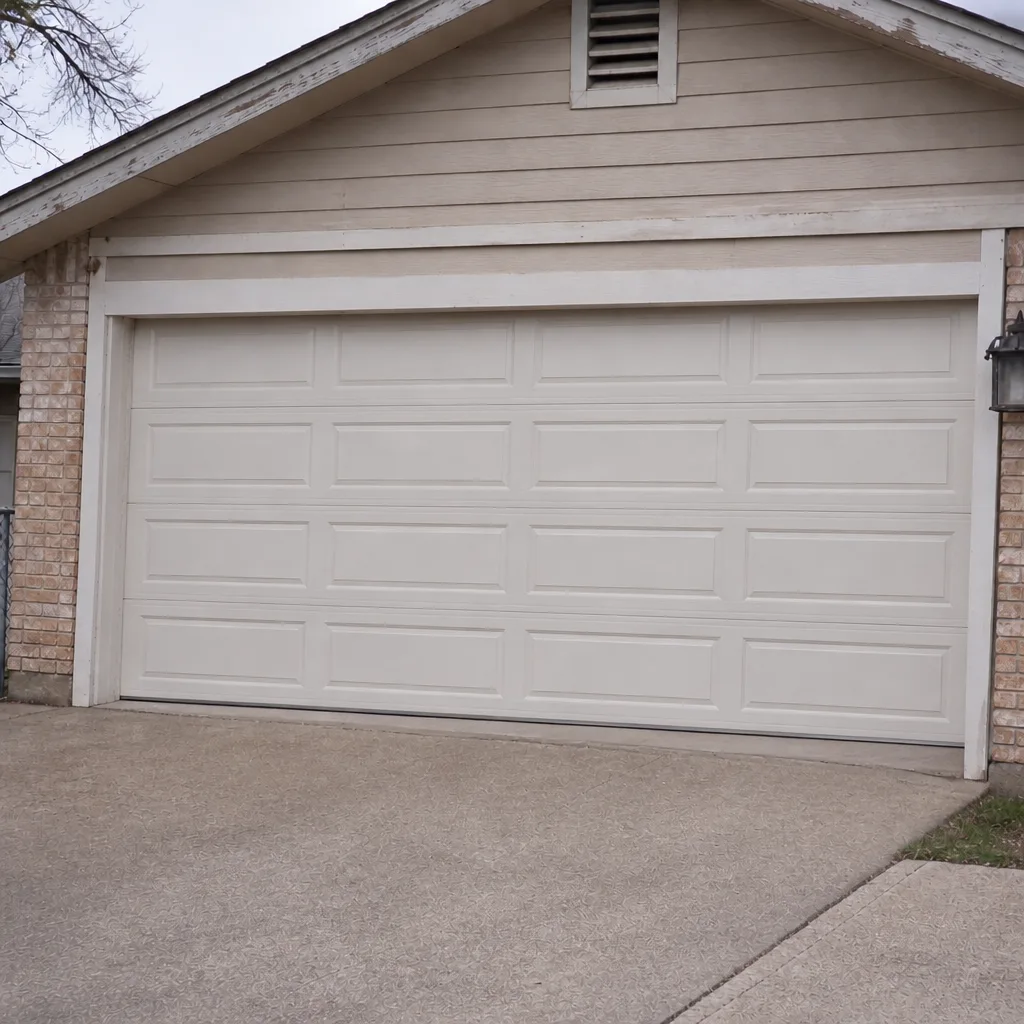
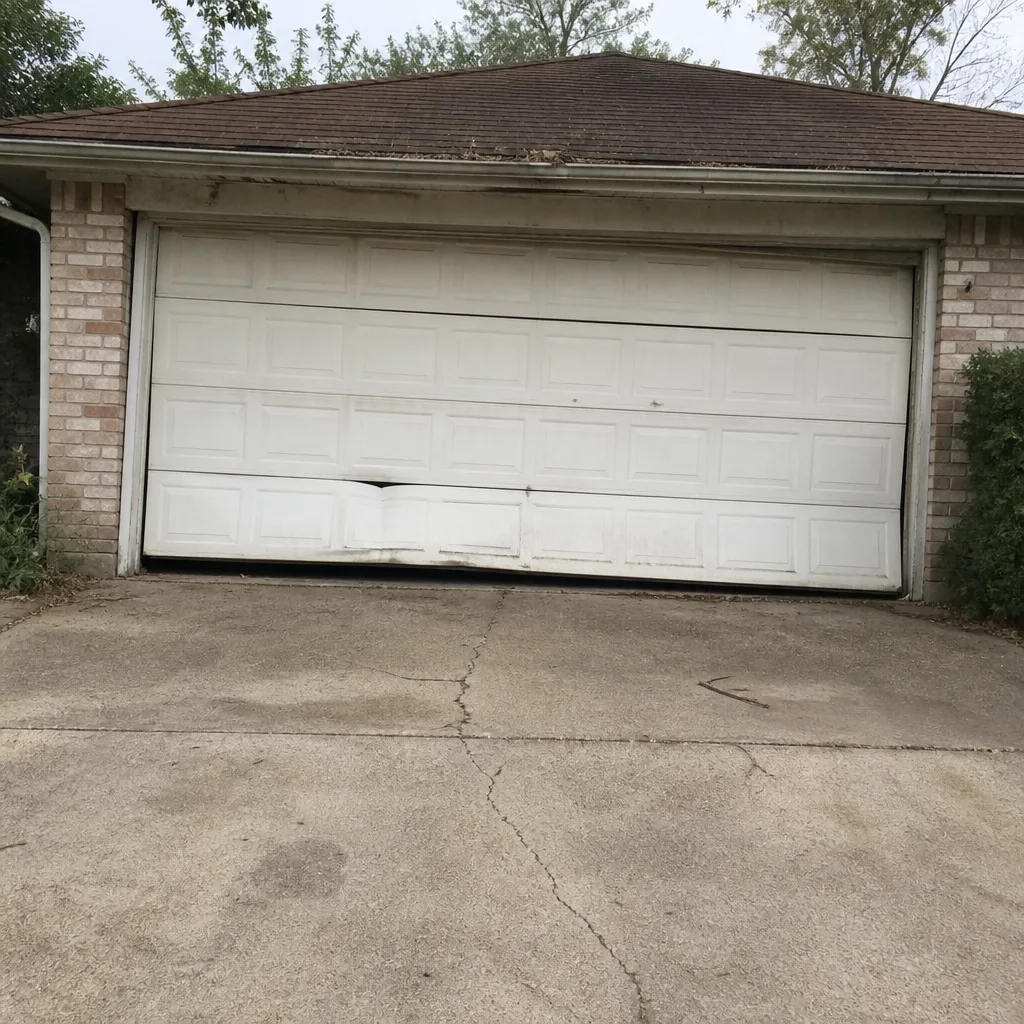
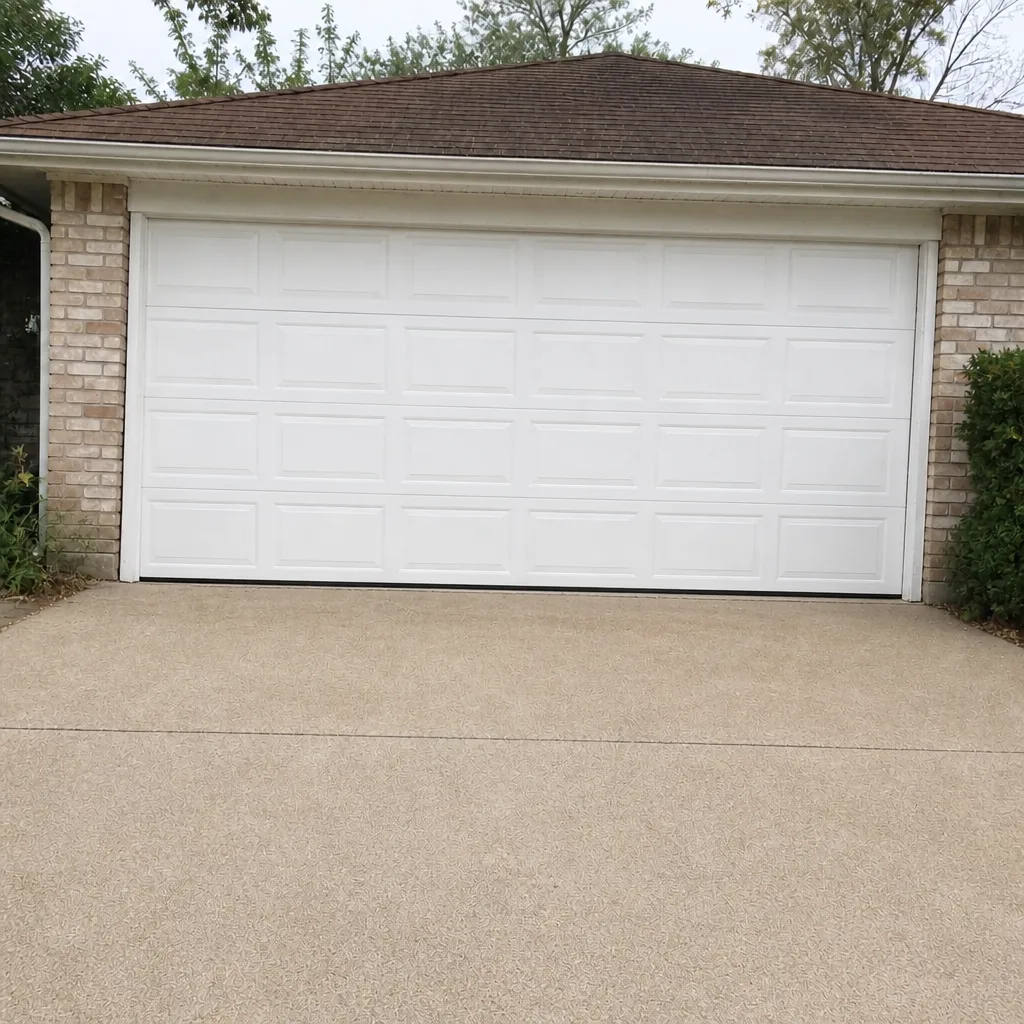
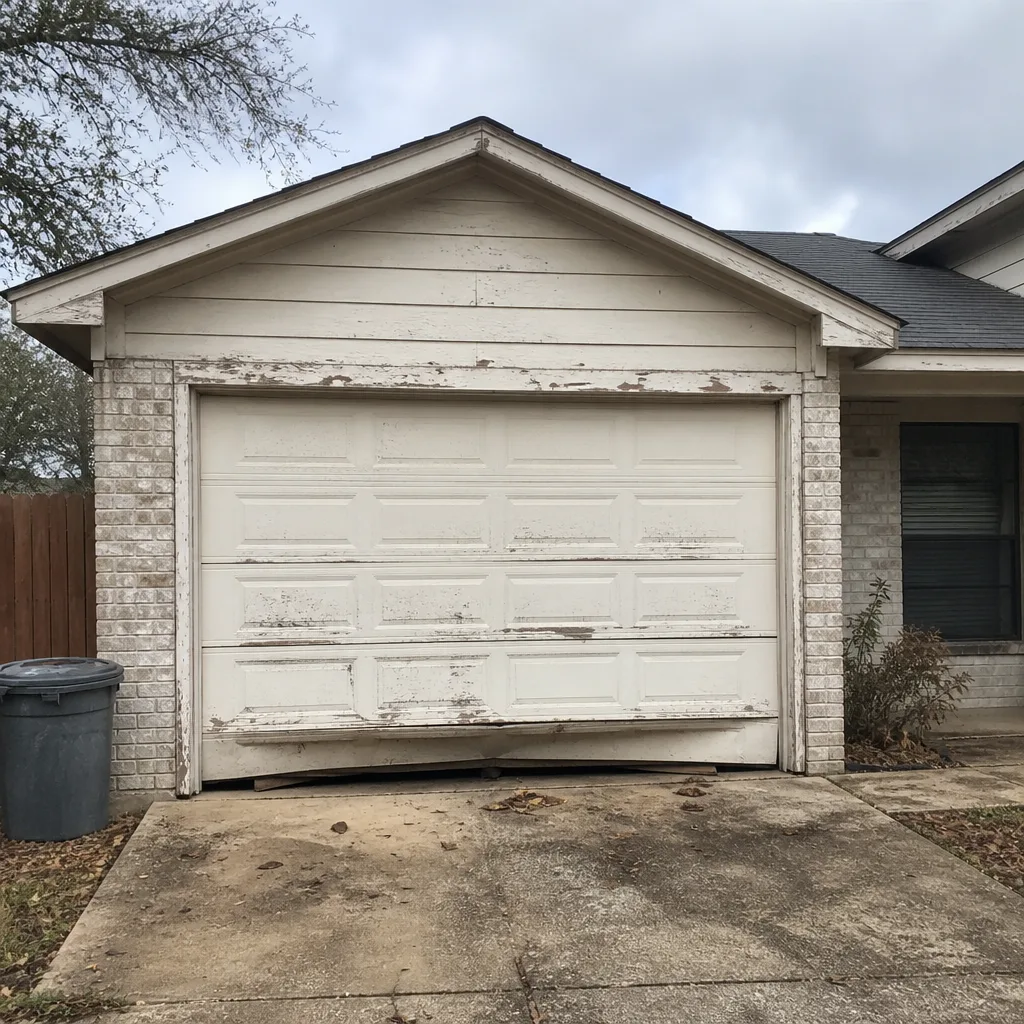
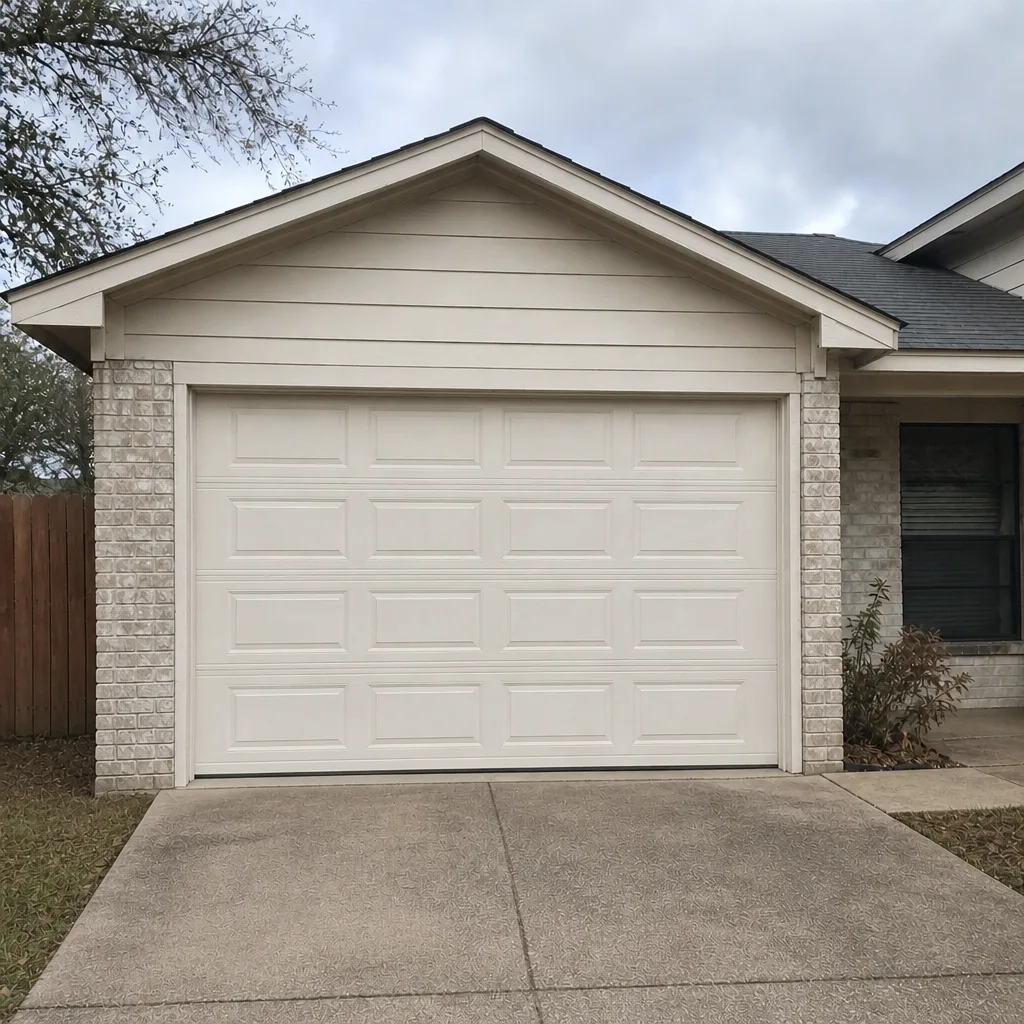
See the difference
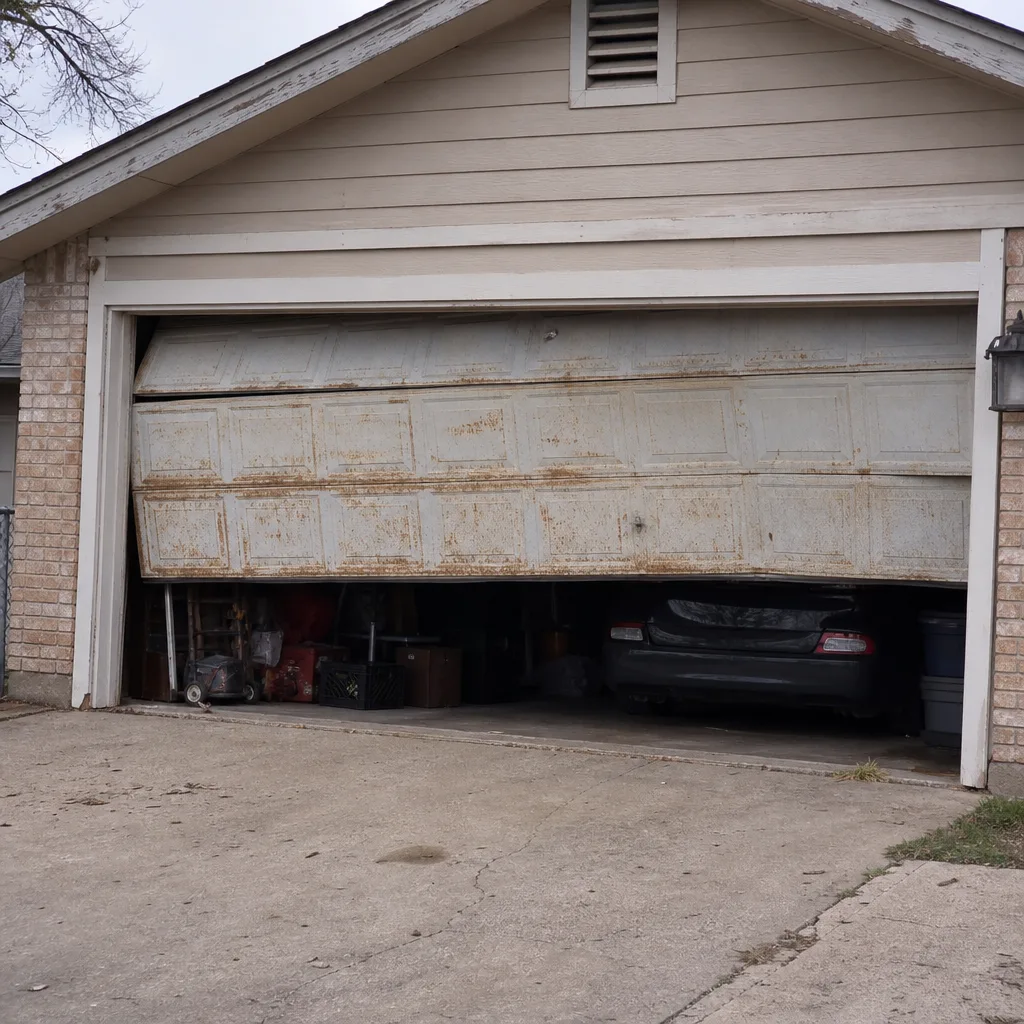 Before
 After
 Before
 After
 Before
 After
When to Call a Professional
Some garage door problems need a technician the moment they happen. Others can wait for a scheduled visit, but shouldn’t wait long. Call a professional when a spring has broken (you’ll usually hear a bang and the door won’t lift), when a door comes off its track or hangs crooked, when cables look frayed or rusted, when the door reverses unexpectedly or won’t reverse when it should, or when the opener runs but the door doesn’t move. Call also when a door has gone more than a year without service, especially in a rental. Some of these are safety issues, not conveniences. Bluestone Garage Door Repair offers free estimates in College Station. Call (888) 874-4281. We answer 24/7. Fast dispatch from 7am to 7pm.
Frequently Asked Questions
Typical repairs run from around $100 for a tune-up to around $340 for a single spring replacement, with opener repairs and cable work in between. The written estimate sets the final price, and estimates are free. Call (888) 874-4281 for an exact quote.
Once a year is a solid baseline, and twice a year is better during the hot, humid seasons. College Station’s heat and humidity wear parts faster than drier markets, so a door here benefits from more frequent attention. Call (888) 874-4281 to schedule a check.
Often, yes. Spring failures are the most common emergency call, and fast dispatch from 7am to 7pm covers most of them. Call (888) 874-4281 and we’ll get you scheduled.
No. The price we quote and agree before work starts is the price you pay. If the inspection turns up something different from what you described, we’ll tell you before touching anything. Call (888) 874-4281 for a free estimate.
Most likely, yes. We’re factory-familiar with eight major brands across doors and openers, including Clopay, Amarr, LiftMaster, Chamberlain, Genie, Wayne Dalton, Craftsman, and Raynor. Legacy and less-common systems aren’t turned away. Call (888) 874-4281 for your brand.
With good service, most doors run fifteen to twenty years, and springs typically last eight to twelve. Humidity and heat shorten both timelines, so maintenance matters more here. Call (888) 874-4281 to have your door assessed.
The Bottom Line
College Station’s garage doors are shaped by three forces: a hot, humid climate that wears springs and corrodes cables faster than in dry markets; a housing stock that ranges from Southside’s older homes to newer builds off William D. Fitch; and a rental market that leaves many doors chronically underserviced. The door and opener brands installed here are well understood, which means a good diagnosis on the first visit is realistic. Replace springs in pairs, keep up with lubrication, and don’t put off the signs of cable corrosion. The cost of a proper tune-up is small against a mid-season failure. When you need expert help, call (888) 874-4281 for a free estimate. We answer 24/7. Fast dispatch from 7am to 7pm.
Written by the team at Bluestone Garage Door Repair.